Paul White – Paul White & The Purple Brain
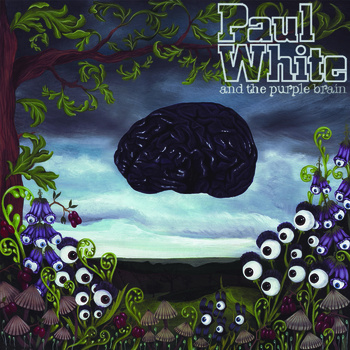
Rating: ★★★★☆

When a man turns into his own private realm to find inspiration, the results can be quite unexpected. If madness and immersion in a subject matter take over a man, the results can perhaps be more predictable. However, when both are combined, you get someone like Paul White. In this specific case, armed with only a sampler, renowned British hip-hop producer Paul White relied heavily on the eastern musical influences from the entire seminal works of legendary Swedish psyche rocker  S.T. Mikael. What emerged from this study is the second album to be released via his own determined One Handed Music label. It also marks his debut in conjunction with Now Again, Paul White & the Purple Brain, which was released back in early June.

For years, Paul White has been gaining quite the reputation as one of the most unique and forward thinking beat-makers in the UK, while in the process continuing to defy categorization. As his discography continues to grow on the foundation of his brilliant debut full length release, The Strange Dreams of Paul White, his sound and even his followers continue to evolve. Known at first as simply a hip-hop producer, White’s beats soon became something more, appealing to audiophiles of all genres. Nowadays, there is no limit to where his beats and his reputation can go, though one thing is for certain, he is working ahead of the curve.

As seen on his previous works and again found here in this primarily instrumental work, the sound-scapes he produces are relatively short in duration (with the longest at 2:23) but lengthy in number. Although his different effects and layers create unique worlds in each ‘sketch’, they all contain the original, overall psych-rock theme. On the opening number ‘Gentle Freak’ he uses a simple and summery guitar riff to form his main layer and from there he continues to form his piece with beat culminating in a track which is unavoidable catchy. On ‘Pride‘ he utilizes the same approach as the opener but creates a dreamy yet psychedelic sound-scape which is truly difficult to describe. He reunites with his hip-hop roots however on ‘Marshen Signals’, though the psych element never strays too far from the source. It’s remarkable how seamlessly White can combine different elements while composing a study as a whole so convincingly. Even on ‘Come Back’ which is the first entrance of a vocal track with its slow groove and ethereal vocals making it especially enjoyable.

Regardless of the track throughout the record, there’s no mistaking it’s the work of Paul White. It’s an incredible piece by one of the most forward thinking producers in ‘hip-hop’ today. The creative and spontaneous nature of his works continues to push the limits of the beat-making world while conversely staying strictly in its own world. It’s this adverse nature and approach to beat-making that gives White the vision and wherewithal to discover new things about his studies and his fantastic purple brain.

[audio: https://austintownhall.com/wp-content/uploads/2010/07/02-Pride.mp3]

Download: Paul White – Pride [MP3]

School of Seven Bells – Disconnect From Desire

Rating: ★★★½☆

Often times, we find that a bit of clarity pays off huge dividends.  For the second album from School of Seven Bells, Disconnect From Desire, this is precisely the case.  A few years of touring since their last release, and those moments of clarity provide for an entirely different listen than their previous album, Alpinisms.

While the band once coated their sound in a bit of fuzz and indifference, the moment you hear “Windstorm”, you can tell the group has flipped the table over, revealing a more pristine, electronic version of themselves. For one thing, the production has the Deheza sisters coming off a bit clearer, even with the tribal chanting in the background.  Sonically, they sound as if they aged, like a fine wine, getting better with as time’s passed.

But, the bread and butter of Disconnect From Desire has to live in the darker elements of the record.  “Heart is Strange” probably sounds really powerful in a venue, but in your home stereo, there’s an element of smoke filled clubs coated in debauchery.  This isn’t to say that the band is hinting at such things with their lyrics, but you can almost feel yourself sinking into a sense of despair, albeit an exuberant sort of despair.  “Dust Devil” evokes a similar quality with its driving rhythms, and vocals that seem to just float atop the air.  For some reason, this track evokes a weird monastery feel, perhaps its the way the twins carry the notes, almost to the point of chanting.

Using a minimal amount of instrumentation, however, does create a bit of redundancy throughout the entire listen.  It’s not that School of Seven Bells can’t write good tracks, as it’s clear they have that power, it’s just that the album doesn’t have a lot of variance; it blends together a bit, and gets mundane.   “ILU” and “Camarilla” use really delicate vocals from the girls, but their voices are so distinctive, that if you placed these songs back to back, which they’re not, you might find it hard to completely tell the songs apart from one another.  Perhaps some will find this attribute infinitely rewarding, as many people love their electronics with a solid vocal behind it.

All that being said, one track will surely stand out for every listener. You’ll find this hook on “Bye Bye Bye,” where the programmed element alone is enough to keep this track on repeat for prolonged periods of time.  Oddly, the girls sound a bit younger here, almost a bit more refreshed.  A few more tracks like these placed carefully around the album, and you’d probably have Disconnect From Desire in the running for album of the year.  Just promise yourself you won’t miss this track.

All in all, progress has been made, and it seems a great deal more rewarding for all parties involved with concerns to Disconnect From Desire.  A dark quality resides throughout the album, but it comes in the form of moving electronic flourishes, clear, for the most part, of the elemental noise that was present in the past.  School of Seven Bells have made an honest record, and one that now seems to match their electric live performances.

[audio:https://austintownhall.com/wp-content/uploads/2010/07/SchoolOfSevenBells-Windstorm.mp3]

Download: School Of Seven Bells – Windstorm [MP3]

The Love Language – Libraries

Rating: ★★★★☆

It sounds like things in North Carolina couldn’t be any better. The Love Language recently signed to Merge Records, and then they followed that up with the release of Libraries.  At first listen, you might find sonic touches of other bands, you might even think you recognize vocal qualities of singer Stuart McLamb.  In the end, you’ll find that this record is full of well executed songs, all of which provide repeated listening pleasures for every individual who puts down the cash to get this well crafted pop opus.

“Pedals” starts off slowly, before guitars begin to ring in backed by light keyboard strokes.  Enter Stuart, carrying his melody high above the rest of the band’s swirling sonic display.  There’s an edginess to all this beauty, and every movement within the song feels sharp, yet incredibly uplifting, especially when the strings arrangements enter during the latter part of the song.  You can’t start off much better than this.

During “Brittany’s Back” you start to get a hint that McLamb has a bit of Hamilton from The Walkmen in his voice, but during this song, his voice seems much more controlled than his vocal contemporary.  But, on “This Blood is Our Own” you really see a similarity, as Stuart reaches for that high spectrum of his own pitch, wavering just a bit at the top.  Still, this song, aside from the piano, doesn’t really sound all that much like the aforementioned band; it has a much more cinematic quality, one that would fit nicely in the wooded regions of the Carolinas.

“Summer Dell” starts off a slew of songs that don’t sound as crowded, musically, and they really take Libraries to the the top tier of indie rock.  Steady guitar strumming, and really sharp drum hits, give it a strong emotive quality, yearning for you to get lost amidst the finer details of the song.  “Heart to Tell” takes a like-minded approach, as its similarly stripped down, though you’ll find a more upbeat group, giving you a little bit of swing as you listen.  McLamb’s vocal performance here is one of the strongest of the whole collection, and creative production from the percussive section adds an extra level of enjoyment.

Something about the approach to the writing in “Wilmont” will forever stick with you.  After an album that seems filled, cleverly, with every inch of space, you have a slow number that is carried by light strumming and McLamb, that is to begin the song.  Once the drums kick in, and the guitar seems to be chasing the stars, you try to follow, yet you’re distracted by the vocals, almost haunted.  It is hard to pull yourself away from this song; you simply can’t do it.

That’s precisely the way you’ll feel listening to Libraries, especially after the third and fourth listen.  Details will begin to emerge, melodies will seep inside you, and you’ll discover that crooning sounds coated in wooded effects can be successful.  In fact, it’s so much so, you will keep coming back to The Love Language just to take a different look around the indie world. You’ll be better off for it.

[audio:https://austintownhall.com/wp-content/uploads/2010/04/ll-heart.mp3]

Download: The Love Language – Heart to Tell [MP3]

Admiral Radley – I Heart California

Rating: ★★★☆☆

Odds are you know more about Admiral Radley than you think you do.  Comprised of Grandaddy members (namely Jason Lytle) and Earlimart members, the band has concocted an album titled I Heart California, which has left the Internet hounds wondering precisely what would come of this collaboration.  Well, if you know these artists, then you know precisely what the sound will be, and you’ll either love it or hate it, depending on your attachment to aforementioned parties.

Kicking things off is this Grandaddy-esque “I Heart California.”  It’s laden with pounding piano, blended with textures from electronic land, and it blossoms during the chorus with that trademark wall of euphoria. Odd lyrics, well, for a song about California, such as “fake tits in the symphony” make one wonder about Lytle’s dedication to his homestate, especially after his move to Montana.  Nonetheless, it’s the catchiest number of the collection, and one worthy of so many repeat listens.

But, bubbly software pop is not all that fills the minutes on I Heart California.  Aaron Espinoza takes the lead vocal on several tracks throughout the duration, and his soft touch gives tracks such as “Ghosts of Syllables” a warmer, less-quirky sound.  It’s an interesting dynamic, providing listeners with a substantial bit of deviation between songs, although this might lead some to look at a lack of cohesion, or perhaps a schizophrenia within the writing process. Aaron isn’t the only Earlimart member to share his voice here, as Ariana Murray gets her own number with “The Thread.”  It’s something that seems to fit with her own personal style, using a certain light-hearted approach to the crafting of the melody, which really takes control of the song itself.  However, it seems oddly placed smack in the middle of the record, and it kind of breaks up any momentum the album had.

All their appearances aside, Jason Lytle is really the mainstay, or the big ticket here.  His presence alone provides Admiral Radley with a substantial amount of credibility from the get go, and it pays off with songs like “GNDN.”  Skeletal piano holds the song up, as quiet guitar strumming and light percussion build the landscape of the song itself.  Electronic beeps and blips, a Lytle staple, are largely absent, at least in the final mix, which actually makes a strong argument for Jason as a songwriter.  There’s something in the fragility of his voice here, something unnamed that makes it all extremely affecting.

Most listeners will likely find the last four songs the most enduring in their playtime of I Heart California.  “End of Me” starts the final run, and if you could strip the casio keyboard effects away, it might succeed as the best song on the album.  Beginning quietly, it erupts into a pretty solid rocker.  In fact, the more you listen, the more this might be  your favorite song here.  From there you go to “GNDN” all the way to “I Left U Cuz I Luft U.”  All if makes a strong closing statement, providing some structure and cohesiveness that seemed a little bit scattered from the beginning.

Casual listeners of Admiral Radley will definitely find some really rewarding moments on I Heart California. They’ll find pop gems waiting to make your day brighter; they’ll find the attraction to Jason Lytle many discovered years ago.  Those who fell in love with Grandaddy and Earlimart might be a bit disappointed, however, as you expect these four to knock it out of the park, blasting us all into sunshine.  Instead, they give us a good record, not a great one.  There’s nothing wrong with that in the long run, as good records are often rare nowadays, and, besides, isn’t it just nice to have Lytle still around writing music?  One listen here, and you’ll be sure to agree.

[audio:https://austintownhall.com/wp-content/uploads/2010/05/1-I-Heart-California-1.mp3]

Download: Admiral Radley – I Heart California [MP3]

Wolf Parade – Expo 86

Rating: ★★★½☆

Three albums into their career, it’s difficult to explain what exactly the entity Wolf Parade actually is, as it stands at present.  Their insanely popular Apologies to Queen Mary blew us away, but as more side projects came into the foray, the group didn’t seem as tightly knit as they once were, almost as if they exhausted their creativity in other works.  Will Expo 86 see the return to greatness? Will it finally win everyone over?

Pounding drums introduce the album, with singer Spencer Krug letting his wavering voice accompany the guitars on “Cloud Shadow of the Mountain”  There’s a sense of urgency in the song, as if the band is dedicated to make an impression.  If there is a note to make from the get go, it’s that Wolf Parade have come out firing with a barrage of noisiness–not a bad idea.

You’ll relive the heavy bounce of the group’s olden days when you come upon “What Did My Lover Say.”  Keyboards are met by slicing guitar lines, and Krug sort of his hangs his vocals in the air during the chorus, but clearly the cohesiveness wins out here, as all elements work together tightly.  As usual, this isn’t just Krug’s entourage, it’s a group with two dynamic singers.  Dan Boeckner brings his throaty post-punk vocal to “Little Golden Age,” which is an energized number with dark undertones of electronics that drive the song to its rambunctious climax.

You’ll find traces of the individual projects of key members lying around here. “Ghost Pressure” definitely wears the influence of Handsome Furs, using Boeckner and heavy electronic touches to give a little backbone to the tune.  Most people will find Dan’s chorus vocal extremely appealing (as I do), but you’ll also note the blasts from 80s house electronica coming through.  Krug plays his part too on “Two Men in New Tuxedos,” which bears his mark not only on the vocal, but just in the songwriting in general.  He definitely plays the role of the odd writer in the group, giving us less straightforward lyrics to follow than his partner.  All in all, there individual voices flourish throughout, but the success of Expo 86 lies in the team aspect.

Their disjointed presence at times has clearly dissolved.  You take a song like “Yulia,” which is probably one of the band’s most honest pop tracks to date, and you’ll notice that everyone is working together.  Drums are tight, Krug adds his keyboard flourishes, Boeckner takes lead, and it’s all so tight.  Separately they’ve honed their craft, and finally brought it all together to create a strongly united Wolf Parade.  Perhaps they’ve given up on offering hooks and whatnot to the audience, choosing to create art of their own liking with the perfect balance of all members taking precedent.  It makes Expo 86 a great rock album, and one that everyone will be listening to for the unforeseeable future, as the band is back, doing what they do best.  They’ve given us unique rock of the heavier sort, which suits us all just fine.

[audio:https://austintownhall.com/wp-content/uploads/2010/05/WolfParade_GhostPressure.mp3]

Download: Wolf Parade – Ghost Pressure [MP3]

Love at 20 – Time to Begin

Rating: ★★★☆☆

Austin’s Love at 20 is comprised of several members who’ve been making a name for themselves for quite some time (I remember drummer Mark Toohey as the man behind the kit for Lucidus in 99). Such backgrounds allow the group to bring an amalgam of influences to make a creative debut that’s as sharp as the cover art for Time to Begin would suggest.

Oddly, the band claim to have a huge influence of British indie rock, but opening track “The Look” has more of a resemblance to old Omaha circa the days of Denver Dalley.  It’s got extremely sharp guitar chords that battle from ear to ear, and a complex structure that didn’t really exist outside of the more obscure Brit pop groups.  Perhaps its the anthemic vocals during the chorus that harken back to that era, but nonetheless, its a solid lead track.

One might find that the band’s name sort of confines the group to a certain genre of writing, which comes apparent in lyrics and song titles such as “Let Her Know.”  Despite the leaning towards somewhat juvenile lyrics, which is just personal taste, this track emphasizes the bombastic approach that surely has built the band’s following around Austin.  Toohey’s drumming here is spot on, and the more creative he gets, the more powerful the group sounds.

“So Bad” celebrates Love at 20 stepping outside of the box.  A choppy guitar cutting in across a danceable bass groove really points to a group that doesn’t always follow their own anthemic formula, which is probably a point for future focus, as spots to tend to get a bit tedious with similar sonic structures.  “Time to Begin” also gives a breath of fresh air to the album, though it has some traceable roots to the band’s sound.  Personally, that chorus rings loud like something Jeremy Enigk would have pulled off during his best days of the 90s.  You can just imagine crowds with fists in the air screaming at the top of their longs, or at least you should.

Personally, the best run the band has during Time to Begin comes during the last three songs, “Hearts and Fire” and “Things to Come Pt. 1 and 2.”  Deep melodies and a sense of patience really reveal the craftsmanship dedicated to creating the record as a whole.  Maybe I’m just an old sad bastard, but I love it when the group slows things down, almost to a grinding halt, using the strength Mike Groener’s vocals to propel the tunes.  All in all, its a decent piece of work from another hard working band dedicated to keeping the Austin scene going strong.

You can grab yourself a free copy of Love at 20‘s Time to Begin HERE.

Stars – The Five Ghosts

Rating: ★★★☆☆

Toronto band Stars has spent years crafting albums full of emotion, politics and love.  It’s now 2010, and the band have switched labels for The Five Ghosts, perhaps signaling a change in the band’s mentality, or at the very least, their dynamic sound.  Signing to long-running emo label Vagrant may not have been a bad idea in regards to exposure, but would such exposure exist on the merit of the music alone?

“Dead Hearts” oddly begins with the feel of a melodic Death Cab for Cutie song, with the guitar barely trickling beneath the alternating vocals of Torq Campbell and Amy Millan.  It’s a pleasant enough number, and one that newcomers to the band will surely enjoy, but it seems as the album begins to take flight that the group is already taking a rest.  “Wasted” similarly seems uninspired, as if Stars opted to craft songs in the vein of friends Metric; the lyrics even bear the mark of Emily Haines.

By the time you encounter “I Died So I Could Haunt You” you’re looking for some sort of extreme contrast.  The sonic barrage apparent on In Our Bedroom After the War (“Take Me to the Riot”) is no more.  Sure, the thick bass line definitely adds a brooding quality, but as the song builds towards an unknown climax, listeners will find themselves a bit unfulfilled.  Really, where are the drums here?  But, perhaps this is the direction the band has chosen to head, so we shouldn’t knock them for treading new ground, that is until you arrive at “We Don’t Want Your Body.”  Frankly, it’s a bit of a juvenile number, and where you want to find a bit of passion, you only get a little coy vocal from Millan.  Oddly, none of it really seems too bad, but at this point, it all seems bad in comparison to other works by the group.

Luckily for the band, Amy Millan is just incredible.  Lack of inspiration never seems to hold her back, as witnessed in “Changes.”  She practically carries the song all on her own, with, as usual on The Five Ghosts, very minimal instrumentation shining through.  You have to give her credit in the end, as her light definitely has a bit of shine to it, while the rest of this album seemingly fades into banality.

Still, there are some bright elements on this record to assure us all that they still have a knack for writing good hooks.  “Passenger” has this catchy little moment during the chorus that appears as part electronic, part vocal, and for whatever reason, it just grabs the listener. On “How Much More” there’s a bit of a ringing guitar to go with another great vocal Millan performance.  Back beats here give a little boost of energy to go along with it all, rounding it out to be one of the better tracks.

Not long ago I would have sworn by Stars, such was the quality of their back catalog, but The Five Ghosts just seems like an anomaly.  It doesn’t seem like a record within the character of the group I’ve gotten (or we’ve) to know for the last ten years or so. It would be wrong to call it uninspired, but you could easily say that this is nowhere near the band’s best work to date.  Hopefully, this is just a brief identity crisis, and one that will bring the band back stronger next go around.

[audio:https://austintownhall.com/wp-content/uploads/2010/06/Stars-Wasted-Daylight.mp3]

Download: Stars – Wasted Daylight [MP3]

Hollywood Gossip – Dear as Diamonds

Rating: ★★★★☆

When their EP, You’re So Quiet, came out awhile back, you wouldn’t have been off to declare Hollywood Gossip one of Austin’s best twee bands.  They sounded sunny with trademark jangling guitars cutting back and forth across the short collection.  But, a year and a half later, they’ve matured on Dear as Diamonds, albeit in their very own style.  It looks like Austinites can now rejoice, as we finally have a quality band to fill the void left by the recent break-up of Voxtrot.

“Sleepwalkin” begins the album in a similar place that we last found the group, but the slight changes, such as letting the guitars ring for just a bit longer, give the song a little bit more warmth. What used to be covered in witty lyrics and crisp guitars has now evolved into a full sound, moved forward by a rambunctious closing moment featuring exuberant shouts from singer Tyler Womack. It’s these closing moments, and time changes mid-song, such as in the various spots on “Summer Haze” that point towards a band who’ve grown quite a bit.

“Turn It Up” is definitely one of the many feel good songs you’ll find on Dear as Diamonds, and this is the first time you’ll notice some changes in the vocals of Womack.  In the past you might have found hints of groups like The Smiths, but on this track you can definitely hear a bit of Hutch from The Thermals; you should really dig this song.  This track offers a grittier guitar as well, which is just another show of the progress the band has made.  But, don’t think that their catchy jangle-pop days are completely gone.  “Narcissus in a Window” uses a bubbling bass line for a backbone courtesy of Cory Ryan, and starts with that jangle we’ve come to associate with Hollywood Gossip. Mid-song, they change it up, stripping away that jangle for a heavier guitar tone.  One of the many things that makes this track great, along with others here, is that instead of stopping short, as many of the tracks from their EP did, they continue to grow the song a bit, fleshing out all the details. It’s hard to skip ahead when all this goodness hides in wait.

Yet another change that is sure to win over many new fans is the element of softly strummed guitar.  First, you have the short ditty “Out of My Depth,” which has Tyler questioning himself over that lightly played guitar.  Short and sweet, to the point, and enjoyable all the same.  Closer “All That I Want” also utilizes a similar style for the greater part of the song, illustrating the strengths of Womack’s voice.  Once again, the band pushes the song into new areas they haven’t visited before, at least not on recorded material, when they hit the 3 minute mark (roughly).  The rest of the group joins, and a guitar solo swings in to provide a different dynamic altogether. Ryan joins in on the fun in the end, carrying us out on a high point.

Hollywood Gossip really hit the high-water mark with Dear as Diamonds.  In drawing from their pasts whilst pushing forward, they wrote a collection of songs so enjoyable that not a one of them should be skipped over.  The past gave me fuzzy feelings listening to the group, but now I’m sure that I’m in love with this band. You should be too!

[audio:https://austintownhall.com/wp-content/uploads/2010/06/05-Narcissus-In-A-Window.mp3]

Download: Hollywood Gossip – Narcissus in a Window [MP3]

Magic Bullets – s/t

Rating: ★★★½☆

San Francisco of late hasn’t really offered up a lot of genuine pop records, instead it has a great deal of bands weirding out if you will.  That is until you hear the delightful sounds coming from the self-titled album by Magic Bullets. There’s a lot of obvious influences that you’ll hear on this, their second album, but regardless of where they’re coming from, the group is sure to be up for good things in the future.

It’s hard to tell if the band is using California as their starting off point, or if they’re just channeling classic Orange Juice riffs.  They’ve got sharp guitar hooks fueling the song, and the drums give it an extra bit of spring.  You might find a hint of Robert Smith in the vocals, but the overall atmosphere of the song is much more vibrant, creating less of a mood swing and more of a foot stomper.  A similar effect is employed in “Lying Around,” the single for the band, but the pseudo-yelp in the vocals can only evoke a magical quality you’ll find in the band’s name.  Bubbling bass work here goes a long way to give a bit of a groove, and one you’ll use to get your friends moving about your house.

Still, this isn’t your typical album chocked full of jangle pop, as slow-movers exist to provide an underlying level of depth.  “They Wrote a Song About You” catches you in the arms of your lover, twirling you about, as the vocals have a smooth croon, which is different than early exposure to the band.  “China Beach” moves really slowly, but careful guitar strumming provides listeners with a chance to give themselves over entirely to the emotive quality here.  As other songs seem to encourage you to catch up with Magic Bullets, this song asks that you slip into the song itself, going gently into the swirling beauty of the chorus.

Surely everyone will find joy in songs like “On Top of the World” with its ringing guitars reminiscent of recent work by The Lodger.  This is the music you can dance to while your arms flail about and your feet struggle to catch the beat.  It’s a track that lets you get lost in joyousness and carefree times.  Similarly, “Sigh the Day Away” goes all nostalgic, reflecting guitar oriented dance tracks of the mid-80s (this is before the cursed invention of laptop dance).  You’ll hear songs like these, with their solid percussive elements, and you’ll have no choice other than to give yourself over to the rhythm, as you should.  Just let yourself go.

Magic Bullets self-titled album has a lost of trademark sounds taken from various other groups, which I suppose could be the one knock against the group, but when you’re able to perfect such qualities, taking them to your own place, then you’re a success.  Every bit of this album sounds familiar, friendly and danceable.  Grab your friends by the hands, drag them to your living room dance floor and enjoy this pleasurable record.

[audio:https://austintownhall.com/wp-content/uploads/2010/04/04-Track-04-1.mp3]

Download: Magic Bullets – Lying Around [MP3]

Blitzen Trapper – Destroyer Of The Void

Rating: ★★★½☆

ATH Favorite and Portland, OR’s own Blitzen Trapper are back with their latest from Sub-Pop; the ominously titled Destroyer of the Void. The task of following up 2008’s critically acclaimed Furr was no easy one. Following in such momentum of an impressive record and equally hyped tour however is easy with the laundry list of talents and influences which Blitzen Trapper wear proudly on their sleeve. The last time we spoke to the band during ACL in 2009, they told us they were going to highlight more piano and it quickly becomes apparent with their latest they held true to form.

From the first notes of the title track to the last not on ‘Sadie’, the record as a whole is very piano heavy utilizing once again strong song writing fundamentals from Eric Earley. ‘Destroyer of the Void’ (the song) shows in no uncertain terms the sampling of everything in their bag of tricks. These influences and genres include piano ballads, strong off-kilter harmonies, good old fashioned rock, a little country thrown in for good measure, and as always strong songwriting fundamentals. On the second track, ‘Laughing Lover’ the piano is again the focus and this time it is the catalyst for wonderful layering techniques that are quickly becoming the band’s new trademark sound. ‘Below the Hurricane’ and ‘The Man Who Would Speak True’ form a good 1-2 punch with slow intros building into a tempo that the band seem to thrive in, similar to that found on ‘Black River Killer” from Furr. Solid harmonica play starts in the former and continues through the latter creating wonderful flow and consistency. If Earley is good a one thing as heard in the release, it’s creating compelling stories.

From there, the group deals with duality on ‘Love and Hate’ and again on ‘Heaven and Earth’. The latter finally shows more of the heavy blues sound listeners grew used to on such releases as Wild Mountain Nation. This change in pace is short-lived however, with Earley back into piano ballad mode with the latter.  The high point for this listener comes a little halfway through the album starting off with ‘Dragon’s Song’ and its bluesy, almost Shin’s worthy instrumentation, into a wonderful duet with Alela Diane on ‘The Tree’, and topping it off with ‘Evening Star’, perhaps the most lasting and single-worthy track on the entire release.

Overall, the album is much quieter and subdued than any previous release. That may not be the best thing to keep a relatively new and hungry fan-base appeased, but it’s not necessarily a bad thing either. It shows some growth into not relying too heavy on one idea and for Earley, shows the continuous drive for writing the perfect song. Though I continually refer back to Furr and Wild Mountain Nation in years past, only time will tell if this album holds the same staying power. On first taste, the momentum gained by the band following Furr is slowed a little by this release, but only sidelines it slightly. The strengths of Blitzen Trapper are growing and they do many things very well.  This release definitely fills the void left by Furr, but Destroy? That may be a little presumptuous.

1 64 65 66 67 68 102
Social Media Auto Publish Powered By : XYZScripts.com