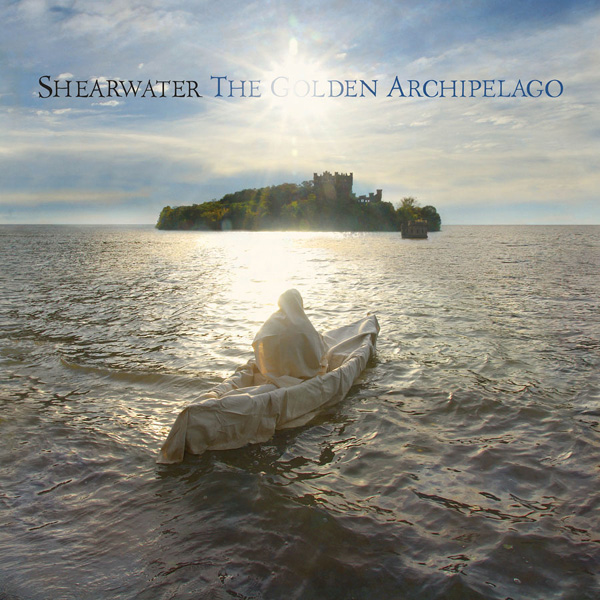
Shearwater – The Golden Archipelago

Rating: ★★★★☆

Two years ago Jonathan Meiburg released Rook under his project, Shearwater; it was an operatic endeavor, which came across forceful in moments, while resting quietly in others.  His band returns with The Golden Archipelago, along with an abbreviated dossier, unless you opt to shell out the bucks for the completed dossier.  An album such as this is not something to take lightly; it’s full of depth and precision, all of which successfully push the listener into the realm of masterpiece as created by Meiburg and associates.

“Meridian” is a tricky album opener, especially for those mindful of the band’s past releases, Rook in particular.  Slowly the song builds upon the quietest strum of guitar matched perfectly with Jonathan’s falsetto.  The tone is somewhat ominous, especially with echoing vocals in the background and the orchestral touches.  You expect a crash of some sort, similar to that exhibited on the first track of Rook, but instead, the song sort of fizzles to an end suddenly.  It pushes you into “Black Eyes,” which is perhaps the loudest of the tracks on this collection.

Once you arrive at “Landscape at Speed” you begin to arrive at core of the album.  Consistent rim shots provide a hollow percussive element to barely audible strumming.  Instead of focusing this number on the guitar work, Shearwater fills out the space with various snippets of noise.  It’s the sort of restraint demonstrated in the work of fellow Austinites, Spoon; these sorts of approaches tend to keep listeners in a holding pattern of sorts, asking you to indulge yourself in the cinematic quality of the record.

However, songs like “God Made Me” are precisely what make everything Meiburg does relevant to the broader spectrum of music listeners.  His strong vocal performance in front of string instruments begs you to hold onto every emotion within, only to release it during the semi-chorus that leaves his vocals feeling somewhat scratchy like his one-time bandmate from Okkervil River, Will Sheff.  The barrage of banging pianos only heightens such a release, yet he manages to let you rest quietly as the song fades into thin air. Finally, he seems to have taken his songwriting as seriously as he’s taken the orchestration of his previous albums.

Those looking for an album constructed of singles and hits might not find such numbers here, at least not apparent to the naked ear, so to speak. “Castaways” has a pounding drum beat that illustrates that Shearwater is more than just a project of Meiburg.  But, his vocals cresting and crashing warrant the song one of the most accessible on the album, though time spent with The Golden Archipelago finds all these songs as such.

Perhaps the best summation of this album is the second to last song, “Uniforms,” existing in a dense world brought on relative noise before kicking in with powerful vocals.  Just as the vocals signal for bombast, they’re immediately pulled back in favor of a more gentle confrontation with the listener.  At  2.5 minutes into the song, you’re greeted with the complete ensemble of the band smashing everything into a raucous moment, all before the song peters out.  With that, you find yourself at the end of an album that seems to revel in the contrasting experiences of quite and loud; it’s a trick used by many in the past, yet never done in such an operatic manner as we find here on The Golden Archipelago.

[audio:https://austintownhall.com/wp-content/uploads/2010/02/08-Castaways-1.mp3]

Download: Shearwater – Castaways [MP3]

Clem Snide – The Meat Of Life

Rating: ★★★★☆

Clem Snide, comprised of songwriter extraordinaire Eef Barzelay and his constantly rotating cast of characters (this time surprisingly with two constants, Brendan Fitzpatrick and Ben Martin) are back with their latest release since their early 2009 release Hungry Bird, of which Barzelay described as a “loosely-conceived, post-apocalyptic fairytale”. This release is a more cohesive topic of conversation than the latter in what is no doubt their most polished and mature release to date. Hungry Bird was a collection of older tracks unearthed after being on the shelf for a few years, thus following a brief band fallout in 2008. This resulted in Barzelay touring solo and perfecting his craft. Following last year’s stop at Mohawk, the new material ensured this was to be a release I was looking forward to for some time.

Surprisingly, Clem Snide are still flying under the radar for most, which begs the question, when will they finally get the praise they deserve? Eef’s songwriting aptitude and unique nasal howl is obviously the most prominent feature throughout the album and the instrumentation is well constructed with the addition of three fellow Nashvillians Tony Crow (Piano, Organ), Roy Agee (Trombones), and Carole Rabinowitz (Cello). Clem Snide doesn’t take any massive leaps beyond Hungry Bird or End of Love for that matter; however, the band achieves a more cohesive orchestration rather than just relying on the aforementioned stellar songwriting. The addition of supplementary instrumentation is a bonus and helps add depth to otherwise vintage Barzelay vocal epiphanies and a solid rhythm from Ben Martin on the sticks.

Barzelay’s unique view on the mundane and unobserved is refreshing and invites the listener to see things from a new perspective; often seeing humor or beauty in otherwise sad or distressing situations. This forte is nothing new from Barzelay’s songwriting resume, but it is something at which he excels. The boisterous opener, ‘Wal-Mart Parking Lot’ is a good example, exclaiming that the sunset seen from there “has never been so beautiful.”

For the most part, Meat of Life is a case-study on the subtleties, unfortunate circumstances, the wonderfully surprising elements of a loving relationship and his growing frustration with relationships in general. ‘Denver’, a beautiful and disheartening ballad about a woman bearing his child and denying him attention, is heart-wrenching and proves a strong moment for Barzelay to show off his vocal chops. The addition of simple soft piano and percussion is an exemplary track leading into the raucous ‘Forgive Me, Love.’ This segues from the previous track’s misfortune into a statement of disappointment and complete repentance for even trying.

The desperation for affection is apparent with ‘Please’, stating that “when I sing it’s you I see, them other girls ain’t real to me. It’s just sometimes I hate to be alone.” ‘Anita’ finishes off the album with a strong, endearing, yet pitiful statement; a ballad with lighthearted word-play and beautiful organ/cello interludes.

Overall, this release is simple in tone and subject, but holds sentiment and perspectives unseen anywhere in the music landscape. Meat of Life is a strong release from Clem Snide and they continue to be one of our favorite live performances, as long as the crew stays together and true to form. You can catch Clem Snide once again at the Mohawk, May 25th and you can bet your ass, we’ll be there.

The Strange Boys – Be Brave

Rating: ★★★½☆

It’s been a little over a year since the release of their last album, but already The Strange Boys are returning with another album.  Here we find the local Austin heroes doing their twangy R&B meets country on Be Brave.  This time, however, the boys don’t seem nearly as rambunctious, instead they’ve chosen to slow it all down, spending a lot more time with swinging numbers that might just have you wrapping your arms around your favorite pal (or lover) as you swing them to and fro.

There’s an elephant standing in the corner of the room, and it’s best to get that fella out in the open right away.  Singer Ryan Sambol doesn’t have the most pristine vocal styling, and some might even call it grating at times. But, despite the fact that he never seems too polished, there is an underlying bit of charm behind such an approach.  It seems rooted in the tradition of singers who had very little traditional training, but put every ounce of emotion into their performances.  That being said, it is not a vocal style for everyone.

The first song to really put the listener on notice has to be “A Walk on the Beach.”  At first, the song seems to stumble through the first two minutes, as Sambol does his warble croon over  a light guitar track.  But, once that two minute mark hits (1:32 actually) you get a quickened pace, almost as if a train’s coming for you.  Just as soon as you get there, you get a switch, as the boys turn into a twangy swing band.  The music isn’t really swing, but you can feel the band twisting and turning you with each guitar chord, and after all, there is a blaring horn.

One of the things about Be Brave that shows a bit of a shift in musical strategy, as alluded to earlier, is that the slow burners here have a lot more of an emotional appeal this time around.  Take “Between Us” and play it on your back porch while you’re drinking with your pals, and you’re guaranteed to have your arms around each other laughing at old tales of glory.  It just has a sort of swing that gets you into cherishing times past.

The Strange Boys clearly have discovered that they can continue along the lines of their self-created genre while still pushing their sound, and their career for that matter.  “Dare I Say” is a wonderful tune, and it’s probably one of the simplest numbers on the record.  There’s a touch of barroom piano, but mostly it’s just guitar and vocal; it remains one of the more “mainstream” tunes they’ve tossed out. It’s also the song that kicks off a steady string of slow, yet solid, songs.  From this point until the end, you’ll find mellow numbers that seem more like solo affairs than anything else.  Funnily, “All You Can Hide Inside” sounds like The Strange Boys covering Jeff Buckley, yet you’ll still find it enjoyable.

Be Brave comes to you with little press, at least in contrast to …And Girls Club, yet for those who listen closely, it’s the most complete recording The Strange Boys have managed to put together.  Aesthetically, it remains the same, but it’s their ability to find the groove from simple guitars and vocals that manages to make this album more successful than the last. Cheers boys, you’re doing us Austinites proud.

[audio:https://austintownhall.com/wp-content/uploads/2010/02/08-Dare-I-Say.mp3]

Download: The Strange Boys – Dare I Say [MP3]

Fyfe Dangerfield – Fly Yellow Moon

fyfeRating: ★★★★½

For most on U.S. soil, Fyfe Dangerfield might be a name largely unknown, but you might recognize his work with his band Guillemots.  They’re a quartet of indie popsters who’ve made waves with British press, but now it’s time for Fyfe to take flight on his own.  Fly Yellow Moon is a remarkable debut affair, and one that will surely find fans on all sides of the Atlantic.  If you’ve ever been in love with British pop, then this is the record for you.

You’ll start your listening experience with “When You Walk in the Room,” and you’ll find your feet stomping.  This number wears the influence of all sorts of British pop, primarily from the late 90s.  Fyfe’s throaty vocals find their way into your heart; this has to be one of the single’s of the year.

But just as he has you stomping your feet to the pop, he spins around and goes all Richard Hawley on you.  For the next couple of tracks he’s a barroom crooner, and one that seems every bit as passionate and believable lyrically. “Barricades” might rest a bit too much along the lines of Travis, but there’s really nothing wrong with that now is there?

Just as you get comfortable sitting in a bar with your favorite pint, he mixes it up again.  The piano-laden”Faster Than the Setting Sun” has a darker quality than previous tracks, as guitars atmospherically fill out the background.  At this point, as a listener, you should remark to yourself the dynamics of Fyfe’s vocal performance on the album.  You can throw the variance of each song on the Fly Yellow Moon into the ring of praise; it’s clear that you’re witnessing one amazing songwriter.

And so the album goes into a bit of an acoustic interlude, pushing two great acoustic songs upon you.  While “Livewire” has a generally folky feel to it, “Firebird” sneaks in with a bit more of an ominous tone to it. Everyone should appreciate Dangerfield’s ability to mix it up, even when the instrumentation seems to be somewhat of the same vein. It’s hard not to say it too much, but not a single song here holds onto its predecessor, yet they all fit together extremely well.   Just wait until you go from the quiet “Don’t Be Shy” into the steady beating “Any Direction.”  If you added a little bit more bass and snare to the mix, the latter would surely be a club hit across the globe.

Stepping out from behind the safety of a band is never an easy task, but Fyfe Dangerfield seems to have done so with such grace that you’ll be astonished at how remarkable a debut this actually is.  It’s not an album bogged down by modern indie rock conjecture or hipsterdom. Fly Yellow Moon is just a refreshing collection of great pop tunes, and in being such a record, you’ll fall in love with just how refreshing it feels.

[audio:https://austintownhall.com/wp-content/uploads/2010/01/05-When-You-Walk-in-The-Room.mp3]

Download: Fyfe Dangerfield – When You Walk in The Room [MP3]

Balmorhea – Constellations

balmorheadRating: ★★★☆☆

Last year, Austin’s Balmorhea released their grandiose coffee-core album , All is Wild, All is Silent, to much critical acclaim. Its epic sprawl captivated listeners.  Celebrating the dynamics in the title, it was an album of polar opposites, sometimes soft, and other times more upbeat. However, with their newest album, Constellations, there is nothing for the musicians to battle, only the black emptiness that is dotted by billions upon billions of sparkling stars.

For the most part, the band succeeds in fulfilling the aesthetic instilled in listeners who pay close attention to the title of the album.  Everywhere you look, there seems to be empty space on the album, or places the band could have easily filled with limitless touches of their inspiring instrumentals.  But, where as they chose to let those moments loose on All is Wild, All is Silent, here they show restraint, barely letting the control out of their crafty hands.

Some listeners might yearn for the more moving moments of the past, but Balmorhea seem keen not to repeat themselves, which is an honorable stand for an up-and-coming group; Constellations is not the same album, and it refuses to be such.  Instead of forcing violins and piano work into the organic construction of the songs, these kids hold back, filling the spaces with just the right amount of music necessary to hold onto listeners.  The most spirited you find them is on “Bowsprit,” a song you will adore if you love to hear the sounds of a string instrument (even guitar or banjo) plucked properly.  But, if you came in search of a repeat performance from last year, then you will be severely disappointed, as the one thing this album lacks if proper movement; at times it seems far too stagnant for its own good.

But, one thing that made their debut album so convincing was the way the songs built upon little moments, creating a voyage for listeners to take.  Constellations, which is a fantastically cohesive grouping of tunes, doesn’t seem to operate along those same lines at all.  Where you expect to find a rapid pace, or just a guitar that rolls you along, you find Balmorhea pulling back upon the reins.  Where they could increase volume, they instead choose to hide in the vastness of the night sky.

Perhaps this is what the band expected of their performance.  They wanted to dot the night sky with their own inspirations; they wanted to fill the void in our listening experience with their own light touches of instrumental genius.  If it is to be read as such, then Constellations is one of the most successful concept pieces you will find as of late.  It is a record that defines looking into the night sky with your telescope whilst putting musical notes inside your head.  Balmorhea have filled that black canvas in the night, or in our lives, with generous drops of light, and for that much we can be thankful.

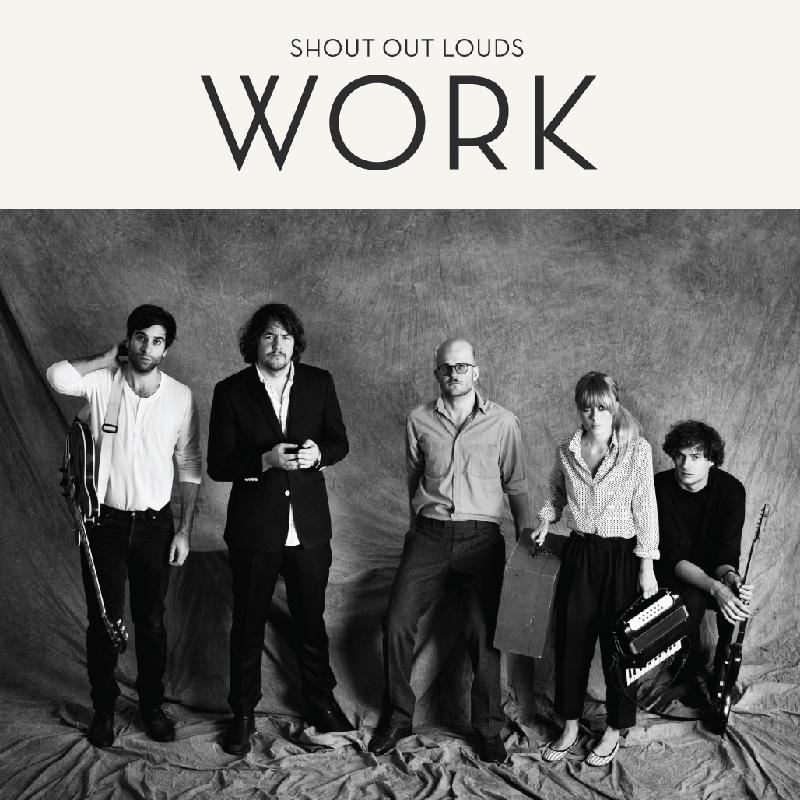
Shout Out Louds – Work

shout-out-loudsRating: ★★★★☆

It seems like our obsession with Sweden has faded since a few years back, but luckily for us, there is still a lot of great music coming from the Scandinavian country.  It’s the home of Shout Out Louds, a quintet who has slowly built a following in the States by releasing several albums chocked full of pop hooks and those crafty Swedish melodies.  Work is another solid display of a band who knows their strengths, who can pull them off with such precision that it’s hard to find a thing wrong.

We’ll start our journey with “1999,” a tune that spends its first thirty seconds tinkering away on the piano before Adam Olenius’ vocals kick in to really get the song going.  Just for fun, they toss in a couple of “oohs” to grab you with a little hook.  But, where some bands might push the limit during the chorus, Olenius has the band pull back, leaving a perfect pop gem in the wake.

You can continue to push through this record, and those of you who are familiar with Shout Out Louds will notice that the work of Phil Ek (producer) has really put the spotlight on the group’s assets.  Sure, they have those New Order guitar chords cutting in and out of the entire album, but you’ll definitely take note of the percussion.  One of the things that made bands of this ilk so fashionable was the drummer, and Eric Edman definitely solidifies everything in the music.  He’s steady, and his delicate touch in songs like “Candle Burned Out” display his dynamics behind the kit.

Percussive elements are not the only noticeable difference with Work; Shout Out Louds have gradually grown a little bit softer.  On Howl Howl Gaff Gaff, they seemed a lively bunch, eager to have you bounce around the club to their tunes, but that’s all changed.  It appears now that they just want you to nod your head and tap your toes, which has admirable traits in itself.  “Too Late, Too Slow” has a jangle to the guitars, but instead of pushing forward as the group has done in the past, they let vocal interplay between Olenius and Bebban Stenborg carry out the song.  While it may not jump up and drag you to the dance floor, it might convince you to grab your lover and dance once around in the living room together.  “Walls” does much the same thing.  It chugs along pleasantly with steady guitar, and while you might find it catchy, it’s a restrained sense of joy.  And, the chorus is quite emphatic, showing they’ve never strayed too far from where they began years ago.  These are how perfect pop moments are made.

Just make sure that you save your dancing shoes because the group hasn’t given up entirely on their knack for throwing in a solid groove.  You might have to wait until the end of the record, but “Show Me Something New” is not only one of the best tracks in this collection, it’s the one most likely to get you moving frivolously to and fro.  Using Stenborg to balance out Olenius’ voice perfects the chorus, and it seems the group can do little else to win you over.

Shout Out Louds seem to have outlived the fad of the Swedish invasion, and they’ve done so by not sacrificing their original formula.  Instead, they’ve chosen to perfect each inch of recorded material; they’ve pushed Adam’s vocals to new levels, and they’ve pushed themselves to an entirely new levels.  Work shows a band who have finally found the place where they’re the most comfortable writing great pop songs, and we’ll all be better off for it.

[audio:https://austintownhall.com/wp-content/uploads/2009/12/Shout-Out-Louds-Walls.mp3]

Download: Shout Out Louds – Walls [MP3]

Efterklang – Magic Chairs

Efterklang_Magic_Chairs_emailRating: ★★★★½

Following on the recognition in part to a dedicated fan base, a live repertoire rapidly becoming known as one of the best acts to catch in the world, and a newly inked contract with 4AD, the Copenhagen-based quartet Efterklang are set to release their 3rd studio album, Magic Chairs. Trying to improve on Parades, one of the best albums of 2007 and last year’s vastly underrated live recording, Performing Parades is a difficult feat. Luckily for the listener, Efterklang are fully committed to the challenge.

In comparison, this release is by far their most extroverted album and with their imminent reprise at SXSW 2010, after a US tour with locals Balmorhea, these indomitable souls are positioned to make big waves. On this release, they adopted a unique approach to recording, displaying their acumen for performing. Ask anyone who has seen their show and they will tell you that their skill flourishes with their unrivaled live presence. These songs were born in a live venue and after the blemishes were removed and the arrangements completed, the setting was reproduced in the studio with the help of their touring members including siblings Peter and Heather Broderick. The tracks were then mastered with the help of famed British producer Gareth Jones (Depeche Mode, Interpol, and Grizzly Bear). The overall aesthetic is obviously something taken very seriously as Efterklang has enlisted Hvass & Hannibal to once again produce beautiful and provocative album artwork.  

With Magic Chairs, Efterklang has bridged the gap into a more accessible realm of pop music. The first single is the relentlessly catchy “Modern Drift” which opens with a simple piano pattern soon paired by Casper Clausen’s deep and vibrating vocals before building into a sound of trademark Efterklang as we know them.  This back to basics style is quite a leap from earlier releases, especially their 2004 debut Tripper. In doing so, they may have abandoned a few fans who have grown used to the more prominent electronic influences from Mads Brauer, Casper Clausen’s soaring (though unrecognizable) lyrics and Peter Broderick’s vast string arrangements.

Efterklang seek perhaps a more profitable labor and have mostly abandoned their immense, cinematic presence and incomprehensible lyrics for a more understandable, logical approach. Songs titles “Harmonics” and “Natural Tune” are obvious indications of this endeavor. However, what they have left behind has not completely vanished and with repeated listens, the layers remain; though more subtle and carefully placed. This attention to detail is most impressively heard in the one-two punch of “Raincoats” and “Harmonics”, which is by far one of the strongest moments on the album. Here they draw obvious influences from the Dirty Projectors by means of majestic harmonization, utilizing heavy percussive elements, and the addition of subtle Radiohead-esque arrangements.

The one weak moment in the album for me is the bubbly “Scandinavian Love”, which is undeniably the most poppy track on the album and although the rifts ate catchy, it feels like a rushed product. I will withhold-complete judgment until I hear it performed live.

Other highlights include “The Soft Beating” with soaring vocals and subtle electronic influences which calmly and delicately build into a strong finish where “it all comes down” and the dreamy, thought provoking “Mirror Mirror” which seems to feed my imagination seems like the only obvious bridge between their last release, Parades. The last track on the album, “Natural Tune” contains a beautiful and supple duet with simple piano and guitar interplayed. It’s a stunning finish to one of the best albums of the year thus far and I fully expect to find it on many best of lists.

After multiple listens it’s truly a difficult process to find fault besides those mentioned above. That says much about Efterklang’s work ethic and their endless steps towards pop perfection. I reserve a half star due to the fact that these songs were instinctive live songs and fittingly their place is in a live setting.  Luckily for them, I’ll be at SXSW seeking them out with my gold half-star in hand. 

Also the whole album is streaming right now over on Sound Venue.

[audio: https://austintownhall.com/wp-content/uploads/2010/02/01-Modern-Drift.mp3]

Download: Efterklang – Modern Drift [MP3]

Holy Fiction – Hours From It

holyRating: ★★★☆☆

Somewhere on the long stretch of HWY 290 between Houston and Austin, Holy Fiction was formed from the ashes of various other bands who’d been playing in their respective local scenes.   After countless demos and honing of their own musical voice, the band is now set to release Hours From It, their debut LP.

Turning on Hours From It, you’re bound to recognize Evan Lecker’s distinctive voice.  It dwells somewhere in the land between The Twilight Sad and Shearwater, though we’ll lean more towards the latter since the band hails from Texas.  You can’t help but ignore the comparison, however, as the way he carefully extends certain syllables and seems to hold notes just a second longer than most define a great portion of the album.

It seems that the story of Hours From It relies upon sweeping movements and accentuated elements.  Take “Song 10,” which holds onto a somber emotion, but it’s fleshed out by orchestral touches and keyboard notes in all the right places.  Such light notes take what would seem an ordinary song and carry the tune unto another level entirely.  These are insights into the careful planning the group spend in crafting their debut.

The title track, “Hours From It,” provides listeners with the opportunity to hear what the band may sound like in a live setting, or on future recordings.  It’s a grittier tune, with the vocals coming across less pristine, which actually does a lot for the emotive quality of the song itself.  Then, just as the song seems to fade away, it begins in an entirely new direction, but with the same unrefined sound alluded to earlier.  Holy Fiction backs that up by closing the album with another similar track, “Yes They Were Here.”  As unfortunate as this may sound, Lecker’s vocals are at times too pristine.  Just a little bit of scratchiness makes him all the more enchanting, and that is precisely what the last two album tracks offer listeners.  The music, too, benefits from this dynamic, as the vocals no longer seem to be simply hiding within the song; they stick out a lot more, giving the lyrics a bit more definition.

As debuts go, Holy Fiction has to be pleased with the work they’ve put into Hours From It. The record shows careful thought in the way the songs were pieced together, which demonstrates that this won’t be the last we hear from this band.  All the clarity in the instruments creates vibrant soundscapes that rise and fall with Evan Lecker’s voice, leaving listeners yearning for more.  Keep your eyes on the road ahead, as this shows a bright future for HF.

[audio:https://austintownhall.com/wp-content/uploads/2010/02/05-Song-10.mp3]

Download: Holy Fiction – Song 10 [MP3]

Field Music – Measure

field_music-measure-albumcoverRating: ★★★☆☆

The Brewis brothers have just returned from their brief hiatus, which featured several decent albums by their respective projects (School of Language and The Week That Was).  But, as they’ve reunited with Field Music, they present the masses with Measure; it’s a burdensome album that takes twenty songs and goes beyond the 70 minute mark.

It becomes apparent that the group hasn’t strayed too far from their staccato style prog when you first press play.  The piano even has a stabbing sound to it, albeit one surrounded by various layers of texturizing.  This will ultimately be the story of this album, it’s the inclusion of textures and layering that fleshes out Measure. Some listeners will see them as sort of a British version of Pinback.  Both bands operate on these mathematical constructs, as if each instrument has been placed into the stero by way of equation rather than heart (that’s not to say I don’t like that about them).

Unlike some of their brethren in The Futureheads or Maximo Park (bands who’ve joined the group in the studio and on the stage), the one thing that doesn’t push this record forward is that it does seem so calculated.  You can cruise through the first five songs until you land on “Effortlessly,” which is the first song that seems to really draw you into the record itself.  Then you sort of wander back and forth through meandering instrumentation until you hit “You and I,” the tenth track.  Perhaps the slow-core tempo is really the breeding ground for inspiration here because the lacking of pace in this number is what makes the jump in the volume during the chorus seem to emphatic.

As a fan of the band, Measure is still really hard to follow along all the way until the end.  Like Sufjan when he released Illinoise, this whole thing will sort of wear you down; it’s just too long for a modern listening experience (that’s a whole other issue).  Formulaic rock is great, and there are a lot of incredible little moments throughout the whole affair, but you have to recall be on your game as a listener to take this whole thing in one sitting.  Try as I might, and I’m a fan mind you, I couldn’t get through it all at once.  Songs bled into one another, and the larger idea of the record sort of faded away.

But, you can take a different approach, one that will reward you.  Listen, at first, in brief sittings.  Take three or four songs at once, then pause and reflect.  “Measure” your thoughts, if you will.  Might I suggest starting at “First Comes the Wish,” which just happens to be one of the stronger songs.  Start here, then go forward two song, then maybe skip around. Although I like the record a lot from this point until the end.  In pursuing a different listening experience for yourself, you will define this album on your own terms.  It will reveal itself to you in an entirely different manner than perhaps it did me.  This way, you won’t be worn down or burdened by the large undertaking.

Taken in one sitting, this album bleeds together, which makes the formulaic sound a little weaker than Field Music intended.  But, if you can move in and out of the record, finding your own passage through Measure, then you will be rewarded, as the group has cleverly constructed a piece of art that deserves your deconstruction.

Lightspeed Champion – Life is Sweet! Nice to Meet You

lightspeed-life-is-sweetRating: ★★★½☆

Years ago, Dev Hynes had it all as a member of Test Icicles.  The English press fawned over him and his mates, and yet it didn’t last.  Still, he has maintained his role in the spotlight by pushing forward with Lightspeed Champion.  His second album under the moniker, Life Is Sweet! Nice to Meet You, carries him in a slightly different direction than his first outing, albeit one that exhibits Dev taking more musical risks.

The moment you realize Dev has grown up, at least in the musical sense of the word, is the moment you arrive at the album’s single “Marlene.”  For one, the production here has been amped up quite a bit, which surpasses his earlier work on Falling of the Lavender Bridge.  Aside from the production, the arrangements here are much larger, and a touch more significant.  Just take the very British “The Big Guns of Highsmith,” which uses a chorus from what appears to be a troupe of actors who adore Sweeney Todd.  Such touches have more emphasis this time around, rather than just acting as filler for the empty space left behind by his lone guitar.

What hasn’t changed a great deal is the subject matter of his songs. He still lives in a world where being left alone and pining for women seem to dominate his thoughts.  One can’t blame him too much, as he’s still a young chap, but the future will show if his writing offers more for the listeners.  Still, while his lyrics often seem somewhat adolescent, you can see hints of a young Jarvis Cocker lying in wait.  His storytelling and his affection for large production bring that all to one’s mind.

Those looking for classic Dev, at least in the vein of his other album, will find “Madame Van Damme” a delight.  It’s one of the few songs on Life is Sweet… that doesn’t seem to demonstrate his progression as a songwriter.  It feels as if he has regressed in age on this song, which also alludes to the lyrical content.  All that being said, it’s still a great song.

One of the great surprises for those familiar with Dev is that he offers a lot of variation throughout the album.  “Middle of the Dark” wraps up the end of the album with a bit of soaring vocals atop a pounding piano.  “Smooth Day (at the Library)” seems to find Dev living it up in that dessert bar, singing out his heart, leaving no emotion untouched.  You can’t forget the Western-ish feel of “Sweetheart” either! Lightspeed Champion is interesting in this fact because you clearly see all the influences of the man behind the project; he never seems to leave a musical stone unturned.

At the end of the day, Life is Sweet! Nice to Meet You is another good Lightspeed Champion record.  You’ll find that there are several great songs for you to dwell upon, all depending upon your mood and desire for subject matter.  Most listeners will relish the fact that the album is much more dynamic than Dev’s previous work, leading the masses to believe that there is only more great moments to come.

[audio:https://austintownhall.com/wp-content/uploads/2010/02/02-Marlene.mp3]

Download: Lightspeed Champion – Marlene [MP3]

1 71 72 73 74 75 102
Social Media Auto Publish Powered By : XYZScripts.com