Free Energy – Stuck On Nothing

Rating: ★★★☆☆

Since they released their first 7″, the name of Free Energy has hit all across the blogosphere, garnering hype as a straight ahead rock ensemble a la Thin Lizzy or Cheap Trick.  Backed by the production talent of LCD Soundsystem‘s James Murphy, no one had any idea how far this band could really go. Finally, Stuck on Nothing is upon us, and it lives up to all the accolades for the most part.

That first riff off “Free Energy” hits you hard, with a little rock emphasis thrown in by the excessive cowbell. It’s easily the most hook-laden on the record, and it’s one you could easily find lying on mainstream radio channels alongside the likes of Weezer.  Sure, that seems frightening nowadays, but you know you liked the blue album too!  I mean, its filled with the exact same sort of mediocre guitar solos in the middle.

They don’t stop bringing you their cookie-cutter rock moments for the first several tunes on Stuck on Nothing.  Despite the originality in the opening minutes, you’ll find that songs like “Dream City” just have that sort of hook that you imagine your parents got stoned to during college, which probably means you did the same in high school at some point. But, you’ll find that the band is just more than a nostalgic throwback once you get to “All I Know.”  Yes, it does have a very similar riff aesthetic, but slowing down the pace of this track reveals that Free Energy can grab your attention without being overtly in your face all the time.

From here on out, the record begins to really hit its groove.  The band discarded the balls out fury they opened the album with, opting instead to push their sound just a little bit further by working on those guitar solos, and in fact, in doing so, they’ve made the rhythm guitar moments sound a great deal more effective.  It’s this sort of song construction that creates ultimately more enjoyable moments than those fueled by cock-rock.  Sure, you can hear all sorts of Thin Lizzy over “Young Hearts,” but Free Energy somehow manage to make it all their own (most likely due to a singer that is not Phil Lynott). “Hope Child” is another step into the band developing their own sound entirely.  They take the classic guitar stomping moments that have been present throughout, but they throw a bit of California punk vocals atop the whole mix.  It’s an effective move, one that makes the band sound a infinitely more relevant in today’s musical climate.

As you can see, the one thing that the record really lacks is excessive creativity.  That being said, no one is going to deny that you’re going to have a whole keg worth of fun jamming to this record all Spring long.  Occasionally it’s okay to let go of all pretense and just let your hair blow in the wind, and Free Energy is here to be that band for you.  Stuck On Nothing brings you exuberance for days, and as the sun comes out in March, could you ask for more?

[audio:https://austintownhall.com/wp-content/uploads/2009/07/free-energy-free-energy.mp3]

Download: Free Energy – Free Energy [MP3]
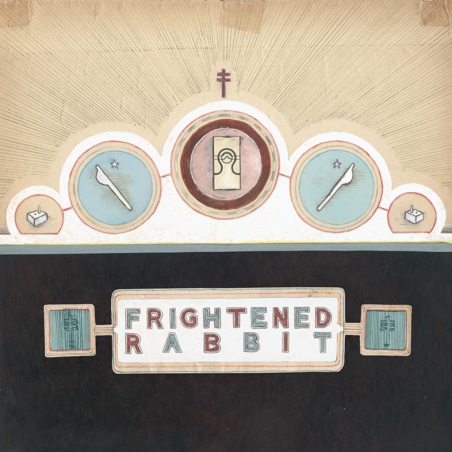
Frightened Rabbit – The Winter of Mixed Drinks

Rating: ★★★☆☆

Riding the waves of praise since the release of their last album, The Midnight Organ Fight, Scotland’s Frightened Rabbit are poised for their breakout album.  They’ve amassed a large following built on their recordings and a knack for delivering powerful shows to audiences across the globe.  The Winter of Mixed Drinks finds the group middling between intimate club group and powerful arena-ready rock band.

The Hutchison brothers, Grant and Scott, remain the core focus of the band.  It’s Scott’s vocals that dominate throughout the record, and Grant’s drum tracks that foreshadow a blistering live show.  But, at times, it doesn’t appear as if too much musically is going on within the songs aside from these two, despite three other members now being part of the entourage. Take “Things” or “The Loneliness and the Scream,” for example, which don’t actually have too much traditional songwriting to them, at least as far as the instrumentation dictates the song.  In the latter, it seems as if the guitar is merely there to keep Scott on pace.  This isn’t a huge knock against the band, as Hutchison’s voice can carry the band alone, but it does lead you to wonder precisely what the songwriting process was during recording.

“The Wrestle” is the first song where you can hear a bubbly bass line just beneath the surface of the vocals.  In creating this underlying tension, along with a staccato-sort of guitar strumming, the vocals really pull at you.  It’s such a song where you can picture the band belting it out on stage to throngs of adoring fans who all sing along simultaneously.  These are the type of moments you came to expect from Frightened Rabbit.

Guitars finally begin to crash upon your ears when you come to “Nothing Like You,” which is the fastest song on The Winter of Mixed Drinks.  This is the sort of song that has the pacing and drum work to really win over fans in the live setting, but for some reason it doesn’t really seem to fit into the collection of songs here.  Most of the songs have a slower, almost folk approach, so it feels sort of lost.

Much should be noted of the possible influence of fellow Scots The Twilight Sad.  Many songs seem to be coated in atmospheric noise, but only as an extension of the song.  “Not Miserable” has sort of a slow, drawn-out beginning, fleshed out by a fuzz in the background, whilst piano lines sputter along.  It’s something that leads you to focus on the lyrical content, which is perhaps a very current Scottish trend.  Then again, it seems like using atmospheric backing all about is just a general fad in the industry.

Once you finish your listening experience, it’s hard to sit down and think back to superb moments on The Winter of Mixed Drinks.  Every single song is pleasant, and some might say they are all good tunes, but none of them really achieve that feeling of exceptionality one expected from Frightened Rabbit this time around.  They filled the record with decent tunes, but leave you feeling somewhat indifferent, which is something you surely can’t say at their wonderful live shows.

[audio:https://austintownhall.com/wp-content/uploads/2009/10/swim-until-you-can_t-see-land.mp3]

Download: Frightened Rabbit – Swim Until You Can’t See Land [MP3]

Jason Collett – Rat a Tat Tat

Rating: ★★★½☆

Many people will recognize the name Jason Collett for his involvement in Broken Social Scene, but this is not his first foray into solo work. Rat a Tat Tat is Collett’s fourth official album, and it has all the trademarks of his previous work, while also stepping forward into a bit of playfulness that wasn’t present on earlier recordings.

Opening this album, you find Jason dealing with relationships in his own way.  “Rave On Sad Songs” reveals his prowess as a songwriter of heartfelt tunes, something probably not accredited to his role in BSS. It’s a soft spoken song relying upon soft piano and very gentle guitar strums, which allow his distinctive vocals to tug at your heart.

Such mellow numbers were commonly featured in his last few releases, especially Idols of Exile, but as you move into tracks like “Love is a Dirty Word,” you find that Collett has gotten a little bit more lively.  As the bass line seems to shake your body, Collett delivers his idea that love is not quite all its cracked up to be.  Bouncing rhythms haven’t always been his forte, but he pulls it off here, showing that he’s got room to grow as a songwriter.  The idea that Jason is out to goof around a bit with his audience is only made stronger when you listen to “Bitch City,” which has a vocal performance reminiscent of Devandra Banhart, not to mention the subject matter.  Oddly, that same vocal effect shows up once again at the end of the album “Vanderpool Vanderpool,”  something that wasn’t noticeable on his earlier releases.

On his last record, Here’s to Being Here, we saw him exhibit a little bit of straightforward polished pop.  He still brings those lighthearted moments to this album, on songs like “Cold Blue Halo.”  There’s a fuzzed out keyboard groove that opens the number illustrating his widening set of tools, some provided by his longtime backing band, Zeus.  All that being said, the tune has a bit of foot shuffling feel to it, something sure to win out in the live setting. All playfulness aside, Collett still has the ability to write quiet numbers that find their way into your regular listening rotation on iTunes. “Long May You Love” and “Winnipeg Winds” are two songs that illustrate this point perfectly, as both have the steady stroll of acoustic pop moments attached. “Winnipeg Winds” creates an effective wind motif with the howling vocal backing that haunts the song when Jason is not at the helm.  One can assume he’s added these quiet moments to the record in hopes of keeping a perfect balance, and he succeeds in accomplishing that feat.

Focus at this time is surely on the upcoming BSS release, but aside from that project, it’s clear that Jason Collett has his own style and his own agenda to push.  Rat a Tat Tat is just another record that demonstrates what a strong songwriter he is, proving that he grows stronger as his music evolves.  Sure, it’s a lot more fun than previous works, but by making that change, Jason balances out this record, giving himself more options to write great songs in the future.

[audio:https://austintownhall.com/wp-content/uploads/2009/12/jasoncollett-loveisadirtyword.mp3]

Download: Jason Collett – Love is a Dirty Word [MP3]

The Morning Benders – Big Echo

Rating: ★★★½☆

California’s The Morning Benders (though they claim NYC now) have been flying under the indie radar until recently.  They’ve put out multiple releases, but the hype seems to have finally brought the band to the forefront with Big Echo.  A lot of this will be due to the production credits being given to Grizzly Bear‘s Chris Taylor.  While you can definitely feel the touches of Taylor, especially in guitar and bass sounds, The Morning Benders seem to have grown into their own sound.

Remember how Phoenix opened up Wolfgang Amadeus Phoenix with its two best tracks?  Well, The Morning Benders seem to be applying that strategy to this album, and these opening numbers are blissful moments you won’t soon forget.  “Excuses” begins the album with a little bit of tinkering on the piano while some beach guitar washes over the song like waves.  All this arrives prior to the sweeping vocals being introduced along with the atypical percussion (not necessarily drums, but still percussion).  Mid-song, they seem to do a bit of meandering, but once again, the band kicks in at the 3 minute mark with that percussion and creative bliss.  They’ll follow this up with “Promises,” one of the songs that definitely resembles the work of the producer.  That bass and guitar sound definitely hit at the heart of Grizzly Bear, but The Morning Benders make it their own by coating the tune in a wash of pop.  Also, the vocals are not as pristine as Droste’s, which actually make a more compelling statement of musical prowess.

If you were to find a detractor to this collection of songs, you’ll find that it hits really hard up front, offering two brilliant songs, but then it kind of takes a step back.  Instead of pushing forward with their California avant-indie pop moments, they recline.  They trade the vibrant noises they began the album with for a set of bedroom moments, such as “Bedroom Sighs.” It’s an aptly named song, as you definitely feel as if the band has relaxed, wavering just a bit.  The end of the song does have sort of climactic moment near the end, but it just sort of loses the punch of the earlier moments of brilliance.  “Mason Jar” is similar, as the music is less movement oriented, choosing to push the focus on the vocal melody.  These aren’t necessarily bad moments by any means, it just lends the record to remaining a bit unbalanced.

However, “All Day Day Light” definitely kicks the album back into gear. You’ll find it as one of the more inspired moments on the latter half of the record, and it seems like the band could have employed a little bit different track-listing to balance out the power of tunes like this with the quieter moments.  All that being said, this number really shows you that the band is able to move beyond the producer.  It’s filled with energy, not to mention a little bit of sonic noise that shows The Morning Benders have a creative talent all their own.

And so Big Echo comes to a slow end with “Sleepin In,” another bedroom listen.  Although at times the record seems a bit unbalanced, it’s clear that The Morning Benders are more than just a masterwork of Chris Taylor.  They have a different spin on their own creation of pop, leaving the listener with a lot more bright moments.  Even the slow songs start to evolve on their own after repeated listens, so stay with this album, as you might have just found yourself a new favorite band to follow, and an collection of songs that will keep you occupied for weeks to come.

[audio:https://austintownhall.com/wp-content/uploads/2010/03/02-Promises.mp3]

Download: The Morning Benders – Promises [MP3]

Ted Leo and the Pharmacists – The Brutalist Bricks

Rating: ★★★★½

Ted Leo has been around long enough to have amassed a great deal of influences and personal touches on his musical repertoire.  Throughout the years he’s tried hard to squeeze all those influences into one cohesive album, to varying results.  Finally, The Brutalist Bricks sees Ted meeting expectations, combining influences and flair to create one of his best records to date.

His voice opens the album on “The Mighty Sparrow” with his trademark yelp meets croon.  You’ll notice that ringing guitar in your ear just before the drums kick into the song.  But, like the perfect Ted song, he slows it down in the middle just before a solid drums solo.  It’s this kind of classic songwriting that makes his music seem so refreshing and enjoyable listen after listen.

Then the group kicks it up a notch with “Mourning in America.”  Here is the hard-hitting song that began to surface on Living with the Living, but instead of a non-stop barrage of fury, he tones it down around the 2 minute mark.  Somehow, the rockers on this album seem so much more refined, as if he found the perfect recipe for his creations.

You’ll find yourself already involved in the album by the time you reach the one-two punch that is “Ativan Eyes” and “Even Heroes Have to Die.”  It’s the way that he strikes the chords that grabs at you emotionally in “Ativan Eyes,” but the vocal performance near the end grabs you when he strains to push his notes a bit higher.  The latter number is one of the catchiest tunes Ted has written, yet you’ll find it hard to figure out precisely why this is such an incredible song.  It seems like any other song he’s done, until you hit that ridiculously poppy hook in the chorus.  Some might say that this is a radio-friendly song, but the way he mutes his picking just prior to the “ooooooh, oh well” moment that is the hook makes it distinctively Ted.

Even when you hit the seemingly highest point, a place where Leo has occasionally fallen off in the past, The Brutalist Bricks continues to deliver great moment after great moment.  “Bottled in Cork” begins with a riotous fury of guitar and commentary of the political sort, but he pulls back and throws in an acoustic moment talking about “the path of least resistance” that carries until the end.  He mixes it up further with “One Polaroid a Day,” which is sort of a groovy number fueled by his “chugga-chugga” guitar rocking out (there might even be some sort of harmonics in the background) prior to a mini-solo, then going back into the groove.

Be sure not to miss “Bartolomeo and the Buzzing of Bees.”  For me, a long time fan, this is probably one of my favorite tracks.  The throbbing bass lines provide the backbone, which gives Ted the freedom to maneuver his guitar back and forth throughout the song.  This time he seems to relish in some negative space, filling it with feedback, but his vocals feel so warm here, that you just have to fall in love with Ted all over again (if you ever stopped).

And then there is the swan song, “Last Days.”  It’s the perfect closing statement for The Brutalist Bricks. It encapsulates everything about this record, and about Ted Leo.  It’s got that twangy guitar sound that is all things Ted, but there are some eruptive blasts throughout, both vocally and musically.  It shows you that he finally found the formula that allows him to put the tenacity and vigor of his live shows into his music without going too far on record.  It makes for a perfect personal statement for Ted Leo and should push the band further into the hearts of listeners.

[audio:https://austintownhall.com/wp-content/uploads/2009/11/Ted-Leo-Even-Heroes-Have-to-Die.mp3]

Download: Ted Leo – Even Heroes Have to Die [MP3]

The Ruby Suns – Fight Softly

Rating: ★★½☆☆

Last time out, The Ruby Suns drenched their record in clever guitar parts, using electronic elements to fill out the empty space here in there.  This time around, they’ve changed that recipe entirely, filling their newest record, Fight Softly with beat upon blistering beat.  It completely changes the dynamic of the recorded product for the band; this is something old fans will have to get used to, as it doesn’t look to change anytime soon.

You hate to have comparisons to other bands define you, but once you hear “Sun Lake Rinsed” you’ll really understand that occasionally comparisons are completely valid.  From the first beat, you start to hear the faintest hint of Animal Collective, which only increases as you continue through the song.  One of the things that differs, and this could be a positive, is that the vocals of Ryan McPhun aren’t nearly as grating as those of Animal Collective tend to be. McPhun has a softer voice, which makes this more of a bedroom dance record than something you would blare elsewhere.

Fortunately, the one thing that differentiates the music on this album is that the melodies don’t rest merely upon the notes being used.  Others have used similar styles, but have piled layer upon layer of electronica to create dense melodies.  On a song such as “Haunted House,” you definitely can see all sorts of dance references, particularly Justice, but McPhun’s voice is just to good to completely ignore.  His voice is the one thing that makes the whole sound come together, uniting all the various melodies.

All that being said, it’s easy to see detractors for Fight Softly;  it’s the same sort of criticism that has led others to dismiss the electronic pop movement altogether.  After listening through the album for several spins, you can see that the music begins to blend together.  Yes, there are differences in each song, such as the jungle homage played out in “Dusty Fruit,” but repetitive listens, especially in one sitting make it all sort of bleed into one giant collage of electro-pop madness.  One might assume that the band chose to apply this strategy purposefully, but there is far more detail to the lyrical content than one would place on a collage of beats.

The Ruby Suns aren’t asking you to make a decision on whether or not you should include yourself in the massive throngs of electronic music connoisseurs, but they do want you to have fun while you listen to Fight Softly.  It’s an upbeat record full of some bright moments that you can definitely use on mixtapes for friends, but at times, it does tend to wear you down with a bit too much on the beeps and blips front.

[audio:https://austintownhall.com/wp-content/uploads/2010/03/06-Haunted-House.mp3]

Download: The Ruby Suns – Haunted House [MP3]

Twin Tigers – Gray Waves

Rating: ★★★★½

It’s hard nowadays for a debut album to really blow people out of the water, unless you’ve had success and backing from various media outlets.  Twin Tigers have had a mild amount of press in that regard, but odds are the release of their album Gray Waves will have more people clamoring to find as much information on the group as possible.  This record moves back and forth between several musical spectrums, often times within the same song; in following this formula the group has constructed one of the most creative straight-ahead rock records in recent memory.

From the moment you click play on your stereo, you get the feeling as if you’re in for something entirely special; the discordant noise sets an ambient tone before the drums and feedback squall shatter the sonic setting on “Passive Idol.” But, just as you expect a blistering number, Twin Tigers pull back, choosing to create a more melodious moment for listeners.  Mathew Rain’s vocals seem to have some sort of echo in them, which makes him seem both haunting and dangerous.  Either way, you can’t help but to fall into this record from the get go.

“Red Fox Run” recalls some of the mid-to-late career albums of Sonic Youth, in so much as it maintains a balance between using appropriate melody and blistering noise.  Movement within the song is hard to ignore, and you can tell that thought went into every detail of the way the song unfolds.  Similarly, “Everyday” grabs you right from the get go, using a summery underlying hook that borders on bubble pop.  Still, waves of guitar noise remain in the background, and the chorus provides the perfect amount of angst that is necessary for pure rock songs.  All this before the song blasts into another direction towards the ending, only to return to the hook featured at the beginning.

Yet, Twin Tigers are not a one-trick pony they refuse to rely upon their Sonic Youth tendencies, or Rain’s howling Jesus and the Mary Chain vocals.  They’re capable of almost anything here, as “Gray Waves” suggests.  If they ended at the midpoint, this would easily be a great song of typical indie pop such as Deerhunter, but they push beyond influences, forging new ground all on their own, as witnessed by the darker vocal performance by Rain near the end.

An aside that is necessary here is the performance of Dougie Crump.  A steady drummer is a definite must if you’re going to construct mini-suites mid-song.  You’ve got to have someone who can keep everyone on track by providing the perfect rhythm; Young does this spectacularly.  On top of that, his work is magnificent in its own regard; his drum fills alone really flesh out the group’s sound as a whole. Cheers to that Richard.

All in all, Gray Waves is a remarkably refreshing debut.  Angular guitars cut and feedback throughout the entirety of the record, all the while Rain tries to utilize his vocals to keep a hint of melody to the core of Twin Tigers.  Not once can you deny the creativity and vibrance of this young band; they’re here to take their influences and build a world all their own.  And, who knows, the way they cut and paste the sonic collage here shows they just might tear that world all to pieces, but odds are you’ll still love every minute of it.

[audio:https://austintownhall.com/wp-content/uploads/2010/03/03-Everyday.mp3]

Download: Twin Tigers – Everyday [MP3]

Jaguar Love – Hologram Jams

Rating: ½☆☆☆☆

When the Jaguar Love project first came to fruition, it was initially 2 parts Blood Brothers and 1 part Pretty Girls Make Graves.  They released an incredible single with “Highways of Gold.”  That was then.  Now the band is 2 parts Blood Brothers and no parts PGMG; will this affect the sound of Hologram Jams?  The answer is yes, and you’ll be surprised how much.

Take Me to the Sea, the group’s first album was fueled with the energy you would expect from Blood Brothers, but this new band doesn’t even really resemble anything of that, other than that you can always recognize Johnny Whitney’s vocals.  That’s about the only thing remaining that you will find on Hologram Jams.

Unfortunately, the missing percussionist Jay Clark really leaves a huge gaping whole in the music.  Instead of turning to another drummer, the remaining duo went straight to a drum machine.  The Nylon Tour in 09′ featured the group as such, but many hoped that this was just a temporary solution.  Without Clark, the beats seem really uninspired, and the guitars of Cody Votalato don’t really add an extra dimension.  If you take “Cherry Soda,” it just sounds like programmed beats with auto-tune. 

After all the promise of the early recordings of this band, Hologram Jams is an enormous let down.  Lyrically, it just seems extremely cheesy. Here’s a sample from “Up All Night” : “We stayed up all night, and saw the sun come up.”  This is disheartening, as the lyrics just come across as if they were written by a teenager in the midst of his first experience with partying. 

While your nostalgic tendencies want to recall the glory dates of Blood Brothers, this album seems to damage everything that they established.  People remarked that this was a New Order meets Black Flag, but instead it comes across like a hardcore Kesha album, only cheesier. 

Perhaps the criticism is extremely unfair, and I’m being overly harsh.  I thought about that sincerely, especially after I praised this band all during the summer of 08, but I feel like I owe every person who read that stuff an apology.  This is possibly one of the least enjoyable listening experiences of my life.  I can back this up with four simple comments: 1) These sound like the beats already programmed into any keyboard you buy at Wal-Mart 2) The guitar doesn’t even seem to serve a purpose on this record 3) Lyrics are pre-pubescent 4) I just deleted this from my iTunes.

Sorry guys, but while I love early Jaguar Love moments, Hologram Jams is the least listenable thing I’ve come across in a lifetime.

Rogue Wave – Permalight

Rating: ★½☆☆☆

Let’s face it, Zach Rogue hasn’t had it easy.  He was forced into rock n’ roll because of the dot-com bust, and his band lost a former member/friend in a fire, not to mention his own health issues. Through it all, Zach has tried to put a light on his life with Rogue Wave.  Now comes the release of their fourth album, Permalight.

“Solitary Gun” begins the album on the right foot.  It features Zach’s cool California vocals with a twangy guitar.  Percussion here correlates to the song itself, brightening the aesthetic quality of the tune, despite the underlying dark theme. But, this is about as good as it will get.

“Good Morning” has Zach channeling a bit of Passion Pit as he uses synthesized beats to build the hook within the song.  Somehow, the chorus sounds a lot like Postal Service (or Owl City if you like).  It comes across really generic and uninspired, especially the bouncing beat that goes with the chorus.   Such a song is shocking considering the depth in all the songs on Asleep at Heaven’s Gate.  All that depth has clearly gone out the window; disappointing.

A lot of Permalight seems really mundane, if not a bit forced.  “Stars and Stripes” features more of that out of place electronic palette. But, what hits you the most is the redundancy of the lyrics; you here the words stars and stripes too much to recollect any of the other banal details in the song.  Similar issues plague the lyrics on “Fear Itself;” you can only repeat lyrics so many times before they lose all importance.

Don’t forget, however, that Rogue Wave has always been capable of crafting really good pop moments.  “Right With You” seems like something Nada Surf would have done long ago, or maybe Ok Go.  “I’ll Never Leave You” is also standing near the end of the album, but it’s one of the few tunes that really tugs at your heart.  It’s a mostly acoustic number with some sort of shaker echoing in the background while Zach’s vocals carry the whole of the song. Much can be said, too, of “All That Remains.”  It ends the album on a high note, at least as far as quality goes.

Looking back on Permalight as a whole, you can’t help but feel really let down.  There are some moments here, like “I’ll Never Leave You” that show the abilities of Zach and his band, but you get the feeling throughout that the album is somehow left unfinished.  It’s as if the label needed something, and this was all there was, which perhaps explains the foray into electronic backing during certain moments.  Despite a few enjoyable moments, the album struggles to rise high like the previous Rogue Wave records.

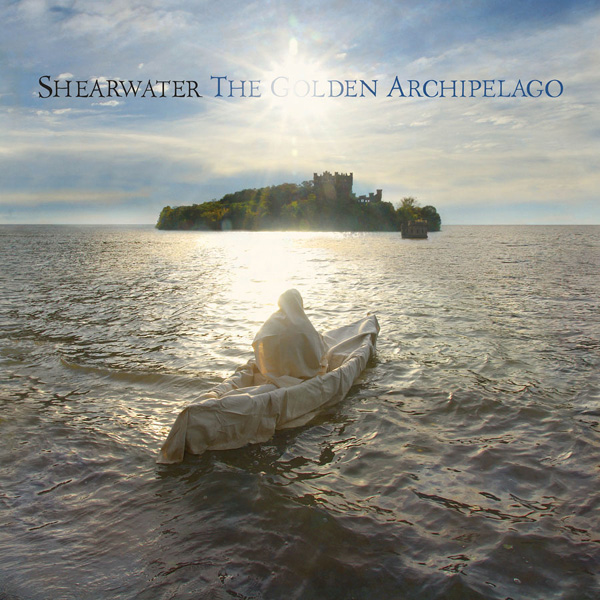
Shearwater – The Golden Archipelago

Rating: ★★★★☆

Two years ago Jonathan Meiburg released Rook under his project, Shearwater; it was an operatic endeavor, which came across forceful in moments, while resting quietly in others.  His band returns with The Golden Archipelago, along with an abbreviated dossier, unless you opt to shell out the bucks for the completed dossier.  An album such as this is not something to take lightly; it’s full of depth and precision, all of which successfully push the listener into the realm of masterpiece as created by Meiburg and associates.

“Meridian” is a tricky album opener, especially for those mindful of the band’s past releases, Rook in particular.  Slowly the song builds upon the quietest strum of guitar matched perfectly with Jonathan’s falsetto.  The tone is somewhat ominous, especially with echoing vocals in the background and the orchestral touches.  You expect a crash of some sort, similar to that exhibited on the first track of Rook, but instead, the song sort of fizzles to an end suddenly.  It pushes you into “Black Eyes,” which is perhaps the loudest of the tracks on this collection.

Once you arrive at “Landscape at Speed” you begin to arrive at core of the album.  Consistent rim shots provide a hollow percussive element to barely audible strumming.  Instead of focusing this number on the guitar work, Shearwater fills out the space with various snippets of noise.  It’s the sort of restraint demonstrated in the work of fellow Austinites, Spoon; these sorts of approaches tend to keep listeners in a holding pattern of sorts, asking you to indulge yourself in the cinematic quality of the record.

However, songs like “God Made Me” are precisely what make everything Meiburg does relevant to the broader spectrum of music listeners.  His strong vocal performance in front of string instruments begs you to hold onto every emotion within, only to release it during the semi-chorus that leaves his vocals feeling somewhat scratchy like his one-time bandmate from Okkervil River, Will Sheff.  The barrage of banging pianos only heightens such a release, yet he manages to let you rest quietly as the song fades into thin air. Finally, he seems to have taken his songwriting as seriously as he’s taken the orchestration of his previous albums.

Those looking for an album constructed of singles and hits might not find such numbers here, at least not apparent to the naked ear, so to speak. “Castaways” has a pounding drum beat that illustrates that Shearwater is more than just a project of Meiburg.  But, his vocals cresting and crashing warrant the song one of the most accessible on the album, though time spent with The Golden Archipelago finds all these songs as such.

Perhaps the best summation of this album is the second to last song, “Uniforms,” existing in a dense world brought on relative noise before kicking in with powerful vocals.  Just as the vocals signal for bombast, they’re immediately pulled back in favor of a more gentle confrontation with the listener.  At  2.5 minutes into the song, you’re greeted with the complete ensemble of the band smashing everything into a raucous moment, all before the song peters out.  With that, you find yourself at the end of an album that seems to revel in the contrasting experiences of quite and loud; it’s a trick used by many in the past, yet never done in such an operatic manner as we find here on The Golden Archipelago.

[audio:https://austintownhall.com/wp-content/uploads/2010/02/08-Castaways-1.mp3]

Download: Shearwater – Castaways [MP3]

1 49 50 51 52 53 61
Social Media Auto Publish Powered By : XYZScripts.com