The War on Drugs – Lost in the Dream

wodlp3.11298covertextRating: ★★★★☆

Slave Ambient, the 2011 sophomore record by The War on Drugs pushed the group to new heights, and was marvelously well received, turning out to be exactly what a sophomore album should, despite several changes in band members. Lost in the Dream looks to be a further push down the line of progress for Adam Granduciel and company, the result of which is a cinematic, sweeping rock narrative, that will do more than make you jam along.

The album begins with “Under the Pressure,” a grower of an opener that chips its way, shyly at first, into your heart. At close to a nine minute long song, it comes across as a small folky rock star version of an opera, with its Dylanesque lyrical wanderings, sharp guitar meandering and ultimate reprise of the piano as well as Granduciel’s repetition of the title of the song. With each repeat, it seems like Granduciel tacks on more and more lyrics to come back around to the beginning of the circle, and you’ll follow him, knowing that it will come back again with a slightly different, more intense finish. It’s a sweepingly beautiful track, with nuances and special twists and turns to stumble into.

But if you thought the first song was a treat, just wait until you reach “Red Eyes,” the exciting track that immediately follows it. An immediately infectious guitar riff, accompanied by gracefully swelling synth and steadily trucking percussion kicks things off, and while you have the same feeling of build up as the first number, but somehow the stakes are higher, already intensified by the quickened percussion. Then the number explodes with a whoop into its chorus, and we see the band cut loose in a wildness that is warmly welcome—there’s no loss of control, but the song feels like a folk song that picked up ground with some electric guitar and ran with it. It has become one of my favorite tracks from the album, as well as from the band’s whole discography; for another particular gem, see “Burning.”

It is apparent now that when this band sets out to make an album, they don’t do so haphazardly or short-winded. As with the prior release, Lost in the Dream is sprawling, with songs that seem to stretch on into the horizon and gradually fade away into an ethereal dissipation. Each track is crafted artfully—a careful balance of delicate and harsh elements over sets of long tracks. Usually this is a plus for the band, adding to their grand style and overall transcendental transportation, but this album carries on superfluously somewhat towards its final stretch, ultimately taking you out of that atmosphere if you’re not completely on board.

This is my only complaint thus far in my listening experience with Lost in the Dream, and it is still a fairly small one. The War on Drugs have created yet another album of epic proportion for you to devour and spin all week, all year, and perhaps till the next album from these gentlemen. If you’re new to the group, this is a great place to start, but it seems that every work from this band is just that.

The Coathangers – Suck My Shirt

The-Coathangers-Suck-My-Shirt-608x608Rating: ★★★★★

Honestly, I didn’t expect this from the Coathangers.  The group’s always been a blast to jam to, but in no way did I expect these ladies to offer up such a complete record as Suck My Shirt.  Four albums into their career and this is far away their best record, and for what it’s worth, the best thing I’ve wrapped my ears around.

From the opening moments of Suck My Shirt, the album offers a bit of gritty rock n’ roll that’s juxtaposed perfectly with tiny bits of pop.  “Follow Me” features drummer Stephanie on vocal duties, offering her gruff rasp over a precision drum beat.  But, the simple entrance of “whoas” in support give that catchy touch that makes the group so endearing at the moment. Personally, I love the way Stephanie’s vocals battle back and forth with her counterpart, Julia Kugel.  Take, for instance, “Adderall,” which pops up later on in the album.  The vocals are strained while the guitar work slides up and down the scales.  It would seem like the drummer has the key with her performance, but then Kugel slides in with just a the slightest yelp of “yeah” or “what” during the chorus; it completely takes a good song to the next level.

But, one thing remains the same with this modern version of The Coathangers: the ladies still bring bubbly fun to their tunes.  Sure, there’s a dark edged propulsive rhythm on “Springfield Cannonball,” but as the cymbal crashes and the guitar knifes through like a siren there’s still an element of frivolity to what they’re doing.  They’ll even get you bouncing and moving when you go ahead to the next track, “Merry Go Round.”  High-hat work coordinating with the way the guitar’s played would be enough to get you tapping your toes, but the vocals are both bratty and driven by an inherent hook.  Just imagine yourself rocking to a surf-pop act, only this time it’s fueled by ladies with a sinister sense of humor and fun.

Still, it’s not all pop spun on a knife’s tip; there are some generally sweet songs lurking throughout.  For one, you can take the quieted effort on “Zombie,” which has one of the most gentle vocal displays the band has to offer.  Even when they jump the pace up a bit, there’s an element of enchantment coming through your speakers. It works well with a song like “I Wait,” that offers almost a jazzy crooner feel to it, though done in the vein of an evil temptress.  It’s just a sign that the group has it all at the moment.

I’m not generally one to fawn too much over a record, but I don’t know why anyone would have anything negative to say about Suck My Shirt.  It’s playful in all the right spots, yet filled with ballsy rock n’ roll moments that will please any listener. For what it’s worth, The Coathangers have been building toward this for a long time, but it feels like this is the culmination of all their hard work coming together perfectly. I dare you to disagree.

Warm Soda – Young Reckless Hearts

warmsodaRating: ★★★★½

When a musician steps away from a well-followed act, it’s difficult to say where things will end up.  But, in the case of ex-Bare Wires member, Matthew Melton, his move to form Warm Soda seems to be paying off immensely.  The band’s first album, Someone for You was spot-on power-pop, and Young Reckless Hearts picks up where that album left off, smoothing out the edges towards perfection.

“Going in Circles” starts the album off, indicating that while the riffs still maintain their crunchy edge, they might be polished up just a bit. The track offers a smoother delivery than previous Warm Soda tunes, though it still has that powerful driving rhythm prompted by the pounding drums.  Then you’ll move right into “Postcards,” which employs more of an angular guitar cut.  Personally, I love the way that Melton moves in and out of different vocal ranges within this number. You can then push forward to the record’s title track, “Young Reckless Hearts,” featuring a guitar part that our parents would have happily air-strummed at their favorite arena-rock show. However, there’s still an intimacy with what Melton and his cohorts are crafting; there’s an inherent warmth to the way vocals are delivered and how the pieces all fit together.

Honestly, the greatest thing about listening to Young Reckless Hearts is that you’re not going to find a single track that you’ll want to skip over, even though we’re all guaranteed to find our own favorites.  My last few rounds I’ve really been enjoying “When Your Eyes Meet Mine.”  It has a call-and-response backing vocal that really adds some pop-sensibility (as if much more was needed) to the song; it also has Melton working with my favorite vocal inflection. “Things That We Said” is also another winner, in my book.  If you jumped into the track just prior to the 1 minute mark, you’ll hear exactly why I love this tune; there’s this swirling pop sensation that’s crafted by multi-part vocal harmonizing backed by a twangy guitar sound.  Just don’t think that the group can’t still deliver a killer punch amidst all this shimmering pop.

The closing tune, “Stranger to Me,” is one of the songs on the record that’s most reminiscent of the band’s earlier works.  The sound of the guitars is much more forceful, providing a nice discordant ring through your speakers. You’ll also find it filled with lots of guitar solos allowing for the band to demonstrate some of their fine musicianship; it even includes a nice little jam session before pushing forward to wrap up the track with a final explosion of glittery garage goodness.

You’re going to find it hard to dismiss Warm Soda nowadays.  There lives shows have garnered huge responses, and it seems like the hits from this group just keep on coming.  Young Reckless Hearts is a record you’ll enjoy at full volume, making it perfect for your entrance into Spring…or you’ll just be glad these guys released another batch of kick ass songs.  Either way, I’m happy.

[audio:https://austintownhall.com/wp-content/uploads/2014/03/07-When-Your-Eyes-Meet-Mine.mp3]


Eternal Summers – The Drop Beneath

ESRating: ★★★★☆

Back in 2012, Eternal Summers made my radar with their wonderful sophomore record, Correct Behavior, as it was one of those that maintained not only the sunny punk-pop that seems to be all the rage these days, but brought sophistication to the genre with its detailed song writing and variety. Such elements made me excited for their next release, and The Drop Beneath far from disappoints.

While the previous album brought a bit of weight and substance to the usually light punk-pop tunes, this album continues to bring the darkness in a controlled manner. Even if you simply take a look at the song titles as well as the album artwork, you can see a streak of sinister cutting through titles like “A Burial,” or in the dark swirling image on the cover. “100” transfers this darkness into their sound quality. While the slightly fuzzy guitar, tinny percussion, and of course Nicole Yun’s sugary vocals make their way back, the mix seems closer to the ground than that of before. The vocals are more of a part of the instrumentation than sitting high above them. Next you have aforementioned “A Burial,” which, forget sunny pop, is a straight up rock’ n ’roll track, with Yun lowering her voice for the verses to build up to a bright chorus. This second song is mature, yet not overly refined, complete with a nicely timed jam session at the close.

Just when you think the band has moved away from their poppier sounding tunes, you come across a track like “Never Enough,” that takes you back to sunshine and warm breezes; the track sounds like a late 80’s pop song, with its driving bass line rocking away and some infectious arcs that will have you singing and dancing along. A new side to Eternal Summers also comes on “Not For This One,” with male vocals and acoustic guitar. The softness of this track serves as a perfectly timed reprieve from the thusfar stony garage rock. Though, the group hasn’t gone completely soft on you; they still manage to build the track up into a jam, albeit gentler.

The Drop Beneath is exactly what its title entails—a drop deeper into the sea of heavier tracks with the occasional surfacing for air in a pop tune. I find it to be an apt sound for this transition from winter to spring, and perhaps later on it will be good for those dog days of summer. Eternal Summers have done it again, why they aren’t a bigger name in the indie-sphere is a mystery to me.

Each Other – Being Elastic

eachRating: ★★★½☆

It seems over the last few years that a great deal of the bands I’ve taken a liking to have put less emphasis on the meaning behind the title of their completed works.  I can’t, however, say that about Each Other.  Their newest effort, Being Elastic, fits entirely in line with what one might think when reflecting upon the album’s name; it stretches all over the place musically.

“About the Crowd” begins with this fuzzy bass line lurking beneath the vocals.  The pacing seems like a mild stutter-step, until you reach the 1.5 minute park, where the guitars begin to chime in with more of a euphoric circle pit direction that perfectly meets the vocals.  From here Being Elastic moves into the more post-punk driven “Send Your Signals,” which is driven by the tight percussive quality and angular musicianship.  At times, the band slows things down to a more drawn out tempo, finishing off the track with this soaring pop vocal that’s indicative of the band’s efforts to move all over the place within their tracks.

Throughout the listen, Each Other moves in and out of varying genres.  “You or Any Other Thing” is one of those tracks that encapsulates precisely why the group’s so intoxicating.  The tune drifts in with dreamy folk harmony, but at various points, things are flipped upside down as the song takes an approach that seems like the obvious clash of influences like Q and Not U and The Wrens.  To me, it seems like the perfect way to make a nod to past greats, while still showing a progressive attitude in the songwriting. It seems like an easy enough formula for success, but I like how the group is capable is switching the approach, as they do on “Fine Time.” This number has a softer opening moment, then it jumps off into a jangling romp that is bound to pick up the spirits of listeners.

You do have to be careful where you skip around on Being Elastic, as you’re likely to get the wrong impression if you land on certain tracks.  “Seeing Doubles Dreaming Troubles” is dominated by an upbeat chugging that only slows down long enough to suck the audience in before bounding off in an enjoyable fashion.  It’s a complete juxtaposition to tracks like “The Trick You Gave Up” or “Or Else,” both which rely upon an extremely mellow mood to deliver their message.  Your best bet is just to enjoy the diversity from start to finish.

And there you have it folks; you have a record that’s as diverse a listen, sonically, as the name would imply.  Being Elastic offers a glimpse into the life of a band that’s not sold on one dynamic, and in taking that in stride, Each Other have released an album that demonstrates the vitality that comes with maximized creativity.

[audio:https://austintownhall.com/wp-content/uploads/2014/02/08-Your-Ceiling-is-My-Floor.mp3]

Download: Each Other – Your Ceiling is My Floor [MP3]

Real Estate – Atlas

AtlasRating: ★★★★☆

Here in Austin, whenever March rolls around we usually find ourselves baring our arms and legs to the air, the weather on the toasty side for what most would consider to be the end of winter or the beginning of spring (though the recent uncharacteristic cold snap would suggest otherwise). What that means for us is that we are ready for sunny and breezy indie pop long before most other parts of the country. So if you’re still trudging through snow and ice, you may not think you’re on board for the bright and surf-y guitar riffs of a band like Real Estate quite yet—Atlas may just change your mind.

Real Estate have already arrived at their third full-length release with Atlas, despite forming as a band just four short years ago. Their first two records were widely hailed in the indie-sphere, allowing this conglomerate of talented gents, some of which have their own successful projects outside the band, to keep progressing in their sound. “Had to Hear,” begins the album, instantly evoking the mood of a perfect spring day that’s perhaps chilly in the shade, but balanced out by the sunlight. The angular guitar riffs are there from the second you press play, but you don’t really focus on them until the choral hook, akin to the sun emerging from the clouds of winter. It’s a long number, pushing five minutes, but a welcome lengthy introduction to the record. The instrumental outro yields itself to grooving along to the tame jam.

“Talking Backwards,” and following track, “April’s Song,” are a back to back combination that should have fans of this group salivating and those who have never heard this band before completely hooked; here are two songs that perfectly compliment each other with the effortlessness that Real Estate have on lock. The first of these two songs is a sure single for the group, with their premier dueling guitar riffs abundant and Martin Courtney’s semi-transparent vocals adding another layer to the guitars in its angular qualities. The soft percussion compliments the sharp hooks of the guitar, generating a dreamy soundscape for you lavish in. The end of this song builds to a climactic finish, which would suggest a drop off to the next number, but they compensate with “April’s Song,” an entirely instrumental number that will bring you down slowly from the high of the previous track. If these two tracks weren’t enough, it’s impossible to forget a slower number like “How Might I Live,” where we see a slight change of pace as well as vocals for the group, while maintaining their signature sound, though with a touch of blues.

There’s nothing to really dislike on Atlas—it’s solid through and through. My only qualm is that it doesn’t really push my already established appreciation of this group to a new level; the tracks aren’t a stretch from what this band has already done on previous albums. This however, does not diminish their worth, nor their ability to make you feel like you’re strolling amongst flowers in bloom on the perfect day, which is a feat in itself.

The Notwist – Close To The Glass

cttgRating: ★★★☆☆

This German band has been around making records for a long time. When I open a review with something about a bands’ extensive career I usually mean somewhere along the lines of a decade or so, but The Notwist handily defeat this notion through their 20+ year career effort that is still tacking on more releases. 2008’s The Devil, You + Me reminded us all that this band still had it in them, and Close To The Glass looks to repeat that phenomenon.

On the aforementioned record we heard the subtle indie rock of this group somehow manage to feel subtler in its simmering singles like “Good Lies,” but Close to the Glass has something else in store: electronic. From the very first track this is impossible to miss: consisting of pure electronic elements to begin, The Notwist certainly don’t skirt around this change. “Signals,” carries on this way, incorporating what resembles some dub sounds, breaking it down to a groovier and choppier mix than we’ve heard from the group. Of course Markus Acher’s hollow vocals still compliment this beat with ease and delicacy, balancing out the violence of the electronic sounds with his calming voice. The title track follows in the same pursuit, though this time the electro-beats, aided by hand claps feel tribal, which makes for an odd sound whose enticing nature cannot be challenged, but perhaps worries me a little for the sake of longevity.

Third track, “Kong,” takes a complete departure from everything you’ve thus encountered on Close To The Glass, and pushes you back to their classic sound. The mild vocals are abundant and focal, the driving synth base hovers in the background, while a faded drumbeat drives the song all in a hyper-collected fashion. Songs like these are simply what this band do best—you’ll hear a lo-fi fuzzed out version of this archetypal song, albeit a bit slowed down, on “Seven Hour Drive.”  Its got the build up to the outburst of sound and tempo of a chorus that will have you rocking along with them.

The drawback on Close To The Glass, is that it is easy to fall in and out of attention with the tracks. If you’re not careful, you will find yourself finished with the record without a strong recollection of some of the songs Acher’s voice is soothing and easy, glazing over the sometimes ambient—sometimes all out alt-rock—backing instrumentation. So listen carefully for your favorites to add to your catalog.

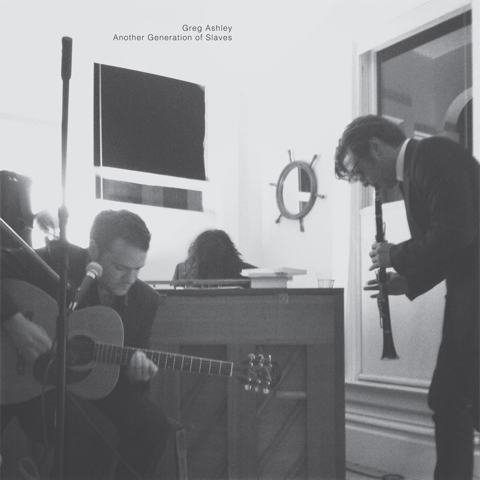
Greg Ashley – Another Generation of Slaves

ashley-lpRating: ★★★★½

The past few weeks I’ve been listening to Another Generation of Slaves pretty non-stop.  When it came down to the arbitrary rating system, I wavered between a 4 and a 5, then settled on the now visible 4.5. While those numbers may mean little, all I can say as I write is that Greg Ashley has left us with a record that, at this point, is the best collection of songs I’ve heard this year.

“East Texas Plain” is a brilliantly solemn ballad.  It opens with a barroom piano while some understated percussion provides the perfect accent to Greg Ashley’s voice.  There’s something that goes into his vocal delivery that offers a familiarity to it; I keep thinking that he’s a more palatable Richard Hawley.  I particularly like how there’s just a little buzz in the recording too, providing some authenticity to what lays within.  Yet, Ashley doesn’t want to create something that weighs you down with one simple style.  “Brother Raymond” is a bluesy offering that brings a little bit of a rock n’ roll swagger to his creation.  It’s the perfect placement too…giving a bit of energy before bringing you to the best track.

It’s not that Another Generation of Slaves peaks entirely early, but I cannot get “Awkward Affections” out of my head.  There’s not too much to the actually lyrical content, but there’s a huge emotional pull going on inside.  Perhaps it’s the repeated séance of “you make me feel like shit/I wanna kill myself.”  If you’re looking for a song that begs to be played again and again, you should find a way to get your hands on this number.  However, the early tracks, like the three above all fall under 4 minutes, while it seems Greg saved his more laborious tracks for the latter half of the record.

The last few tracks on this record are all over 5 minutes, with my personal favorite being “Prisoner #1131267.” I love the piano work on this track; it sounds like there’s some classical training here, but at the same time, the way it’s used makes it seem like it’s just about to go out of tune; it buzzes and hums in your speakers.  It’s songs like these, which is pretty much every track, where you can hear an artist putting every bit on the line, musically.  Sure, Ashley might sound subdued at times, but other moments exist where he’s just belting out the notes, maximizing his passion.

I can’t really explain how much I love listening to Another Generation of Slaves.  There are songs that sound like cowboy piano ballads, then there are others with horns to jazz things up a bit.  There’s no telling which way Greg Ashley is going to take you on this listen, but I can assure you that no matter which way he goes, you’re not going to be let down one bit.

[audio:https://austintownhall.com/wp-content/uploads/2014/02/03-Awkward-Affections.mp3]

Yellow Ostrich – Cosmos

YellowOstrich_CosmosRating: ★★★☆☆

Though five full albums into their career, it seems like Yellow Ostrich are still a bit under the radar, or perhaps just my radar. Regardless of their notoriety, the band is currently a four-piece outfit that hails from Brooklyn, of all places. What started as the solo project of lead vocalist and guitarist, Alex Schaaf, has blossomed into the group effort that produces guitar focal indie rock, which is quite clearly found on Cosmos.

The main difference on Cosmos, oddly enough, is that the balance between electronic elements and electric guitar have been switched for the most part from what we came to know on earlier efforts such as on the Ghost EP. Heavy guitar is the central element, and even on the opening track, which isn’t the most enticing number that Yellow Ostrich have put out, you can see this shift. “Terrors” seems simplistic for the group, relying on the hardness of the guitar sound to carry the number. Though different, it provides listeners with the notion that a different kind of sound can be expected, even if it isn’t exactly what the first song entails.

And if the opening track is a lacking in the intricacy that this ban has thus established, then “Neon Fists,” directly after, offers a rebuttal to everything that I just described in the last paragraph. Suddenly the band is equal parts guitar, equal parts electronic aspects. These two sounds seem to play off each other, each swirling around the other until they have layered to create a cosmic soundscape for Schaaf’s high-pitched nasal vocals to sit lightly on top, bouncing around. Another track that seems to flip around the notion of guitar heavy centricity at first is “How Do You Do It,” which picks up with a drum machine beat and slight clicks and pops. Schaaf comes in with heavyset lyrics, contemplating the nature of the normalcy of day-to-day life. He poses us the question with some power chords of guitar. Here is juxtaposition that I wish was more prevalent on Cosmos: the detailed lyrics and the balance between delicate and harsh seem to blend effortlessly, giving this track real traction and intrigue.

Though there are some good tracks to this album, all in all it seems that it is lacking in the grand vastness that the title might imply. I find myself enjoying a fair amount of numbers, but missing something overall. You might disagree with this sentiment—and at 34 minutes in length, you can see for yourself. Have a listen.

Flagland – Love Hard

flaglandRating: ★★★☆☆

When you first look at Flagland‘s new record, you’re probably going to find it a bit daunting; it’s 20 songs, which for some might be a lot, but don’t let that deter you.  Love Hard deserves your listening ears.  The listen is all over the place, but while that might be tiresome to a few, it actually makes the entire journey quite fun.

“Superlove” casually opens the adventure with a strummed guitar and calming vocal, before the rough edges start to shine a little bit.  Those gritty bits make their way as the opening to “Searchers,” but stick around for the pounding drum and maneuvering bass line that leads the way for a nice bit of distorted guitar work.  While the rhythm bounces along there’s some stuttering vocals to clear the way for the knifing guitar bits. Then you’re jumped into a fast-paced rocker via “Swingin,” which resembles a quickened Southern garage tune. But, Flagland slows things down for a bit.

“Happiness” is more of a pop song disguised as an anthemic guitar tune.  There’s a touch of frailty to the vocal performance, and to show they don’t mind being their own act, they even toss in some space-age samples.  The tune hops a long to catch little end. Then you’re quickly given another slow burner via “Not a Joke.”  It sounds like a catchy garage demo, but I mean that in a good way.  Personally, I’d skip a song or two and find yourself at one of the stand outs of Love Hard, “Monster.”  There’s a familiarity to this track, though I can’t quite put my finger on it (early Liars may haps). Regardless, it’s a pummeling tune that definitely provides your angst with an outlet.

You see, Flagland doesn’t stay in one place for long, and while I admit that I know that’s troubling for listeners, it’s made the listens enjoyable because you’re not inundated with a monotonous style.  One of my favorite tracks as you move to the latter half of the record is “Sugarcube.” It blurs the lines between pop-punk and power-pop, catchy in every sense of the word. It goes along well with “It’s Your Time,” which might be the best song that J Mascis forgot to write.  Vocals are pleasant while the distorted guitars have a heavier tonal quality; the last time I played the record, it was my favorite jam of that round.

It’s refreshing to come across a record like Love Hard.  Sometimes you get bogged down with one sound or one sonic direction from a band, but Flagland aim to keep things interesting.  They add snippets and quick songs to keep the pace of the record moving forward, then fleshing out your listen with longer numbers.  If you’re tired of the same old thing, then you’ll want to pick up this album.

[audio:https://austintownhall.com/wp-content/uploads/2014/02/12-Sugarcube.mp3]

Download: Flgland – Sugarcube [MP3]


1 15 16 17 18 19 102
Social Media Auto Publish Powered By : XYZScripts.com