Beachwood Sparks – The Tarnished Gold

Rating: ★★★½☆

With the current indie landscape coated in folk harmonies and wooded soundscapes, it seems only fitting that Beachwood Sparks would return after taking a break 11 years ago.  Interestingly, The Tarnished Gold, while bearing similarities to the modern landscape, has a sound more classic in structure, carefully crafting the perfect listen for fans of all sorts.

Immediately you fall in love, or at least I did.  “Forget the Song” sounds like an American version of The Crayon Fields, except filled with a bit of slide guitar and twang.  It’s got the same slight echo on the vocal, with guitars and casual drumming all tied in to perfection.  Other songs fit this exact same  style like “Tarnished Gold,” which is perhaps why I’ve enjoyed listening to Beachwood Sparks so much lately.  The guitars definitely give it a more country/folk feel, but the gentle vocals will absolutely carry you away. You’ll also find hints of other great American music throughout.

“Sparks Fly Again” is filled with noodling guitars and vocal harmonizing, but what caught me off guard was the seemingly Grateful Dead chorus jumping in and out.  It’s not there in a jam band sort of way, which enables me to appreciate the track all the more, but it definitely reminds me that my age is having me walk a fine line with the hipster abhorred hippy ilk. But, please don’t tell anyone that I just admitted to that.  The presence of these sort of moments are all over The Tarnished Gold, demonstrating that the band is much more rooted in the classic structure of Californian pop music, rather than joining the bandwagon of modern folk acts.

With all their traditional stylings, one of the things I like best about this Beachwood Sparks record is its ability to go live it out on its own terms.  “No Queremos Oro” is a quirky Spanish pop tune, almost like a sunny Mariachi ballad.  Of course, my love for all things Latin American forces me to love this track, but you have to have courage to put something like this in the middle of a classic folk tinged album; I applaud the band for that.  Luckily, it’s also followed by my favorite track here: “Earl Jean.”  I like the sound of the guitar strumming, spliced with some intermittent guitar jabs (noodles?) coming in and out. It’s explosion of bright guitars at the midway point is truly special, and feels so familiar that I swear I wrote it myself.

The more I get involved with The Tarnished Gold, the more I feel that it’s going to become the perfect soundtrack for my summer here in Texas.  As the warm sun beats upon my back, I can hear the slide guitars meeting on the humid air of the harmonies. There’s elements of folk music, classic Americana, and even your modern indie feel; it’s pulled off to perfection, giving Beachwood Sparks a return to glory that seems much deserved.

[audio:https://austintownhall.com/wp-content/uploads/2012/05/Beachwood-Sparks-Sparks-Fly-Again.mp3]

Download:Beachwood Sparks – Sparks Fly Again [MP3]
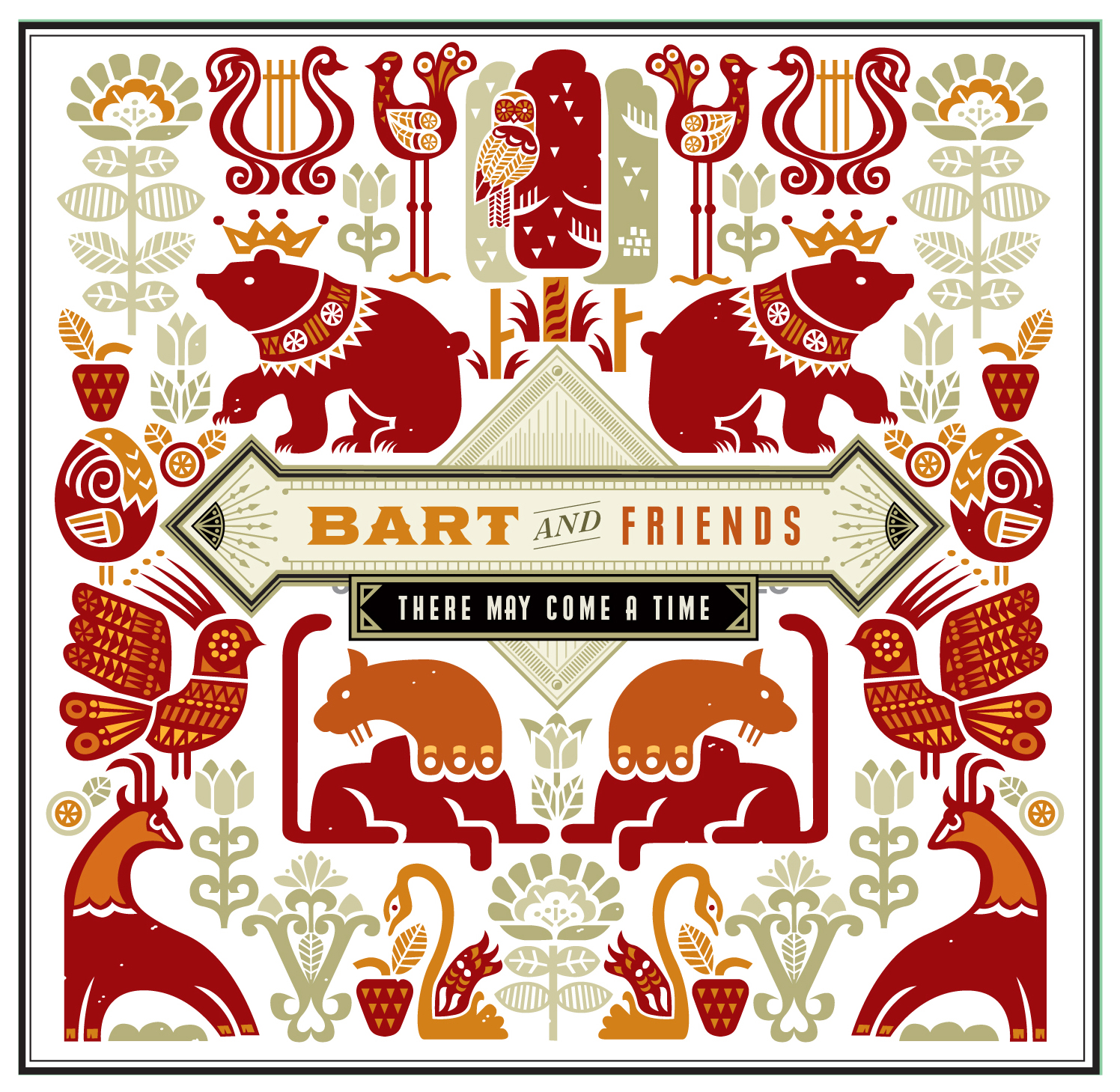
Bart and Friends – There May Come a Time EP

Rating: ★★★★☆

Bart and Friends is an Australian supergroup of sorts, fronted by Bart Cummings.  The group features members of the Shapiros and the Lucksmiths, to name a few, so you’re probably going to have some lofty expectations.  Luckily for us all, There May Come a Time lives up to those expectations, and in fact, it surpasses them.

Opening the EP is “There May Come a Time,” which features the wonderful Pam Berry on vocals.  She’s talking about writing songs, but suggests that there are some words/songs she’ll always remember (those of a love when she was young). I love the brightness of the guitar sound here, not to mention the precision drumming which helps accentuate the depth of the track.  You’re going to be hard pressed to find a better album opener on a pop record than this one.  But, then they move into some extremely familiar territory with the much covered track, “Can’t Help Falling in Love.”  I know the song was originally done by Elvis, but as a kid of the 80s, I think back to UB40 (unfortunately).  However, twenty listens into this EP, I will forever think of Berry’s performance here; her voice seems to be perfectly crafted to sing this track.  Definitely a special song.

From here you’ll get into the middle of There May Come a Time, featuring two of my favorite tracks, though one is the record’s shortest.  “A Kiss You Won’t Forget” encompasses everything I’ve come to love about the sound of pop music that’s been carried over from Australia.  Sharp dueling guitars, careful bass work, and some of the best vocal performances.  It’s one of those songs you want to put on a mixtape and play for all your friends.  There’s only one thing wrong with “There Are So Many Things I’d Like to See,” and that revolves around the 50 second song length.  It’s a completed track by Bart and Friends, but I completely wish they’d have pushed it even further; it’s got the makings of becoming one of my favorite tracks every.  I’m just going to loop it over and over on my own to reach the desired effect. The group does approach similar territory on “These Words Are Too Small,” but Berry seems a bit more rushed here, so it doesn’t have that drama in it.

Closing out the EP is “A Summer’s Dream,” the most chilled out track on There May Come a Time.  Here, while Berry again sounds great, it’s the sound of the guitar that really shines.  It’s as if each note was carefully picked for maximum melodic power; there’s a carefree mood created by both the band and Berry.  It’s a relaxing feeling, the way every summer dream should be.  The ending is perfectly fitting for this EP, as the band have bookended both sides of the EP perfectly.  But, don’t think that the middle is just filler; you’re likely to find some of the most special pop moments of the year hiding in there. Go see for yourself.

[audio:https://austintownhall.com/wp-content/uploads/2012/06/There_May_Come_A_Time.mp3]

Download: Bart and Friends – There May Come a Time [MP3]

There May Come a Time is available now from Matinee Recordings.

Charlie Big Time – Dishevelled Revellers EP

Rating: ★★★½☆

Britain has long had a history of crafting glowing guitar pop, though the more brash bands abroad have garnered more attention.  That’s probably a good thing, with bands like Charlie Big Time quietly making their way to our ears.  The group’s newest EP, Dishevelled Revellers is brief, but for those of you unfamiliar with the band it’s the perfect introduction to the group, now a proper trio.

The title track begins the four song affair, beginning casually for the most part.  It’s a quieted pop approach allowing listener’s to get a full grip on the inherent harmonies present within the track, but that changes at the 1 minute mark.  A chorus erupts with a more distorted guitar sound, giving a heavier touch to the softer melody working beneath the tune.  It’s a familiar song, sonically speaking, but one that speaks volumes to the craftsmanship of Charlie Big Time.

You’ll find that the lead single “The Liberation of Love” provides the perfect “pleased to meet you” moment with the band’s newest member, Beth Arzy.  Her effortlessly gentle voice provides the perfect juxtaposition to the deeper male vocal role, and gives a different level to the slower track.  There’s’ a wandering jangling guitar noodling its way about the track, which is one of the reasons I find Dishevelled Revellers so enjoyable; it’s not here to beat you over the head with brilliant pop, only here to let you sit back and enjoy incredible songwriting.

Personally, I immediately fell in love with “Real Estate” from the moment that guitar line comes in.  Strummed guitars are met with solid vocals and various other textures that demonstrates the creativity of the group–it even includes some light horn flourishes. Beth’s here again, but her voice is slightly understated, turning it into more of an instrument of lushness, rather than a counterpoint.  The subject matter seems fairly dark, but you’d never really know by the emotional tug you’ll get when listening to the track, happily floating away with the tune in your heart.

Then it all comes to an end with sullen “Passion and Headaches,” the fourth and final track here. It seems like the perfect song for someone living on the British Isles, or even the Northwestern US.  I find that there’s a bit of a cold haze that floats about the casual track; I picture the group crafting the song on their porch as the rain comes down.  But, like all great pop, you cannot help but to feel a bit of an uplifting aura surrounding the track, much as you’ll find on the whole Dishevelled Revellers EP.  Charlie Big Time have managed to quickly burst into the scene of great pop songwriting, and hopefully we’ll get to hear more from them soon.

[audio:https://austintownhall.com/wp-content/uploads/2012/06/02-The-Liberation-of-Love.mp3]

Download:Charlie Big Time – The Liberation of Love [MP3]

Dishevelled Revellers is now available from Matinee Recordings.


The Eastern Sea – Plague

Rating: ★★★★☆

As we all know, Austin is a giant arena for up and coming bands to make their names known, but in such a big scene, how do you stand out amongst the others trying just as hard as you? For The Eastern Sea, their delicately forceful rock, complete with some uniquely striking vocals sets them apart from the average bedroom rock band. Upon first listen, Plague gives off an illuminating quality that yields further listening and promises that this band has a lot to bring to the table.

The opener and title track introduces the deep sound that The Eastern Sea builds upon with the rest of the album. A slow burner, “Plague,” relies on a thick coating of atmospheric sound and a gradual build that shows the range in Matt Hines vocals. It’s a refined number that reveals just how much control the band has, and the restraint that is employed early on, leaving you yearning to know just what is in store when they let loose. As if they know what you’re waiting for, the next song, “Wasn’t For Love,” picks up the pace and gives you a taste of the layers of complexity that combine seamlessly. The track begins with a groovy bass line, and continually adds upon itself with a lighter line of jingly percussion, a looping guitar hook and of course Hines’ James Mercer/Ben Gibbard-esque vocals. Some horns join in on the chorus and later in the song, and you’re forced to marvel at how very put-together this band is; they are controlled chaos at its finest, knowing where to reel in before it becomes too much.

As aforementioned, in a town so big on music, something is needed to set apart, and what the Eastern Sea has going for them is their control and an album packed with interesting and excitingly good songs. There are numbers like “Santa Rosa” on which the lyrics are sharp and quick witted, and more horns join in, leading up to a sizzling couple of choruses, before they pull back and end the track on a quieter, refined note. The band pulls back one slower numbers like “The Match,” but still builds to an explosive ending. There is a great mixture of loud and quiet, controlled and chaotic that pushes the elements of sound of this group above others.

There really isn’t much to complain about on Plague; it’s a beautiful album that will have those who love some classic indie rock begging for more. So enjoy this effort from a local band and look forward to this band blowing up in the near future.

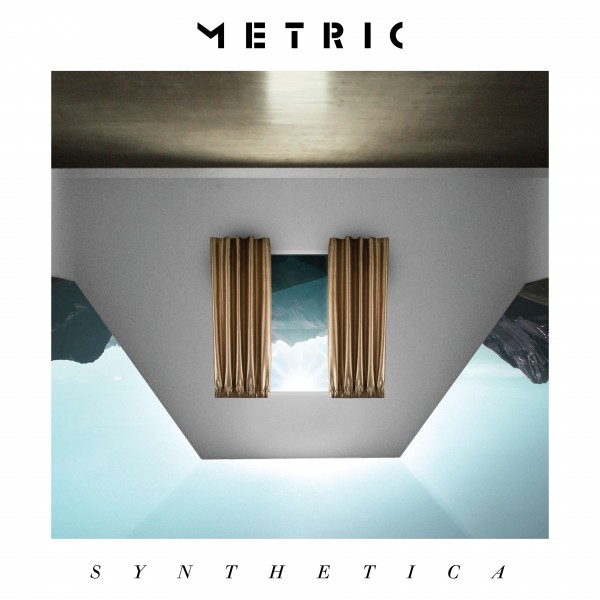
Metric – Synthetica

Rating: ★★½☆☆

When it comes to catchy pop with a superstar of a front woman, Metric has been a staple for years now. Their last effort from 2008 showed a transition to a stronger electronic sound from the angular guitars that early releases relied on. Three years later they are back and the title, Synthetica tells you where this band is headed with their sound before you even hear the first song; artificial and synthetic and further down the road they turned onto with Fantasies.

If the album title wasn’t enough to clue you in to the direction of the album, the first track ought to the do the trick. “Artificial Nocturne” starts out with waves of synthesizer and Emily Haines’ sleek vocals claiming she’s “as fucked up as they say.” This lasts for the opening two minutes of the album, before the guitar and drums kick in and the song begins to go anywhere. At this point, Metric eases into the familiar sound that they’ve given you before, but it feels distanced, as if you have to search to find the pop music that this band has previously doled out with ease.

As far as songwriting goes on this album, it seems as though Haines has grown a bit lazy, which is the main reason that Synthetica falls flat upon listen. Before, the band put out songs with a heavy electronic presence, but the lyrics that Haines spat at you were catchy and interesting, gracing the music with human accessibility. A lot of the tracks on this release feel lazy, with overly repeated lines, which may be catchy, but become stale after they are the very crux of the songs. One of the worst offenders of this repetitive business is “Dreams So Real,” whose two-minute-and-forty-one seconds of existence feels like it goes on forever while Haines reiterates that she’ll “Shut up and carry on,” and sadly, you wish she would.

Of course there are exceptions to this phenomenon that are quite enjoyable. Embedded in the far away tracks are those that you can connect to with hooky guitar lines and Haines sultry vocals leading you along. Songs like “Breathing Underwater,” and “Lost Kitten,” prove to be interesting and real additions to your listening bank of Metric songs. “Breathing Underwater” is a seamless combination of the synthetic elements with the grounded guitar lines, reminiscent of “Gimme Sympathy” off of their previous release. “Lost Kitten,” is a sassy number on which the quick lyrics draw you in and then Haines holds you with her understated power vocals.

Synthetica is not the step into a new, interesting direction that I was hoping Metric would take. Rather, the majority of this album is muted and lacking the shimmer that sets Haines and company apart from the average pop band, however, I invite you to wade through Synthetica to find those gems.

Sonny Smith – One Act Plays

Rating: ★★★★☆

Sonny Smith is most well-known, at least in the Interwebs for his work with the Sunsets, but the songwriter also has a few plays under his belt, although they’re probably more apt to be performed in song.  Luckily, the good people over at Secret Seven Records have released One Act Plays, a recording of songs/plays that Sonny recorded back in 2006 for a play called The Dangerous Stranger. 

Musically, it’s sort of what you expect from Sonny Smith, though it’s him stripped down to his bare bones, naked in front of the listener, as a true performer would be.  His voice in these recordings closely resembles Bill Callahan, which is fitting seeing as he’s playing the role of storyteller in these tunes.  But, he’s also got a lot of help from his friends such as Neko Case, Jolie Holland and Mark Eitzel; having all those guests on one record alone makes One Act Plays worthy of your purchase…and listening.

Thematically, Sonny admits to dealing with issues about family and redemption, and he also gives a nod to Sam Shepard.  But, despite the well-developed characters (as much as one can in one act), Smith perhaps should acknowledge the great job he did turning these acts into actual songs, so much so that you can get lost in the songs themselves.  My favorite is probably “The Stick-Up” just because it’s so stripped down, and the I chuckled each time the mention of stage directions comes into play; you don’t often get stage directions turned into actual lyrics.  It’s odd, but in providing musical accompaniment, the characters are humanized, which is precisely what a good playwright would hope to do.  You’ll even find “The Stick-Up (Part Two)” wrapping up the record, in case you feel like Sonny left you without a proper ending. Just remember, “when you shoot somebody, there ain’t no going back.”

Honestly, this isn’t a listening experience for everyone out there.  But, there’s definitely an audience for this, as Stephin Merritt can attest. While I enjoy the music quite a bit, I appreciate the combination of literary elements being thrust into the foreground.  For instance, the dialogue in “The Terrible Truth” brings to life a conversation between two men, who appear to be friends.  It begins in a call-and-response manner, as a dialogue would appear on stage, but there’s a moment when the vocals unite, and it’s such an emotional moment that your body can’t help but tingle just a bit; then it ends.  Like much of the songs, they’re all a separate entity or chapter, but they fit together, united by theme and song.  Only Sonny Smith seems capable of doing such a thing.  Find one song to love, or love them all, but if you love the theatre and you love music, then pick yourself up a copy of One Act Plays.

[audio:https://austintownhall.com/wp-content/uploads/2012/06/01-The-Stick-Up.mp3]

Download:Sonny Smith – The Stick-Up [MP3]

You can order the LP directly from Secret Seven Records.

White Arrows – Dry Land Is Not a Myth

Rating: ★★★☆☆

Some bands manage to get the timing just right, and as we move closer the official arrival of Summer it seems that White Arrows have arrived with their debut right on time.  Dry Land Is Not a Myth is filled with an electronic influence that’s aimed more at dance floors than bedroom pop experiments; it’s best listened to at high volumes with a bunch of your friends.

When you start off with “Roll Over” you can grasp at the live performance by White Arrows; the guitars are much more prominent, and the vocals unfold carefully, creating a bit of anxiety as the song builds towards the spastic chorus.  But, the album doesn’t fully kick in until you’ve reached “Get Gone,” the following track on Dry Land Is Not a Myth.  Here, you’ll find the band spinning their style around sampled beats, though you still get some angular guitar parts stuttering in the background.  Hand claps compliment the stuttering vocal delivery, and if proper volume is reached, you’re going to be bouncing around your room.

For me, “Coming and Going” is the heart and soul of the record, not to say bright moments are absent beyond, but this is a record built on electronica, and combined with the soulful crooning of the chorus, you can feel the classic pop seeping through the cracks with hints of oddball programmed sounds subtly creeping in to the track; it’s much like a track you’d expect Hot Chip to throw your way–there’s soul, but there’s also a dance element. It matches well with the closer on Dry Land Is Not a Myth, “Fireworks at Sea.”  There’s a wash of electronic atmospherics that coats the song in a sort of fog, but that’s juxtaposed with sprightly guitar licks and a bouncy vocal delivery from Mickey Church.  “Get Gone” might be a hit, but these two tracks exemplify the sound of White Arrows when they’re at their best.

But, it’s not all about beating you over the head with dance jams; the group also goes into more traditional rock n’ roll territory, only with an electronic bent.  “I Can Go” is one such song where the guitar seems to be the focus of the track, rather than the throbbing rhythm from some machine.  That being said, it does make the record a bit disjointed in parts, which I blame on the sequencing of the tracks.  Thrown somewhere else, this is a fitting track, but following three dance heavy songs, it seems amiss.  Still, band’s, especially on their debut, are allowed some missteps, are they not?

As a debut, Dry Land Is Not a Myth is quite a statement. It’s an album filled with hooks, both in the songwriting and the vocals. The songs don’t run too long, so you’re not going to feel burdened by redundancy, instead you’ll feel energized as the group provides you with exciting pop jams over and over again.   It’s a solid debut, and one that will surely give White Arrows claim to the perfect claim to Summer Album 2012.

[audio:https://austintownhall.com/wp-content/uploads/2012/04/Fireworks-Of-The-Sea.mp3]

Download:White Arrows – Fireworks Of The Sea [MP3]

The Tallest Man on Earth – There’s No Leaving Now

Rating: ★★★★☆

It seems like Kristian Mattson is on a roll, musically speaking.  His music has progressed through his first two albums, and he continues his own tradition with his latest release as The Tallest Man on Earth, There’s No Leaving Now.  At this point in his career, his voice and musical stylings have become familiar, making the work on this album more personal.

Upon listening to the first track, “To Just Grow Away,” I noticed that his guitar playing has changed a little bit; there’s an intricacy to the picking of the strings, rather than the heavier handed strumming of earlier efforts. Surprisingly, there’s also a softness to his distinctive Dylan-esque drawl…it all points to bright things on There’s No Leaving Now. You’ll find more changes as you move into “Revelation Blues,” though I’ll admit they’re a bit more subtle.  The musical accompaniment, which has always remained sparse, if even present, is much more noticeable this go round, such as the rolling drum in the background on this track.  Personally, I think it helps fight off naysayers who would say he’s not really progressing; clearly, he’s adding slight touches to change his game.

I think that The Tallest Man on Earth definitely has softened a bit.  Kristian always had just a hint of that off-pitch delivery, but he’s warmed the edges of his vocal instrument on this effort.  “1904,” one of the standout tracks, features a chorus where he goes after higher notes than I’ve seen him go after before–and he succeeds in that for the most part.  In doing so, he crafts one of the more emotional moments on the record, and you’ll keep coming back to the track due to his efforts. Later on in There’s No Leaving Now he warms you again with “Little Brother;” it’s just his vocals and guitar for the most part.  But, aside from a polish to the voice, you begin to notice that Mattson’s grown as a lyricist to boot.

Despite the fact that Kristian’s denied sharing any allegiance to the folk tradition, he definitely has begun to take on a more emotional everyman approach with his lyrics. His stories seem rooted in personal experience, like on “There’s No Leaving Now,” but you can also see that such songs could be applied to your own life by stepping into Mattson’s shoes.  They’re songs about love, about the trials and tribulations of life, but his usage of “you” often makes you wonder if he’s talking directly to you–this is perhaps what’s made Mattson so endearing.

I think the best thing that stands out on There’s No Leaving Now is that there’s a lot of variance in the songwriting this go round.  Sure, there’s your traditional guitar and voice, but there’s also songs featuring some nice backing arrangements and even piano bits.  It’s definitely still The Tallest Man on Earth, but it shows that Mattson’s willing to try new territory, or new twists; this is the sort of thing that makes us appreciate his work, not to mention the fact that it keeps us coming back again and again.  As long as Kristian writes music this good, we’ll all be here for a long time, adoring everything he puts out.

[audio:https://austintownhall.com/wp-content/uploads/2012/05/The_Tallest_Man_on_Earth_-_1904.mp3]

Download: The Tallest Man on Earth – 1904 [MP3]

Jaill – Traps

Rating: ★★★½☆

It’s quite interesting to see the progression of modern indie rock, noticing that many bands are going back to classic rock n’ roll sounds to win over fans.  Milwaukee’s Jaill are one such band, and their second effort for Sub Pop, Traps, sees them getting close to perfecting the formula.  There’s bits of classic rock, elements of psych, drunken swagger, and hints of recording in your garage; now seems like the perfect time for the band.

“Waste a Lot of Things” kicks the record off, and it’s here where I first noticed that Jaill opted to hold back a little bit on this new release, which actually works in their favor.  There’s a steadier pacing to the track, rather than more immediate tracks from That’s How We Burn. It ends up as a stomping track with crashing cymbals that reveals itself as you draw near the end.  Even with “Everyone’s A Bitch,” you get the feeling like the band could possibly blast this one off, but while holding back on the song’s speed, they’ve allowed for the hooks to grow stronger.  It’s very anthemic in it’s construction, even featuring in “ooohs” in the chorus; you gotta love it.

Traps won me over with less urgency and songs that resemble more of a ballad.  “Horrible Things (Make Pretty Songs)” says all that it needs to in the title of the track.  It features a strummed guitar, and even some female vocals harmonizing in the background; I don’t feel like these sorts of songs would have survived on That’s How We Burn.  “Madness” is another such song, which feels very much like a campfire song that was created in someone’s basement–I mean this in a truly endearing way, I swear. Light touches of keyboard and tambourine bring the rest of the track to life for the listener.

But, just because mellow tracks live here, this doesn’t mean Jaill still can’t throw out a rocker for you, even if it’s just a touch less furious than it was before.  “Ten Teardrops” lurks near the end of the record, hanging out behind some softer tunes, but it’s definitely a jam.  You’ll find jagged-edged guitars feuding with classic rock tendencies, giving the whole track a country-fied power-pop feel to it.  Bit of this sort lay all over the record, but aside from the earliest tracks, this is the most rocking in the latter half of the album.

Now, I’ll admit being taken aback when I first listened to Traps, as I was expecting something a little bit different.  That being said, after a couple of listens all the way through, my musical mind made the adjustment, and I think I ended up enjoying the record as a whole a bit more than their first release.  It’s progression, and it’s good; that and that alone is a reason for you to pick up this new Jaill album.

[audio:https://austintownhall.com/wp-content/uploads/2012/04/Jaill-Waste-A-Lot-Of-Things.mp3]

Download:Jaill – Waste A Lot Of Things [MP3]

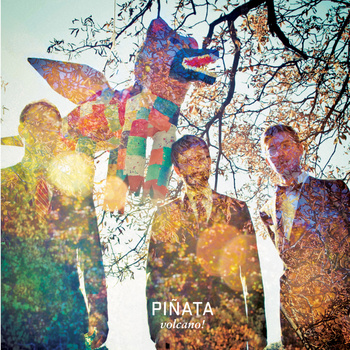
Volcano! – Pinata

Rating: ★★★½☆

I’m going to say this right off the bat…you’re going to have to do a lot of work in order to love Volcano!‘s newest record, Pinata. I don’t say that because it’s not an enjoyable listen, but I say that because it’s up, down, left, right, and any other direction the album wants to go.  That’s actually why it’s such a rewarding bit of pop music; it begs you to follow along, asks you to go with it in order to reap the ultimate reward: pop enlightenment.

“Pinata” opens up the record, using throbbing bass beats just before Aaron jumps in with sort of spoken word vocals.  At times, he’s excitable, matching the precision drumming and reaching higher scales; it’s what you would imagine if you gave LSD laced with amphetamines to Dirty Projectors.  It’s schizophrenic, but planned and organized; you can’t help but bob your head. But, just as you wanted to lump Volcano! in with art-pop acts of similar ilk, they go in other directions, such as the stop start vocal delivery at the beginning of “So Many Lemons.” It’s almost like he’s scat singing, but then he sinks into the groove with the rest of the band, touching on a more polished pop side.  At this point, you might scratch your head a bit, yet you won’t be able to deny the quality (and tightness) of the songwriting.

Honestly, the more I listen to each song, the more I realize that each song can be written about like an album review, as there’s so much texture and creativity put into each track.  “Child Star” for instance begins with an emphatic vocal, matched by choppy guitar and knob twiddling, but it bursts off into this other realm, giving us Aaron’s best vocals on Pinata.  Still, it ends up somewhere entirely different than where you expected it, in the best possible way.  I even thought that “Plate Breaker” might be a more traditional song, nearing the realm of an angular ballad, until the track speeds up around the 40 second mark, gets jittery…and goes to God knows where.  You’ll like it, and you might even love it, but have fun trying to explain your affection to your friends.

Volcano! have one thing going: they don’t sound like anything else out there.  In doing that, they’ve crafted a listen that many people will describe as a “difficult listen,” but those that can stick through the entirety of the record will have something they won’t soon forget.  Songs like “Long Gone” have infectious hooks, that though brief, stick in your head like only the best pop can.  Some of the songs evolve slowly, like “St. Mary of Nazareth,” and appear more delicate; you’ll never know, though, when the band will go in their own direction.  Take some time out of your day, sit down with Pinata, and see if you can unravel the mystery lurking beneath the odd time switches, yelps and, indeed, hooks.  If you make it through, you’ll not only thank me, but you’ll thank the band for being one of the band’s doing something truly original and creative.

[audio:https://austintownhall.com/wp-content/uploads/2012/05/09_Long-Gone.mp3]

Download:Volcano! – Long Gone [MP3]

1 35 36 37 38 39 102
Social Media Auto Publish Powered By : XYZScripts.com