Dent May – Do Things

Rating: ★★★☆☆

Hearing that Dent May had ditched his ukulele, I was a little bit scared about his newest release for Paw Tracks, Do Things.  But, the more I listen to this album, the more I realized that it’s less about his instrument, and more about his voice; it’s still very affecting, which makes listening to the whole record just as enjoyable as his first.

It all starts off with a bouncy number, “Rent Money,” propelled forward by synthetic sounds, yet Dent’s croon is strong as we’ve heard it.  He’s got a memorable voice, but his control over that instrument is what makes his songs so special–here he sings about the trials of trying to earn a living, in a manner that only May can. “Fun” follows, with a similar focus of backing pieces, but this is perhaps my favorite performance of his on Do Things.  Each verse sees the rise and fall of the pitch in the vocals, which in an odd way reminds me of Stephin Merritt‘s distinctive voice.

By the time you get to the single, “Best Friend,” you might begin to find yourself a bit disappointed, as the songwriting begins to get a little to familiar.  It’s filled with hooks, just like the rest of the tracks that come before it, but there’s nothing extraordinary about the construction of the accompanying beats, leading Dent May down a path of pop redundancy. There’s traces of differentiation coming in and out of the record, but they don’t do enough to push the record beyond the stage of mediocrity.

“Find Out” opens with a slight guitar riff, but by the time vocals and percussion mix, it’s fading into the background to stay.  These are the sorts of things that you wish May would have messed with in the final mix of Do Things, adding something special to the formula that would give more emphasis to the tracks.  I mean, “Wedding Day” has a nice jagged guitar line cutting through it too, and I quite like the song, despite its rather mundane electronic sampling.  I wonder what would happen if he just turned that guitar up a little bit (you don’t always have to go to 11).  It would seem that what needs to happen is to get Dent some musicians who can join in the fun of his quirky songs.  They’re good, they’re enjoyable, but in the end they’re ultimately not too memorable.

I’d be remiss if I didn’t say how much I adore Dent May and his songwriting, even with some of the knocks I’ve taken on Do Things.  I give him credit for stepping outside the comfortable realm, but perhaps a bit more time would have really benefited the record.  It’s fun and easily listenable, but does have a tendency to go into the background too easily…that’s not how we knew him on his first run.  Let’s chalk it up to a bit of the sophomore slump, and hope he gets back on track the next go round…based on these songs, he’s really not too far off.

[audio:https://austintownhall.com/wp-content/uploads/2012/06/04-Best-Friend.mp3]

Download:Dent May – Best Friend [MP3]

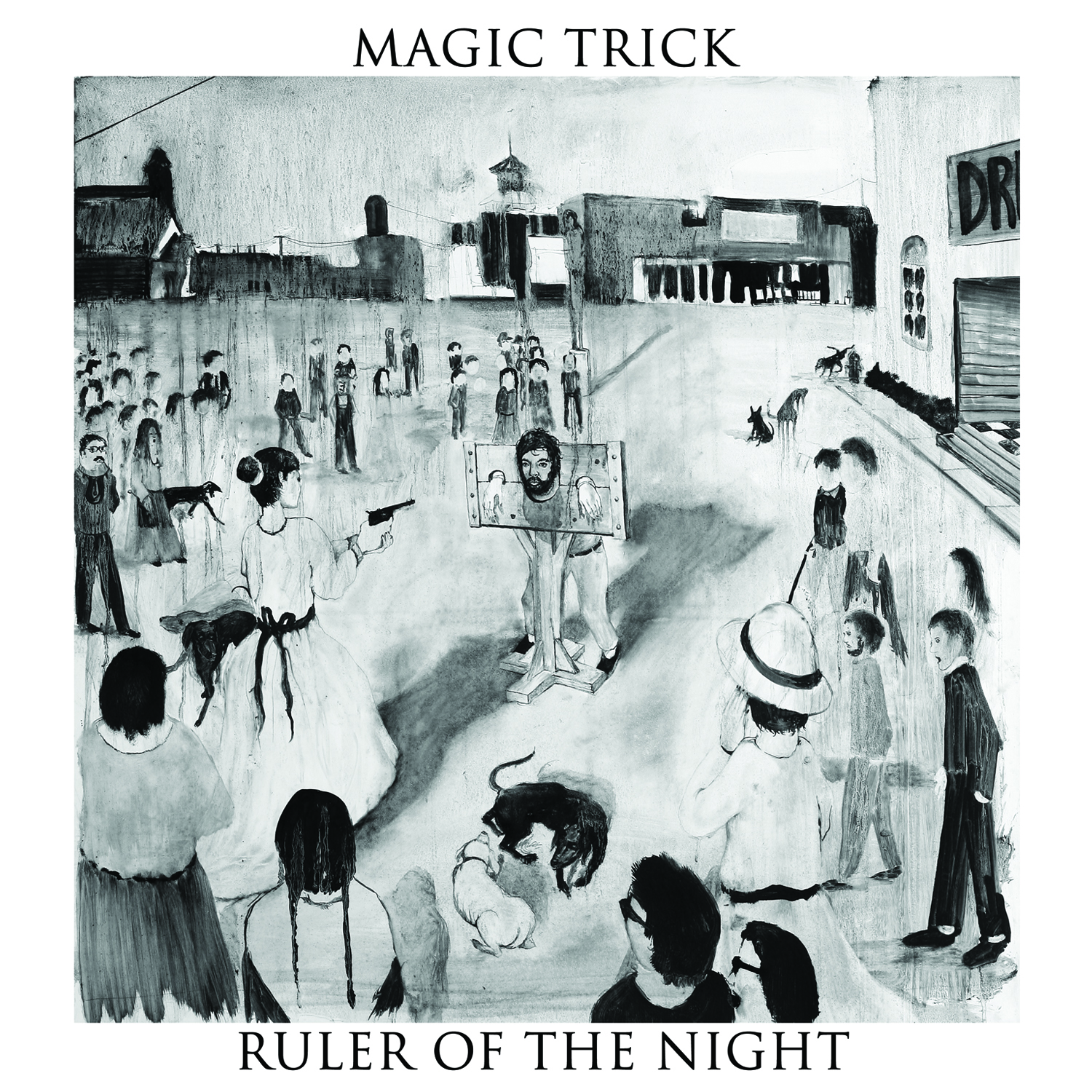
Magic Trick – Ruler of the Night

Rating: ★★★★½

You never really know what you’re going to get with a Tim Cohen listening experience; he’s a man of many faces, wearing various hats in Fresh and Onlys, Tim Cohen and now Magic Trick.  After the first few listens to Ruler of the Night (Hardly Art), you can clearly see that he’s put aside that psych-pop hat, just for a moment, crafting something truly remarkable that won’t leave your record player for days or even weeks.

If “Ruler of the Night” is going to be your starting point, it’s the place that first establishes a different approach for Cohen and Magic Trick, now that the band has been solidified.  You’ll find lightly strummed guitar and an extremely warm backing vocal; the careful construction of the song demonstrates how far Tim is willing to go on this outing.  Immediately following is “Torture,” which just might have the longevity to be one of my tracks of the year.  You can see the lineage of this track, and possible connection, to Fresh and Onlys, but the melodic harmonies backing your frontman here see him pushing that sound; he even takes a stab at a soaring vocal himself, to much success.

Ruler of the Night will probably be remembered most for the variance in songwriting that Magic Trick utilizes on the effort.  “Sunny” sounds like a San Francisco group taking a stab at writing a Magnetic Fields song, but perhaps that’s just the guitar sound, or the backing vocals.  The mood of the song resonates with the title, but it’s juxtaposition to the dark ballad “Next to Nothing” gives you reason to make sure your listening experience revolves around the completed record.  While similarities exist overall, each song creates its own bit of character, all dependent upon the accompaniment of the rest of the group.

“Same People” seemingly has its roots in Tim’s fascination with hip-hop, and it plays like a bit of electronic constructionism. Cohen’s vocals barely seem to rest atop of the beats, but it fits in with the mood of the album, especially when the tone is lightened during the chorus.  It’s a similar track to the appearance of sampled beats early with “Invisible at Midnight.”  The construction of the song definitely revolves around the electronic elements, but like the previously mentioned track, there’s an explosion of brightness that comes with the chorus.  Such delicate touches to the construction of each track demonstrate how careful the group has been in finishing off their compositions.

If anything, Ruler of the Night seems to be a statement for Tim Cohen.  While Magic Trick might be a side-project, it’s definitely one that forces everyone to take notice of the songwriter as more than just a purveyor of psych-pop.  He’s got a solidified group working with him in Magic Trick now, and together they’ve crafted a welcoming album that reveals more to your ear and heart with each careful listen.

[audio:https://austintownhall.com/wp-content/uploads/2012/03/MagicTrick_Torture.mp3]

Download:Magic Trick – Torture [MP3]

The Intelligence – Everybody’s Got It Easy But Me

Rating: ★★★★☆

It’s been almost two years since Males, the last record from the Intelligence came out, so I of course welcomed a return to the fold with Everybody’s Got It Easy But Me (In the Red Records).  It’s all over the place, in the best way possible of course, giving listeners everything you need to enjoy listening to an album from start to finish.

Listening to “I Like LA,” the album’s opener, I feel as if group leader Lars is having a pleasant go with the listener, slowly introducing himself to the world all over again; for the most part, it is an introductory type song, that is until the band joins him in a heavy-handed rocking until the end.  Oddly, it’s the diversity of this track that really sets the scene for the rest of Everybody’s Got It Easy But Me. Just as soon as you think you have the feel for what the group’s doing, you get the jittery “Hippy Provider;” it’s short and jagged, but it’s the sort of song you expect to see hordes of fans pogoing about in their favorite club.

It all seems like fun and games for the Intelligence, until you arrive at “Techno Tuesday,” the group’s latest single.  It’s not your conventional hit, but I feel that it is one of the more accessible tracks the group’s written to date; the heavy strumming with Finberg’s vocals floating over is perfect for fan’s of early Shins–even has a similar bounce.  It’s similar to the garage ballad that comes later via “Little Town Flirt,” which is a Del Shannon cover–it also features Shannon (of Clams and Hunx/Punx fame).  Throwing these sorts of mellower tunes definitely propels the record’s longevity, breaking things up for the audience.

Of course the meat and potatoes of Everybody’s Got It Easy But Me has to be the edgy rock leaning of the band.  You’ll find it lurking in the stylistic approaches of all the songs, but the power lives in songs like “(They Found Me in the Back of) the Galaxy.  While it starts off with a similar riff (one of my few complaints about the record), the guitar work throughout provides a sense of creativity and juxtaposition, all the while sounding as tight as you’ve heard the group.  These are the sort of attributes the Intelligence is known for, and they’re exhibited left and right on this effort.

By the end you’ll find yourself with two long-ish jams, with “Fidelity” remaining my personal favorite. Sure, the lyrics define some of the heartbreak Lars has endured, but the emotional quality of the song supersedes the thematic element.  Eventually, it blasts off into sort of a cacophonous melody, hopefully highlighting a transcendence for Mr. Finberg.  It’s precisely the type of bookend you need for a great record, again recapping the diversity that lives within.  Everybody’s Got It Easy But Me is filled with artful rock n’ roll, but there’s enough of a mixture that moves the group beyond falling into the trap of sounding too redundant.  I’m sure after your first listen, you’ll feel the same.

[audio:https://austintownhall.com/wp-content/uploads/2012/05/08-They-Found-Me-In-The-Back-Of-The-Galaxy.mp3]

Download:The Intelligence – (They Found Me In The Back Of) The Galaxy [MP3]

Also, if you want an excellent read on Lars’ thoughts on the album, had over to Finest Kiss for a great interview/explanation now!

The Walkmen – Heaven

Rating: ★★★★☆

For a whole decade now, The Walkmen have been gracing your ears with their jangly rock music. Now, when I say that, I truly mean it; this band makes albums that linger in your music collection for long periods of time, seemingly timeless in their nature. Earlier albums proved rugged and loose, running wild with youthfulness and spunk, but as I said before, it’s been ten years, lead singer Hamilton Leithauser and company have grown up, and so has their music. Heaven is a testament to this, as the band brings you a different kind of rock album.

Right out of the gate, it’s clear to see the direction in which The Walkmen have decided to go with this seventh studio full-length release. “We Can’t Be Beat,” meanders its way to start, with Leithauser crooning along to some gentle guitar plucking, with sporadic “oohs” floating through the background. Even as the song picks up a bit at the end, the lushness is ever apparent through the use of layered vocals and delicate percussive elements. This lush sound is a general theme of the album, carrying through most of the songs in some shape or form. It’s extra present on some of the later tracks like “No One Ever Sleeps,” that focus on the vocals. A number on the slower side, it comes across as a bit of a lullaby with more billowy and wispy “oohs” that work their way through the lead. The song is gentle and sweet, juxtaposing Leithauser’s sharp voice with the softness of the backing instrumentation.

This group doesn’t have the same reckless abandon that they did when they first started out, but would you really want them to after ten years? A bunch of thirty-something year old guys who all have kids trying to act like kids? No, that would be silly and out of place. Instead, this band has a healthy alternative that still packs a punch for old fans. Songs like title track “Heaven” and “Heartbreaker,” incorporate old with new and are straight up catchy tunes. “Heartbreaker” is a song found early on the record that gets things moving with those rolling drums and hooky guitars, while “Heaven” is a summery sounding number that will have you tapping your toes. There will always be those who reminisce of the old days of this band when they put out jams like “Rat,” but there are acceptable rock songs on this effort as well.

Yes, it’s a grown up record, but by no means is it a snoozer. The Walkmen have made growing up something cool and envied, riding upon the waves of their musical and personal successes. They relish in their coming of age with grace, inviting you to come along for the ride. So join in with them and enjoy the beauty in Heaven.


Crocodiles – Endless Flowers

Rating: ★★★½☆

A few years back, Dan Treacy of Television Personalities used Crocodiles as his backing band, and that’s when I first caught wind of the group.  I trust Dan, so I scoured the net in search of news, only to stumble upon a group that I thought was unfairly being compared to Jesus and the Mary Chain.  Sure, I see the similarities, but as evidenced by Endless Flowers, the group has a lot more in relation to jangling art-pop than JMC.

“Endless Flowers” does utilize some squalling guitar wailing to kick off the whole affair, but vocally, it harkens back to the musical re-imagining of early 00s band such as Longwave; there’s a simple melodic tone that gives listeners that soft-footed shuffle.  “Sunday” again has that atmospheric guitar sound, so everyone’s going to already toss the JMC comparison back onto Crocodiles, but mentally I’m stripping the sound off these tracks, choosing instead to focus on the bright quality of the vocal delivery; it provides a youthful exuberance akin to Pains of Being Pure at Heart.

As Endless Flowers evolves, you begin to see the gentler side of the band, offering a steadier dosage of pop melody as preferred to noise.  “No Black Clouds for Dee Dee” is definitely a heartfelt ballad, considering the band’s relation to Dee Dee (not Ramone).  It’s a standout song, demonstrating that the group’s not always content with upping the noise quotient. Interestingly, as they begin to unleash a lighter side, they also begin to let that element fully collide with their noisier moments.  It leads to some of the longer tracks, such as “My Surfing Lucifer” and “Dark Alleys,” with the latter remaining as one of my favorite tracks on the record.

They break through it all to wrap up the record quite nicely, giving you a rollicking stomp track in “Welcome Trouble.”  The jagged guitar line cutting in the background just builds you to the raucous stomp that ups the ante during the chorus.  It’s got a bit of post-rock swagger to go along with the energetic chorus, and it definitely helps illustrate the group’s progressive direction. Closing out with the quieter “You Are Forgiven” again finds Crocodiles in a steady ballad form that should leave no doubt that the band is capable of affecting songs without having to fill each track with noise.  Admittedly, the chirping of the birds in the background of the recording might make it seem like a B-Side or an afterthought, but the strength of the song itself warrants its inclusion here.

I can see the Internet still hyping up the JMC connection, but perhaps when I listened to Endless Flowers, I was hoping for more, so I forgave its presence and looked closer at the core content in the songs.  If you approach listening to the latest from Crocodiles then I have the feeling that you’ll understand where I am coming from.  Regardless, I’ve had a lot of fun listening to this whole album, especially when you turn it up to 10 (11 is so cliche).

[audio:https://austintownhall.com/wp-content/uploads/2012/02/Crocodiles-Sunday-Psychic-Conversation-9.mp3]

Download:Crocodiles – Sunday (Psychic Conversation #9) [MP3]

Exitmusic – Passage

Rating: ★★★½☆

Exitmusic is a New York City band consisting of Aleksa Palladino and Devon Church that combine to create stormy electronic pop. Using layers of sound, these two are big on emotive music, hoping to generate forms of sound that moves their listeners in some way. A few years back they released the From Silence EP, which dubbed Exitmusic as dark, enigmatic and swirling. Passage, their recent effort, looks to refine these hooks and build ups to something with a bit more control.

If you aren’t careful, the first song will swallow you whole in its drama. Pushing six minutes, “Passage” goes a lot of places, exploring big build ups to drastic cut offs in the waves of sound that crash over one another. The track starts out on a quieter note, until it begins to build to one of its first crescendos and you can start to see the unbridled power that is created when these two come together, giving all they’ve got. Everything comes together in a cathartic build, and then suddenly all falls away in an explosive burst of sound that seems like it would fit as perfect background music to a movie montage. It’s a beast of a song, but Extimusic tames it to a manageable one, teetering on the edge of out of control with cymbals crashing and vocals peaking.

As far as songs on Passage go, the first track is by far the most dramatic in nature, and thankfully. While it has its place, if every song was as pushing as the opener, this album would feel distant and maudlin. This tightrope walk between accessible and melodramatic is the very substance of this album. You have songs like “The Modern Age,” on which Palladino’s vocals are close and easy to listen to; they are powerful, yet subtle in their confidence. The build on this song is manageable, easing into and out of climaxes with the help of soft percussive elements and hooking guitars. On the other side of this spectrum, Exitmusic lose themselves a bit on album closer, “Sparks of Light.” This number drags on, the echoed vocals and dull instrumentation leaving me a little bored.

However, there are still a number of catchy, cathartic songs that live up to the delightfully broody name that these two have earned for themselves. Depending on your personal state of mind, these songs may coat you in layers of glorious ambivalence, or murky heaviness. See for yourself.

KIng Tuff – King Tuff

Rating: ★★★½☆

In the brief bio on Sub Pop‘s web page for King Tuff, and his new self-titled album, it alludes to the fact that the entirety of the record is just rock n’ roll and that you can’t really listen to it with critical ears.  For what it’s worth, the bio is pretty spot on, as King Tuff is something you’re just going to have to experience for yourself.  But, I’ll do my best to point out some highlights.

While “Anthem” is the official song to kick off the record, the best served song to begin your listening experience might be “Alone & Stoned;” it’s a bit on the poppier side, which could ease you into the listening experience.  King Tuff‘s vocals have a slight resemblance to Nobunny or Hunx, and his musical style is definitely similar, though this track does show you a nice bit of polish–though there’s still that element of playfulness.  That light-hearted attitude is something that definitely benefits the record, coming through on other songs like “Keep Movin” and “Baby Just Break.”

But, while KT can come across as setting out to have fun, he’s also got a penchant to infuse a bit of traditional garage rock into his tunes, just as he does on the album’s standout track, “Bad Thing.”  It’s fueled with guitar solos and an angrier moment that’s not present anywhere else on the record.  Personally, I dig the way the he slows the chorus down just a bit before blasting off into “I’m a bad thing” one last time.  It’s the hit single for sure, but stick around as this thing is full of other noteworthy tracks.

There’s softer ballad-ish moment lurking here and there, such as “Swamp of Love.”  It’s built around a strummed guitar and a piano backbone, but it illustrates that King Tuff might not be as tough as the name indicates.  He’s got other moments that come earlier, although possibly too short to be completed ballads, like “Baby Just Break.”  I think these are the tracks that standout the most to me, as I expected the whole record to have an certain amount of ferocity like “Bad Thing,” but aside from album closer “Hit and Run” there’s really nothing that’s just a straight out rocker.  Personally, it fits better this way; you get peaks and valleys on the journey, all with different bits of enjoyment, depending on the listener and what he/she is looking for in King Tuff. 

While it may not need critical ears to listen to this self-titled record, most of the audience will surely find it successful because of its ability to keep you from finding the songs stale.  You can get a quick rocker or a ballad; you can find hints of garage rock; you basically can find gem after gem waiting for your own personal discovery, so it’s probably best to get on it now–go pick up this album from King Tuff.

[audio:https://austintownhall.com/wp-content/uploads/2012/03/King_Tuff_-_Bad_Thing.mp3]

Download:King Tuff – Bad Thing [MP3]

Grass Widow – Internal Logic

Rating: ★★★★☆

Judging by the bio that Grass Widow throws up, you’d expect them to be sort of your run-of-the-mill post-punk girl group, but that’s a whole lot of cliche in one sentence; there’s so much more to the group’s album, Internal Logic, that it stands against your attempt to pigeonhole the group.  No matter what, this is something you’ve got to get behind, and you’ve got to do it right now.

All in all, the album clock in at just under 30 minutes, so you don’t have too much time to dwell on particular songs, and that works in the favor of this San Fran trio.  There’s a dark bubbling bass that opens “Goldilocks Zone,” the record’s first track, and the sparse guitar lines provide an added level of demonic pretense; it’s completely offset by the female vocals–possibly the best of the female vocals I’ve heard this year.  Near the end of the track it shoots off in a more guitar driven direction–it’s a nice little touch. For my money, I think the only thing that makes these girls post-punk is the fact that they’re writing songs thirty years after the initial explosion; these girls write punk songs.  “Milo Minute” is probably one of the most enjoyable punk rock songs I’ve heard in awhile, but I suppose some detractors might say the vocals are anything but punk rock.  That’s the attitude Grass Widow seems to take for the entirety of this album; they use what they have (3 girls singing) and apply it to the punk rock they love.

Of course, that’s just one dynamic on Internal Logic.  Other times, these girls don’t seem to have any interest in punk rock, rather they steer in a more alternative direction with warm vocals and somewhat discordant guitar sounds.  “Under the Atmosphere” utilizes some similar skills from earlier on in the record, but the construction of the song definitely lends to a more pop-centric feel: one that will surely win adoring fans. Still, they have the ability to combine both their favorite worlds, which is why the record’s such a refreshing bit of music to play over and over again.

The second side of the affair hits a lot harder and faster, yet still holds onto the girlishness that makes Grass Widow so endearing.  And in playing faster, they also illustrate some remarkable musicianship, shifting pace and styles within songs.  For some reason, I listen to songs like “Advice” or “Disappearing Industries” and I hear bits of Wire with the modern popularity of girl-pop thrown in to it.  It’s a unique combination of sounds, and one that makes listeners of Internal Logic beg for more.  We all love a lady and her guitar, but give me three chicks who can clearly outplay a lot of the boys, and I’m blown away.  Do yourself a favor and turn this up on the old stereo, and witness the prowess of a band at the top of their game.

[audio:https://austintownhall.com/wp-content/uploads/2011/07/GrassWidow-MiloMinute.mp3]

Download:Grass Widow – Milo Minute [MP3]

JBM – Stray Ashes

Rating: ★★★☆☆

Truly heartfelt emotion is difficult to insert into a song, but it seems that Jesse Marchant, aka JBM, really excels in this sphere of the musical world.  His newest album, Stray Ashes (Western Vinyl) is soaked with emotion, and a lot of that has to do with Marchant’s voice, but he also implements careful accents to each song, giving listeners with an active ear pure joy.

Make no mistake about it, listening to Stray Ashes is probably going to leave you in a sullen/somber mood; there’s very few tracks that could even be described as upbeat, but that’s what will enable listeners to completely lose themselves in the work of Marchant. “Only Now,” which is a piano driven tune, is one of the few numbers on the record that I could see as even remotely light-hearted, and that revolved around the mood created by the pounding piano (and the brief drill of the snare drum). Still, Marchant’s vocals do their best to sway you away from feeling light-hearted; it’s as if he wants you to sink into the tracks, just as he dove into writing them, lost in his own world.  “Forests” is the other tune that I feel has a brighter quality.  I really enjoy the opening guitar line, and the way it sort of trickles in and out of your consciousness as you go to focus on Jesse’s voice; this song is my personal favorite.

Clearly, JBM‘s art is personal; you don’t write songs of this sort without completely investing your soul in the composition.  So when listening, it’s hard not to look deep inside of these songs, and yet close examination just lets you lose yourself in the construction of the song.  For instance, the opener, “Ferry” has this shaker that comes in and out of the track, then disappears, only to be replaced by a thinly veiled backing vocal.  Each time I listen, I try to search to see where, or if, they overlap, and each time, I’m more and more involved in the track; well played Jesse Marchant.  This a theme throughout the entirety of Stray Ashes, which is what helps you escape the occasionally monotonous tones of Jesse’s voice, which, by the way, I can’t entirely place.  It’s definitely familiar and been referenced to Jim James, but I’m not sure that’s what I’m thinking.  Anyways, aside, aside. Even the gently strummed tracks like “You Always Keep Around” or “Crooked Branches” have these faint flourishes (slide guitar, random percussion, etc) that are barely audible, but they’ll guide you to the immeasurable joy you’ll take out of each individual song; I can attest to this.

Initially, I couldn’t get into Stray Ashes as a whole.  It had some standout moments, but I wasn’t sold entirely on Jesse Marchant’s voice (might not be still).  However, the wonderful thing I discovered about JBM, as I’ve alluded to, is that he has the innate knack to draw you in emotionally with the song itself, then bring you in deeper with those extra touches that only come from truly gifted songwriters.  Each time I listen to a track, I immediately play it again to see if I heard what I thought I heard initially, and in the end, I find myself falling aimlessly into the song, and into the record itself.

[audio:https://austintownhall.com/wp-content/uploads/2012/03/JBM-Winter_Ghosts.mp3]

Download:JBM – Winter Ghosts [MP3]

Dana Buoy – Summer Bodies

Rating: ★★★½☆

Having been a fan of Akron/Family for some time now, it’s interesting to see where their music leaves off and Dana Buoy takes over.  Summer Bodies is a great bit sunnier in its construction than any of the work he’s done with his band up until now.  That being said, you can definitely see the lineage between his solo work and his work elsewhere.

I wasn’t really sure what to expect from Dana Buoy‘s solo outing until I made it beyond the first minute of the opening track, “Anatomy of Now.”  For that minute, you get little more than vocals, but then a sort of indie-clad tribal element comes in to join Buoy.  There’s definitely a light-hearted mood created, but it’s not overly exuberant…I like a little restraint. “Call to Be” follows it up with another emphatic number, though this one is a touch darker in its musical quality.  The chorus line of the rising oh into “this is just a call to be” is possibly one of my favorite moments on the record.

One of the great things about Summer Bodies is Buoy’s ability to build anticipation for the listener, leading you into the glorious hooks slowly.  He does this with the opening track, and he does it again with “So Lucky.” But, while those two tracks have heavier (sort of) beats kick in, he can also build into a slow jam like he does with “Sattelite Ozone,” a song that mellows just as it begins to pick up.  It might go too far at time, as the formulaic approach begins to grow a bit expected, but it’s a cool touch that I definitely appreciate.

And as much as I enjoy the beats that encourage me to tap my feet, I appreciated Dana Buoy‘s ability to go in a different direction altogether.  “Futures Part” is one such song, again building slowly, yet there’s a gentle touch to the track as it unfolds.  Time and time again, you think Dana could just go far off into rhythmic bliss, but he’s showing his ability to hold back just enough and explore softer sides.  You’re probably going to overlook such tiny nuances, but in a day and age where songs come fast and heavy-handed (in regards to hooks and beats), it’s nice to find someone pulling up short.

Listening to Summer Bodies comes off a bit like a two-sided affair, yet it definitely has enough to tie everything together. Side A has the tendency to hit hard, using beats to catch your ears.  Side B wanders a bit, in a pleasant sense, showing that Dana Buoy still has the wish to use his gifts as a writer of exploratory pop songs.  Tied in together, the whole record has the ability to thrill and uplift, time and time again.  Label me a pleasantly surprised fan of Dana’s solo work.

[audio:https://austintownhall.com/wp-content/uploads/2012/04/03-So-Lucky.mp3]

Download:Dana Buoy – So Lucky [MP3]

1 36 37 38 39 40 102
Social Media Auto Publish Powered By : XYZScripts.com