The Dodos – No Color

Rating: ★★★½☆

The Dodos are a long way from where they were musically in 2008. What started as a duo of percussive madness faded to a more reigned in, and slightly boring effort, on Time to Die. With such a distinct and limited amount of sound producible with only a few members in a band, it seems like the only direction that The Dodos could go with No Color is backwards.

This revert to their old style of barely controlled chaos starts from the beginning with “Black Night,” but it isn’t exactly as rough as songs like “Fools.” Logan Kroeber starts things off with his furious drumming as always, and you can feel that this sound will build up to something great when Meric Long steps in with his strong, yet tinted with a tiny shred of whine, vocals. This song starts the album out right; a step back from too much production, but not a setback in the quality of the song. They continue this walk down percussive and rhythmic lane for the first three songs, which takes up a large chunk of this simple nine-track album, which is definitely something that I wanted to see.

On “Sleep,” the presence of Neko Case is especially apparent; her simple role in background vocals alters the very nature of the song. She takes what would have been just an ordinary song from this group and adds the icing on the cake, if you will, making something already desirable and good into something grand. While I wouldn’t think that I would enjoy the song with a lot of instruments from this group, it works surprisingly well. Normally what seems most effective for The Dodos is simplicity, but on this pretty little number the layers of instruments, a bit more depth to the vocals with the addition of Neko, and the overall contrast in complexity makes this a sure standout track.

A little later comes “When Will You Go,” which feels more like a pop tune than that of their traditional tunes at first—the drums feel far away, while the guitar is precise and tight. There isn’t the general feeling of about to spin out of control, or that climactic ferocity, but it’s an interesting spin for the group. Yes, the drums and guitars kick up toward the end, but it’s still a good knock at a solid poppier sounding tune, if that’s where they were trying to go.

After “Don’t Stop,” rounds out No Color with some intricate drums and then a final resounding beat, you feel pretty satisfied. There are certainly some weak places here and there, but for the most part, The Dodos have managed to entertain once again with their zestful rambunctiousness.

The Pains of Being Pure at Heart – Belong

Rating: ★★★★☆

After the release of their highly acclaimed first album, and then the release of an intriguing and excellent EP shortly following, the whole of the indie music scene has been anxiously awaiting The Pains of Being Pure at Heart to grace their ears with more fuzzy pop tunes. But now that the wait is over, and this buzzband from 2009 is back with their sophomore effort, will it live up to the first?

Belong, starts off immediately different from its predecessor on the title track. You can feel a thicker buzz in the guitar, a grungier sounding bass and a less bubbly, groovier feel to the track right off the bat. It may feel a bit disappointing to some at first, who wonder where their fluffy twee pop sound went. However, after repeated listens, or even toward the end of the four-minute song, it is easy to see and admire the growth of the sound. If this band produced a record that sounded exactly like the first, it would be mediocre and the spontaneity of said excellent poppy tunes would be banal. Even though it is not a completely drastic change, it is certainly a step towards a mellower album.

Oh, but not to worry, the bounce from The Pains of Being Pure at Heart is certainly not gone: the very next song, “Heaven’s Gonna Happen Now” kicks away the hazy start and busts in with the sweet pop goodness you’ve come to know so well. Rolling drums are accompanied by the vocals of Kip Berman and Peggy Wang that are sure to melt your heart into a dreamy puddle; the same goes for “Heart in Your Heartbreak.” While these are both classic moves from this band, the real superstar track comes your way on “The Body.” High synthesizer spins from the beginning and it is probably one of the hardest songs to not move your feet to. Kip’s lyrics are as earnest and catchy as ever, urging you to “tell [him] again what the body’s for!” It’s a dance jam of pure exuberance, ready made for any party, be it in your head or with actual people.

Belong continues on, going to similar places as the first album, with songs like “My Terrible Friend,” that resembles “This Love is F*****g Right!” However, it hasn’t become monotonous in the way that I thought this album might. The group has matured in that they wandered a little in places, keeping things fresh, but not so far that it is unrecognizable to listeners. This effort, while just not quite as good as the first release, is everything that I was looking for: the flair of youthful energy and springtime freshness paired with the feeling of a step towards a new direction that often follows these sentiments.

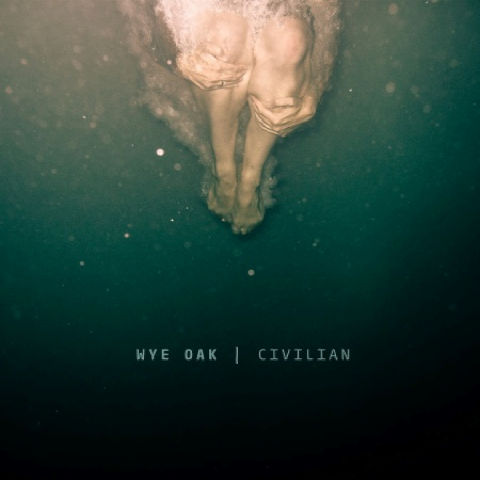
Wye Oak – Civilian

Rating: ★★★★½

It seems like Merge Records can do no wrong as of recent, with stellar releases this year from names like Destroyer, Telekinesis and Apex Manor. So it is not a big surprise that this record is remarkable, well produced and enticing. Wye Oak has indubitably grown a great deal since their last release, and continue to amaze with how fulfilling their sound is for just a two member band.

Civilian is typical in that it has its immediate standouts, but unique in that after repeated listens, those that didn’t stand out before begin to emerge from the background, becoming new favorites. The opening track, “Two Small Deaths,” is one that grabs your attention upon the first listen. A bit of indiscernible chatter opens the song, giving that feeling of the moment before a show is about to start. It puts a bit of anxious-excitement about what is going to come after the chatter falls away, and Wye Oak certainly do not disappoint. Some simple feedback eases you in, and then the elegant and buttery vocals of Jenn Wasner hit you over the head, commanding your attention.  The track ebbs and flows between the swell of folk sound from the beautiful vocals and the shoe gaze guitars.

While the start to this album is certainly calm in it’s nature, it is by no means a template for the rest of the songs. On numbers like “Plains,” there are drastic build-ups to the powerful, vocal and instrumental, crescendos. It is here, along with the rest of the album, where the rich and strong vocals of Wasner are comparable to that of Victoria Legrand from Beach House. It’s so easy to get lost in the delicate, yet hurricane force strength of the vocals, but it’s not a feeling of misdirection. Instead, it’s the wonderful feeling of having nowhere to be, and getting lost leads you to something that you never would have found otherwise.

On the title track, “Civilian,” the song builds upon itself, layering the crispness of folk and the grit of the guitar. It grows and grows, and then hell breaks loose; all tension that has been built is suddenly released in a cathartic swell of squalling feedback. Elements of brilliance such as this are found all over Civilian, both in the attention grabbers and the slow burners. The prevalence of control and detail that Andy Stack and Jenn Wasner bring to their sound allows for them to push their boundaries, all while staying calculated. Sound like this merits multiple listens, and careful listens at that, or else you might miss a savory indie rock treat in this album.

[audio:https://austintownhall.com/wp-content/uploads/2010/12/05-Civilian-1.mp3]

Download: Wye Oak – Civilian [MP3]

Lykke Li – Wounded Rhymes

Rating: ★★★½☆

If the title didn’t already foreshadow this, Lykke Li has made a noticeable shift to a darker sound in general. The lyrics have reached a point of seriousness that can lead one to believe that this band doesn’t want to be mistaken as just a girly and cute throwaway kind of music. Lykke Li, hailing from Sweden, looks to prove that she can produce mature and progressive songs on this sophomore release.

Starting out on “Youth Knows No Pain,” you can see the immediate shift in this darker direction. While the bubbly organ jumping in and out may not convey this right away, when Lykke chimes in with her sassy voice, telling you to live things up while you can, because the “Youth [that] knows no pain” will soon grow old, you can feel the sense of urgency. On the second track “I Follow Rivers,” the group dabbles in the form of drastic ups and downs. It begins mildly quiet, but then dives right into a full energy chorus that carries the jangly tune.

Changing things up from the bouncy first two tracks, on “Love Out of Lust,” the band sounds anthemic, once again urges their audience to take advantage of the time at their hands before its gone; “dance while you can.” From here, if it wasn’t felt before, is from where the newfound profundity really takes off. Yes, the same fundamental sound is there: the bittersweet vocals of the front woman herself, the amiable bass lines, some electronic elements and the overall ability to make you move. When Lykke chants “I’m Your Prostitute,” on “Get Some,” it’s clear to see that she is reaching farther than before. She wants to make a statement with her music that is as equally as meaningful as listenable.

On Wounded Rhymes, Lykke Li does just that, the songs are enjoyable and catchy, but they don’t just stop there. Instead they progress into tracks that can become statements, driven by the desires of the band itself. However, this seriousness makes for a bland number of songs after “Sadness is a Blessing” brings forth the line that dubbed the album. The loss of playfulness that makes this band is absent here, and it makes for an anti-climactic close. While “Jerome” tries so hard, it doesn’t fit in with the songs that came in the beginning and it sort of feels as though she just gave up with the end.

As disappointing as this is, I don’t think it ruins the whole album. The first seven songs are solid and groundbreaking in this new I’m-a-big-girl-now-take-me-seriously style. For the most part, Lykke accomplishes what she set out to prove.

La Sera – s/t

Rating: ★★★☆☆

Known for her bass playing in pop punk super star band Vivian Girls, Katy Goodman has been looking for side projects since spring of last year. She tried her ways under the moniker of All Saints Day, and even released a seven inch. However, it apparently didn’t stick, and Ms. Goodman moved onto her latest project. Enter: La Sera.

 Like Vivian Girls, La Sera has those cutting guitars and the presence of Goodman’s wispy vocals. However, while her voice takes a backseat on her full time band, it is the main element of distinction to this album. On “Beating Heart,” the opening song, her voice is layered upon itself to create echoed sugared oohs in the background. The clear guitar contrasts with this vocal quality, and builds up to the breaking point of the song. This is when the clarity of the guitar shifts muddier, wrapping up the bubbly lo-fi track before its close. Next is “Never Come Around,” one of the singles from the album. Some tambourine spices things up right off the bat, mixing effortlessly with sunny vocals and thus the airy yet viscous song—the norm for this album.

I think what makes this album decent is that Goodman knows her limitations; most of the songs barely reach two minutes, which sharpens the difference in between them, so that the listener doesn’t get caught up in the thick and sticky jangly songs that this album is chalked full of. In this way, the album is able to have those crests and troughs, all while staying close to that happy medium. It doesn’t become too complex for its own good and frankly none of the songs are what I would call bad or boring.

While its shortness is what makes La Sera, it also seems to be what breaks it. When reaching the end of this quick burst of energy album, it’s fairly easy to forget the latter part. The simplicity of the whole thing turns on itself, and suddenly it’s over, and you haven’t really been taken anywhere: like running on a treadmill. Slight fluctuations were present, the songs varied, but there was never that pop punk power punch that knocked your socks off and left you satisfied.

All in all, it’s still a pretty good way to spend thirty minutes of your life. Goodman hypnotizes you with her serene pop/lo-fi tunes, as any good jangly guitar album should.

[audio:https://austintownhall.com/wp-content/uploads/2011/01/LS_DevilsHeartsGrowGold.mp3]

Download: La Sera – Devil’s Hearts Grow Gold [MP3]

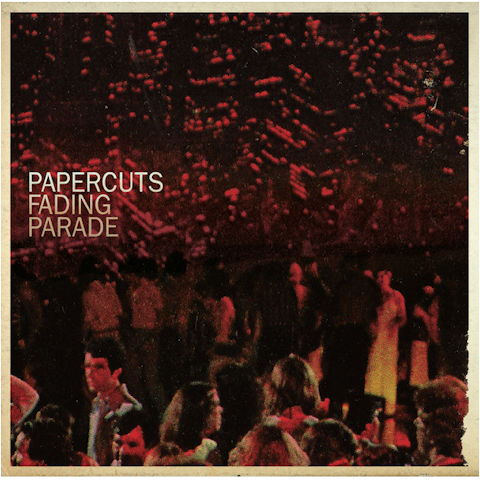
Papercuts – Fading Parade

Rating: ★★★★½

Jason Quever always seems busy, whether producing other people’s work, or writing his own tunes.  Regardless, it seems that everything he touches somehow finds its ways to my ears, eventually leading to massive amounts of pleasure.  On Fading Parade, his fourth record as Papercuts, that’s precisely what you’re going to get, endless spends of moving music that will never tire.

Something about the guitar line opening “Do You Really Want to Know” hinted at perhaps a more light-hearted Quever to open up this album, but as soon as those densely coated vocals entered the scene, I knew deep down that this was already going to be an exceptional listening experience.  The climbing guitar in the background, those precision drumming moments, all lead you towards blissful listening.  “Do What You Will” brings in the same sentiment, especially as Jason’s voice soars during the chorus, though that breathy quality he has for the duration of the song really gets to me.  Going two for two isn’t a bad way to begin Fading Parade.

It’s when you hit the third track, “I’ll See You Later I Guess” that the newest Papercuts release really began to sink in, emotionally seeking.  This tracks a slow-burner, similar to the work of a band like The New Year, yet as always, the production coats it in that heavy bit of fog, giving it a quality that seems to speak to you from the beyond.  Yet this isn’t the only track you’ll find on here that’s going to really move you, if you’re into a headphones listening experience.  “The Messenger” is perhaps one of the best songs Quever has written to date.  Slowly the song creeps forward, suddenly offering up a bit of unsteady vocals, before returning to the quiet mood.  Beware, these songs are begging you to listen again and again.

Tracks such as the aforementioned “The Messenger” offer a slight alteration in the overall sound of your everyday Papercuts recording.  Take for instance, “Winter Daze,” which gently tip-toes along with down-trodden piano.  Sure, that effortlessly warm pop element you’ve found is definitely a staple in Quever’s repertoire, but there’s new territory being explored, structurally especially.  In the past Jason’s possibly rushed forth with the unfolding of melodies in his tracks, but instead he barely lets the melody escape on this number, which makes it all the more powerful.  It’s the same sort of technique you find on album closer “Charades,” another track that gradually relinquishes its hold on melody and ecstasy.

Long have I been a fan of Jason Quever, and the more work he produces, the more I’m amazed at his gifts as a songwriter. Fading Parade shows him in complete control of every aspect he’s worked on since his debut, Mockingbird.  It’s not like he’s really put out a single bad record, but something about the latest bit from Papercuts shows him creating art above and beyond what I would expect.  This is not a dialed-in record; this is a record of great craftsmanship, and one you should all go enjoy now.

[audio:https://austintownhall.com/wp-content/uploads/2011/01/Papercuts_-_Do_What_You_Will.mp3]

Download: The Papercuts – Do What You Will [MP3]

Cult of Youth – s/t

Rating: ★★★½☆

The minute we heard “New West,” the first single from the self-titled album from Cult of Youth, I’ll admit that I was more than intrigued.  It’s got a bit of a old barroom punk rock ethos, yet the more I listened to the track, the more I discovered about the band and their sound.  Sneaky strings lurked in the background, and that dirty bass line never ceased to grab me.  Dirty alcoholic punk mixed with strings you say? Yes, I do, and oh so much more.

Kicking off the record is “New West,” the aforementioned track that really piqued my interest.  Sean Ragon’s desperate growling vocals evokes a bit of spirit I long thought had disappeared. Despite the song’s desire to have this layer of grit, there’s still an uncanny beauty from the guitar parts matched with the related string instruments.  It’s quite a special track.  From here, the band really sort of keeps pace with this sort of shantie-like track, as if the band’s leading you to sea with their brash blend of folk and punk ethos.

Track four, “Casting Thorns” is when the band begins to alter the sound, creating a space for the string arrangements to really shine in the forefront.  Ragon doesn’t have the same raspy vocals, seeming more calm here as he strums the guitar.  But, there’s still a level of darkness that underlies the track, giving a bit of an angrier tint to the traditionally folk sounds apparent here. It’s this sort of change that leaves the band sort of stuck in the middle of their own sound, which has both positive and negative attributes.  “Through the Fear” even introduces a bit of horns, making the band sound increasingly dynamic.  It’s good to see that the band evolves beyond the sound that I originally noted them for upon my introduction to the group.

The latter half of the album does tire a bit, though there are some exceptional tracks hiding here. “Lorelei” has a great strummed guitar driving the song along, and Ragon’s baritone sounds incredibly haunting here, but in a manner that makes you appreciate a good spirit watching over you.  It’s the most unassuming track of this collection, and perhaps that’s why it’s so successful, or that it precedes the one misstep the band makes, that being the seven-minute sleeper, “The Lamb.”  Okay, so there are some musical elements here that are to most people’s liking, but the song could have been wrapped up much quicker, as it seemed to carry on perhaps beyond its welcome point.

All in all, Cult of Youth has done a great job with this self-titled effort, offering new fans a hint at what they’re all about, but leaving plenty of room for growth and directional jaunts in the future.  You have to appreciate a band that’s not dying to get tied down in one place, and with the diversity of this record, who knows where they’ll go, but I’m sure it will be good.

[audio:https://austintownhall.com/wp-content/uploads/2011/01/Cult-Of-Youth-New-West.mp3]

Download: Cult Of Youth – New West [MP3]

Banjo or Freakout – s/t

Rating: ★★☆☆☆

The bedroom effort of Alessio Natalizia, Banjo or Freakout has become fully realized with this debut release. With a touch of professional production, the spacey and atmospheric sounds of this group feel tangible, yet still far away in their nature. A mix of electronic and physical sounds mesh fairly well on this album, and for some of the time, the band maintains that tightrope of emptiness.

Starting out strong, the band doesn’t sound very atmospheric. On “105,” the only hollow element that is prevalent in the song would have to be Natalizia’s pale and borderline falsetto voice that intensifies the buzzing guitar. Some synthesized dulcent undertones gradually trickle into the song, and pull it away from its humble beginning into the deep void of electronic emptiness. The synth undertones meander their way to “Go Ahead,” which is one of my favorite tracks on the album. A little bit muddier than that of the first track, it really focuses on a slightly playful quality in the mumbled vocals of Mr. Natalizia. Even though it’s shift towards a more electronic style, which I’m normally inclined to disgust, it takes a step in a fulfilling direction and becomes an enticing narrative marked by effervescing synthesizer and the dull roar of fuzz.

 Despite its promise at the beginning, there are some huge setbacks to this album. While it is a good start for a band like this, it is nowhere near perfection. Like other albums similar in style, the golden qualities that are presented in the beginning fizzle out, leaving the rest of the songs to sound overlookable and boring. The atmospheric levels of noise that interest and seem so intricate during the first few tracks slip easily into the recess of the listeners mind. Too simply it becomes background music that only serves for filling space, not for bedroom listening. Tracks at the very end like “Dear Me” lose the boundary between vocals and hollow sound, so that the two mold into one. The song loses its edginess and becomes just a bunch of noise that sounds thrown together with much haste.

 Some may say that this album falls under the chillwave category, or at least the latter part. While it does offer a relaxing break from a stressful day, it doesn’t stimulate the senses, save the first few songs. Perhaps I stand alone in the desire for music that will push and pull me places, all while maintaining entertaining qualities. Banjo or Freakout just leaves my brain hanging alone in the cold void of outer space. With some work, their next release could be stellar, so long as they focus on what makes the start sound so good.

Toro y Moi – Underneath the Pine

Rating: ★★★★☆

Despite the deception that the name brings, Toro Y Moi is actually just one person: Chazwick Bundick. Last year, he gained attention through his first release Causers of This. Only a year later, Toro Y Moi is back with a whole new set of songs, which is fairly ambitious, even if the band is only really made up of one person. Ambitious or not, Bundick has made a fairly decent sophomore effort with Underneath the Pine.

Starting with “Intro/ Chi Chi,” Bundick looks to slowly ease you into his style, submersing the listener slowly into his groovy and chill world of sound. He is careful not to throw too much at you, but allows the two minute and twenty five seconds of quite bass and head nod- inducing slow beats. Almost hypnotizing, the first track lulls you into a state of calm, Zen feelings, if only so he can pull you out on the next song. When the last noises of the intro fade out, the positively 70’s disco sounds of “New Beat” kick in. Suddenly, you’re lost in the synthesizer and muted vocals of Bundick, whirling wherever the groovy sounds take you. By the end of the second song, Toro Y Moi has full control, and it is only a matter of what experimental beats he will daunt with next.

On shorter songs such as “Divina,” and “Good Hold,” this band keeps it eloquent. “Divina” is purely instrumental and “Good Hold” relies on a messy piano line that would feel otherwise too chaotic if prolonged for any more than it is. Despite the shortness of these two tracks, both of them are still chalked full of the entrancing qualities of this sound. Contrarily, on the longer side of songs you have surface goodies like “How I Know,” which just feels like summer all wrapped up into a ball. When you press play on this song, it feels like the annual first jump off the diving board and into the cool water that relieves the sweat from your brow. Deeper cuts like “Light Black” are also present: the beat may not be as bumping, but as the gritty sound creeps its way under your skin it makes for a echo-y few minutes of soothing noise.

 It’s the variety of songs on Underneath the Pine that makes it so interesting and enjoyable. While it doesn’t feel like Bundick is trying to permeate your subconscious, he does just so with his coy disco/pop/alternative smooth rock sound. Cool trance beats mix with lukewarm vocals to make it feel like spring in the midst of winter, much like February in Austin.

Tim Cohen – Magic Trick

Rating: ★★★★☆

For most listeners, you’re probably expecting anything coming from Tim Cohen to somewhat resemble his haunting vocal performances from his main gig, The Fresh & Onlys.  But, while that dark tinted vocal is still there, Tim’s been creating music on his own for some time, this being his second solo release in about a year (making that 3 in a year, all work included).  Magic Trick establishes itself as his most timeless release to date, making Cohen a hot commodity in the small indie rock community.

“I Am Never Going to Die” sounds precisely like something your father might have listened to if he grew up in the late 60s.  It was probably a track played by his roommate while they sat in some bong circle, promising one another that they were going to make themselves happy.  Yet you won’t have to travel back in time to enjoy this piece, nor do you necessarily have to partake in recreational drugs; Tim’s music, as well as the themes throughout Magic Trick, apply just as much now as they did then.

The haunting vision of Tim Cohen that I have in my head revolves around those vocals, teetering on the edge of despair, such as you get on a song like “The Flower.”  Still, even with his songs having this shady quality, a track like this reminds you of dark crooners such as Richard Hawley, giving you dense pop songs in a simply beautiful format.  Similarly, “Ledgerdemain” operates in the same spectrum, using a heavy vocal to discuss themes of love as seen through one man’s perspective.  The light piano touches and floating female vocal accompaniment definitely bring an extra punch to this number.

But, perhaps the most notable style present on Magic Trick are the allusions to the psychedelia of years past, only viewed through a more modern lens. It’s hard to go through listening to a track like “The Spirit’s Inside” without noticing the cascading guitars that go with the moody electronic piano.  Not only that, but it hints back at those low-budget movies during the black-and-white era where your hero has a pack of cigarettes rolled up in his sleeve.  “Season of Fires” definitely has some California vibe to it, almost as if it’s the long lost Doors demo, except a tad bit better, as Cohen’s a better poet in my mind.

One of the remarkable things about listening to Magic Trick in its entirety is that you want to put some many songs in certain generic boxes, pushing influences onto the Tim Cohen, but where he seems to have progressed greatly on this album are the darker pop tracks, like those mentioned above or the album closer, “I Looked Up.”  Such touches of songwriting demonstrate that he’s more than just a one-trick pony.  While it may seem that Cohen’s been around for quite some time, this record is the first one that really shows he’s heading in the right direction, even if we didn’t see them coming right away.  Tim Cohen might be a man who loves the past, but he’s certainly the man of the moment.

[audio:https://austintownhall.com/wp-content/uploads/2011/02/Tim-Cohen-Dont-Give-Up.mp3]

Download: Tim Cohen – Don’t Give Up [MP3]

1 54 55 56 57 58 102
Social Media Auto Publish Powered By : XYZScripts.com