Yo La Tengo – Fade

Rating: ★★★☆☆

Okay, so you know Yo La Tengo, the alternative band who has only been around for about thirty years and have released twelve studio albums? No? Well, crawl out from that cave you’ve been living in and get with things! This band has been putting out quality indie rock for a lot longer than most, and Fade is far from a disintegration of such merit and raw talent that this band possesses.

On the first song of Fade, “Ohm,” you have a fine example of the Velvet Underground-esque style of endless looping of the gritty guitars to start things off right. It’s a long track, pushing seven minutes, but the persistence of the song keeps you intrigued for its duration. The mild gang vocals slide in amidst some heavy hitting percussion, contributing to add up to a fuzzy, beast of a number, which sets the band up to launch right into yet another album filled with music that is simply easy to listen to—you can easily find yourself lost amidst the subtle vocals and the overall gentle sound.

While the first song is a bit grungy, it really doesn’t give way to the rest of the album is going to go; the first track is the grungiest number you’ll find on Fade. Immediately after, on “Is That Enough,” while the fuzzy guitars are still present, the string work lightens up things quickly. But as far as the lighter tracks go on this album, stronger songs are to be had later on, such as “Stupid Things.” Fifth on the album, it’s about the peppiest of songs to be had, with Ira Kaplan’s vocals coming at you, echoed and foggy in the verses and sweetly soaring through the choruses. Meanwhile you have a steady upbeat carrying things on jollily. Another unmistakably strong song comes at the very end of the album with “Before We Run,” which incorporates the string work from before, the persistent buzz of Yo La Tengo, and the deep vocals of Georgia Hubley. Similar in length of the first number, the last track on Fade provides for a wonderful ending to the simplicity and comfortable tracks on this album, complete with some magnificent horn work to round things out.  

While the majority of the tracks are easily accessible, Fade can also be lost track of when listened to. Sure, it’s a great record to listen to when you’re just laying around or on an afternoon drive, but it isn’t really the kind of album that persists you to listen to it. Fade doesn’t beg for your attention, but it makes good use when it gets it.

Northern Portrait – Pretty Decent Swimmers EP

Rating: ★★★★☆

It’s been almost three entire years since we’ve heard anything new from Northern Portrait, but this four song affair will make us forgive the gap between releases, as this is some of the most accomplished music the band has crafted to date.  The Pretty Decent Swimmers EP may only be a short little stop gap until a full-length comes our way, but fans old and new will surely find solace in the well-manicured pop of these Danes.

It’s early in the year, but you’re going to have to try real hard to find such a splendid piece of pop musical openings for the rest of the year.  There’s a casual entrance, building the listener’s internal tension, and then unleashing enchanting bliss at the 36 second mark.  You can sing along to the chorus of “Happy Nice Day,” aided by the perfect vocal control of singer Stefan, which never hurts the audiences ability to attach themselves to the music.

“Greetings From Paris” is an eternally satisfying track, full of literary allusions and a ringing guitar line that infects any pop lovers soul.  It’d be easy to take Stefan Larsen’s voice and make Morrissey comparisons, but this song demonstrates the softer quality of the vocals, stripped of the over-bearing sexuality.  I have to admit, I’m a sucker for monosyllabic lyrics sung in repetition like the “la la la las” that close out this little gem.

If you were wondering if Northern Portrait was going to pick up a little bit of the energy, then wait until you get to “Bon Voyage.”  The cutting guitar lines are extremely sharp, which provides a natural bit of pacing to the song…almost a dance floor shuffle.  But, like other pop classicists, The Lodger, there’s a bit of restraint, focusing instead on the harmony within the tune rather than force you to stomp your feet.  Closing out the song is a soaring bit of vocal melody and a tinkering it of piano…you don’t get better than that.

And it all comes to a grand close with the longest track, “I Feel Even Better.”  Larsen here seems to express a bit of solemnity, if only in the way he delivers his vocals.  Sure, the lyrics guide one to think there’s a bit of a reawakening, but you can hear the distant pain that the narrator had to live with at one point.  For me, the attached arrangements present in the background reinforce the pristine sound of twanging guitars that seek out your heart.  A perfect bookend to the whole listening experience.

If you aim to be frustrated about anything on Pretty Decent Swimmers then you’re going to find difficulty in that search.  There’s not a single misstep or faltering moment, but rather a complete collection of four songs exemplifying pop writing at its very finest. Cheers to you Northern Portrait: and welcome back!

Pretty Decent Swimmers is available now from Matinee Recordings.

Low Culture – Screens

Rating: ★★★☆☆

If there’s one thing I’ve been able to count on for some time, it’s been the delivery of solid punk rock records from Dirtnap Records.  They’re at it again in 2013 with their first release, Screens by Low Culture.  Hailing from New Mexico, the band pumps out a grittier version of your modern power-pop, using furious pacing and jagged guitar chords to add an extra dose of energy.

“Screens” kicks off the entire affair, almost blasting off immediately with a punk rock anthem that blurs the lines between traditional punk rock and modern garage-pop.  A quickened beat, encouraged by the pounding rhythm of the drums, makes this one of the albums stand-out tracks.  Seamlessly, Screens moves along into “I Feel Your Ghost.”  It’s here that you first begin to notice a little bit more of a guttural influence on the vocals; this is one of the minor effects that carries the group away from the majority of their peers, at least in sonic comparisons.

While a great deal of Low Cultures latest effort has a tendency to stand in the territory of their punk/power-pop fusion, there are a few songs lurking here and there that allow listeners to absorb something a touch different. For me, you can tell by the opening guitar line of “Touchy Feely” that you’re in for something that varies from the group’s standard fare.  It jumps into a forceful vocal delivery, almost barked in your ear, though they do create a bit more classic alternative melody that enters towards the latter half of the song.  A few songs later you find yourself at “Nightmare,” providing that pummeling sound that one can only assume entices those in a live setting to circle about.  While I appreciate the variation in songwriting, these two examples are also probably the hardest for my ears to connect with during an average listening experience.

My favorite piece of Screens has to be “Trying to Quit.”  It’s sort of a sloppy garage ditty, which has me bobbing my head and tapping my toes as I write these very words.  It also features a softer vocal, though you can still hear a hint of strain; its presence makes the song immediately accessible and memorable, regardless of your personal tastes.  The group comes close to repeating this feat on the following track, “California,” although it takes a second or two longer to fully grasp the apparent pop sensibility in the songwriting.  Like the opening two tracks, this is a good 1-2 punch.

For my two cents, I’ve had a blast listening to Screens, blaring it on the home stereo time and time again.  Sure, there are some weaker spots, but even those I don’t mind playing all the way through.  While Low Culture waivers slightly in monotony, the record’s brevity allows them to avoid such traps, leaving music fans with an album you’ll spin on the table repetitively.

[audio:https://austintownhall.com/wp-content/uploads/2012/11/01-Screens.mp3]

Download:Low Culture – Screens [MP3]

Lone Wolf – The Lovers

Rating: ★★★½☆

Paul Marshall, the heart of Lone Wolf, has been dabbling in the music world since 2007, when he released a solo album under his own name, but Lone Wolf emerged in 2009 as another solo project of Marshall’s, edified with a new moniker. The Lovers is his second album under this name, and it is full of swirling darkness and groovy tunes that will slither its way into your listening palate and curl up and stay.

After a forty five second introductory track of ambient and minimal sounds, the first track, “Spies in My Heart” kicks things off on a mellow note, setting the chill tone for the rest of the album. It’s a slower number, but it also shows off Marshall’s rich vocals, which are charged with emotional power and subtleness. There is an encompassing quality to his voice, which lures you in and makes you hang on his every word. Also on this song, the interesting and complex percussion is introduced in the background, which makes Lone Wolf unique from other alternative, and electro-folk outfits. All together, the elements of this number make for a deep and gradual introductory track.

There are several elements of this album that remind me of that of a stripped down Twin Shadow record. You have the swirling and meandering electric guitar loops and the central focus of percussion, which are exemplified on one of the most interesting songs on the album, “Ghosts of Holloway.” The third real track on Lovers, this song begins with an infectious riff and complex rhythm that will have you grooving even before Marshall’s vocals chime in. After a few opening moments of instrumental, Marshall joins in with the choppy percussion and riff to add another element of smooth to the mix. His voice, combining with the guitar’s cohesive riff, nicely juxtaposes with the cutty drumming. If you haven’t enjoyed the album up to this point, do yourself a favor and listen to this little baby on repeat a few times—it’s damn catchy.

While the juxtaposition between smooth and sharp is quite effective on this number and others like “The Swan of Meander” and “The Good Life,” there is quite a bit of it within the small space of this thirty-four minute album. I’m not saying that it’s not intriguing and appealing, but that The Lovers is missing that element of surprise and variation that would allow it to go from a good album to an especially great one. It’s still a haunting and groovy album with several excellent tracks to enjoy and get lost in. So give The Lovers a try and find some new tracks to spice up your mixes and musical repertoire.

The Babies – Our House On The Hill

Rating: ★★★½☆

The project between Woods‘ Kevin Morby and Vivian Girls‘ Cassie Ramone isn’t exactly a new project, but their newest effort for Woodsist seems like the side-project finally got some much deserved focus from the two core songwriters. Our House On The Hill is the perfect execution of sunny pop with a ramshackle approach, giving listeners exactly what we’ve been looking for since we first got wind of the band.

“Alligator” takes aim at my pop-centric heart almost immediately.  A ringing guitar accompanied by Morby’s sunny vocal approach definitely pleases, and when Cassie Ramone comes in for accompaniment midway through the track, I couldn’t have been happier.  It’s a simple tune, with fairly common writing, but it’s just the beginning of the infectious hooks coming from The Babies.  Immediately following you’re greeted by slow-walking, where Morby and Ramone take dead aim at bright pop by trading vocal duties back and forth. This is the track I longed for the group to create!

A few tracks ahead and you enter the realm of perfection with “Get Lost,” one of the standout tracks on Our House On The Hill.  This is definitely Morby’s track, and it’s his vocal performance that steals the show, though the low-key approach of the various verses just builds the tension for the group to blast off into a bliss filled meandering guitar affair to close out the song.  Just because there’s a hit like this laying in the middle of the record, it doesn’t mean there’s not enough interesting tracks to fill out the album exceptionally.

You can take “Mean,” which is mostly a one-man Morby affair, with the singer coming off with hints of Bob Dylan, both in the writing of the track and the vocal delivery.  Ramone’s quieted backing vocals only strengthen the track even more.  There’s also “Baby,” which belongs to Ramone, and definitely wears the mark of her other project, Vivian Girls, though there’s also similarities to Best Coast lurking in its structure and vocal delivery.  These are just a few of the various examples that mark this effort by The Babies, leaving you with an effort that doesn’t really repeat itself, though paces back and forth in similar territory.

Our House On The Hill is all over place, and in saying this, I’m meaning it as a compliment.  In combining the great songwriting attributes of Morby and Ramone, the record never really gets stale, and if anything, it only improves reveals more gems from listen to listen.  Depending upon your mood, you might light the sunny pop elements, but others might find themselves leaning towards the more stripped down tracks like “That Boy.”  Thats precisely why I think The Babies are so successful on this round, doing what they do best on their own terms, and excelling in every way.


Andrew Bird – Hands of Glory

Rating: ★★★★☆

It would be an understatement to say that Andrew Bird is an accomplished musician, as his work in the musical field spans a great distance. Through his work with Bowl of Fire as well as his own well-developed solo career, he has made a name for himself in the singer/songwriter category. He has generated quite a number of fans to support him and was asked to write an entire soundtrack for a film. Folksy tunes are his game, and his talent shines through everything he does—Hands of Glory is no exception.

Though this album is a fairly short release at thirty-five minutes, Bird doesn’t compromise on substance in the slightest. The first song is an excellent example of the brevity, yet complete nature of each individual number on Hands of Glory. “Three White Horses,” at three minutes, blazes by, building to a dramatic crescendo at its finish. It’s pretty classic to Bird’s style—folksy and slow burning, at least in the beginning of the song. It starts with a bass-line and Bird’s bluesy voice, accompanied soon by backing harmonies and the track is mild, but then explodes into something more fiery; the wall of sound builds and then breaks in emotion that can be heard in Bird’s vocals.

The emotional quality of this album can be felt the entire way through, but it never gets too heavy. You have deeper cuts like “Spirograph,” on which Bird’s voice matches the guitar riff in a melancholy melody and the songwriting of this gentleman is exceptional if you really listen. But there are also lighter numbers like “Railroad Bill,” which evokes a classic country-blues number, complete with a barnstompin’ beat and a fiddle solo to match.

It all comes to a close with a blissfully serene nine-minute number whose simplicity overwhelms you. “Beyond the Valley of the Three White Horses” is a treat to behold—the elegant over-arching string-work drifts in and out, alternating with opposing casual guitar strumming. I find myself swooning over the beauty of such a song, getting lost in the heavy violin sound and then picked up once more with the guitar and Bird playing out in his gentle way. Though it is nine minutes long, there isn’t a point in the song in which you even think about its length. On the contrary, you wish it would continue.

Here in Austin we’ve just experienced our first real cold snap of the season, signaling perhaps the hope of fall, but if you’re anywhere else really, cold weather is here. Hands of Glory makes a great listening companion to warm your inside with folksy bliss as you watch the leaves change colors. So throw on a sweater and jeans and let Andrew Bird keep you company.

Black Moth Super Rainbow – Cobra Juicy

Rating: ★★☆☆☆

I always have a great deal of respect for bands who aim to keep as much about themselves secret as possible, allowing their music to do the talking. Such is the case with Black Moth Super Rainbow—although this is their fifth studio release, little is known about the members of this group and they plan to keep it that way. An enigma or not, this is not their first rodeo, as they’ve been producing electronic experimental music for years.

Unnatural would be one way to describe the music of this group. Gone are all traces of humanness from these tunes, replaced with distorted and robotic vocals, layers of space-age synthesizers and mechanic percussion that never misses a beat. All of these elements make it very easy to get lost in the world that Black Moth Super Rainbow has generated, but something about their material keeps you along for the ride. Take the first number, “Windshield Smasher” for example. The song starts out with a bouncing beat and then dripping-with-distortion guitar joins the mix—at first it doesn’t quite sound too experimental. Then, the vocals, or a robotic emulation of vocals, and synthesizer are added to the mix, which adds a peculiar spin on the sound, leaving you wondering what exactly you are listening to, but grooving along nevertheless.

It seems that there are two ways to listen to this album: analyzing what you are listening to, or getting out of your head and jamming along with the band is offering to you. For me, I waiver back and forth between these two— certain songs just appeal more than others. Although, instead of the normal disparity between the merit of numbers, I find these songs to fall under the ‘take-it-or-leave-it’ umbrella. You have songs like “Windshield Smasher,” and “I Think I’m Evil,” that hold your attention for their duration, providing you with something different than your normal electronic beats to jam to.

However, there is a lack of variety in the songs that don’t call to your attention—all of this mechanic and inhuman sound begins to grate upon you as you progress in the album. Less and less do you find tracks that you are keen upon listening to, and instead are kept waiting for the knockout numbers that never really come on Cobra Juicy. The album slowly swirls into a mass of bass and beat and then ends, leaving you wanting for the enthusiasm that you possessed when you first began. Perhaps it is my own inability to pick up on the nuances from song to song, but Black Moth Super Rainbow get a little lost themselves on this release.

Punks On Mars – Bad Expectations

Rating: ★★★★☆

Ryan Howe’s not new to the music world, but his newest endeavor as Punks On Mars is sort of a new creation.  Listening to the entirety of Bad Expectations, you’re rushed through a compilation of Howe’s influences, re-imagined and perfected by his gift for pop sensibility.  Sure, you can say it’s all over the place, musically, but that makes it one hell of a good listen.

After moving beyond “Overture,” the interlude opener of Bad Expectations you get tossed right into “Chandelier,” which opens with a Ramones-tinted guitar chord.  But, Howe comes in with his semi-erratic vocal delivery, and carries on in his own fashion during the chorus, making the song his own, despite obvious nods.  The punk theme is definitely present on this record, though it’s not stamped onto every song.  It appears on tracks like “Hey! Tiffany” and “Poltergeist,” but you get the feeling that these are just a nice allusion to the heritage in Ryan’s record collection.  He even adds his own vision, draping oddball electronic touches in oddball places, leaving a fresh impression on the listener.

For me, the adoration for Punks On Mars comes from the group’s ability to meet in the space left voided by punk rock and glam.  My mind recalls the progressive tunes that Television banged out, or maybe even Generation X (Kiss Me Deadly), where guitar playing was heralded and song structure was tightened.  If you’re looking for a song that meets my references then just take a listen to the short “Victoria’s World,” using a gleaming guitar and pounding rhythm to clear out the punk rock and replace it with generous elements of pop.  However, there’s also lurking places where the early mod stylings of The Jam are apparent.  Well, at least that’s what I thought when I first gave a listen to “Showers of Pain;” it’s music sounds propulsive, almost carrying a military sensation within it, but there’s more anthemic moments that seem to push it beyond the boundaries of limitations.

In the end, Bad Expectations succeeds because it’s got doses of everyone’s favorite bands, but these aren’t stale renditions, rather an artist putting his own stamp on the music he enjoys.  Many of the songs have electronic elements or keys added in to give a new coat to a sound that seems so familiar.  But that’s why I love Punks On Mars.  Like Ryan Howe, I’ve got tons of punk rock and glam rock in my collection, but in between there’s other bits of clever pop and more orchestral genres.  It seems like this entire effort is a blend of all that, with Howe taking the helm, aiming to freshen up the music of your youth that just might have grown a bit tired.   It’s nice to see someone going outside the normal re-hash and creating something I’ll adore for its obviousness, yet still find myself, and my ears, challenged.

[audio:https://austintownhall.com/wp-content/uploads/2012/09/Punks_on_Mars_-_Showers_of_Pain.mp3]

Download:Punks On Mars – Showers of Pain [MP3]

Bad Expectations is available now from Zoo Music.

Plateaus – s/t

Rating: ★★★½☆

After a slew of catchy 7″ releases, Plateaus are here with their self-titled LP, which is absolutely refreshing. It’s coated in a bit of distortion, but it’s quick to the point and filled with hooks.  It’s a short listen, which benefits those looking for high energy on repeated plays.  Those looking for a new slice of punk in their playlist need to add this one immediately.

It opens with the excellent single, “Blackout,” which bangs out a throttling beat from the get-go, while the guitar cuts its way sharply in and out of the mix.  Vocals have a nice bit of polished sheen to them, providing an edgy bit of pop to the pummeling track.  Then it jumps right in with another heavy-hitter, “Beach Coma.”  Musically, the songs seem to dwell in a similar space, though the vocals are delivered a little bit more spoken-word than its predecessor.  These are the sorts of songs that make a perfect album opening, giving you energy and hooks, establishing the mood from the start.

But, Plateaus aren’t aiming to make this all in-your-face rock n’ roll, especially when you listen to a song like “The District.”  There’s a slower pace to the percussion and the guitars, hinting at a more classic power-pop sound–something I adore in particular. Songs like “Jump Now” and “Swamp Thing” also carry this element of polished swagger to them, providing bits of pop to the general mood of Plateaus. For me, it gives you a nice little break from the grittier moments on the record, just in case you needed that breather.

Sure, the sound of Plateaus does have a very slight tendency to get caught in redundancy, but don’t even worry about that, as there are some clear standout winners, aside from the previously mentioned tunes.  “Better Things” is one of the album’s longest tracks, and it’s filled with noisy cymbal work and a twang-ing guitar that lurks in the far off background, only to cut in with a bit of screeching solo from time to time.  It’s stuck right in the middle of the record, so it often comes in to surprise me, and then I play it again.  I also have a personal affiliation with “Do It For You,” which was one of the first songs that turned me onto the group.  While it might open with a screeching guitar, there’s an element of sing-a-long pogoing delivery to the lyrics.  Sure, the music is lo-fi and dirty, but the hook comes with the combination of the music and the vocal, drawing me in every single time.

Since San Diego has a deep-rooted history of punk rock, it makes sense that a band like Plateaus would be born from the city.  They’ve combined the classic elements of the city’s sound, using hard-edged guitars and fusing it with elements of pop-punk, creating a sound that allows you to tap your toes, sing-a-long, and still bang your head.  There’s not a bad song on the record, so you can’t fail by getting yourself invested in this great effort.

[audio:https://austintownhall.com/wp-content/uploads/2012/09/Plateaus_-_Blackout.mp3]

Download:Plateaus – Blackout [MP3]


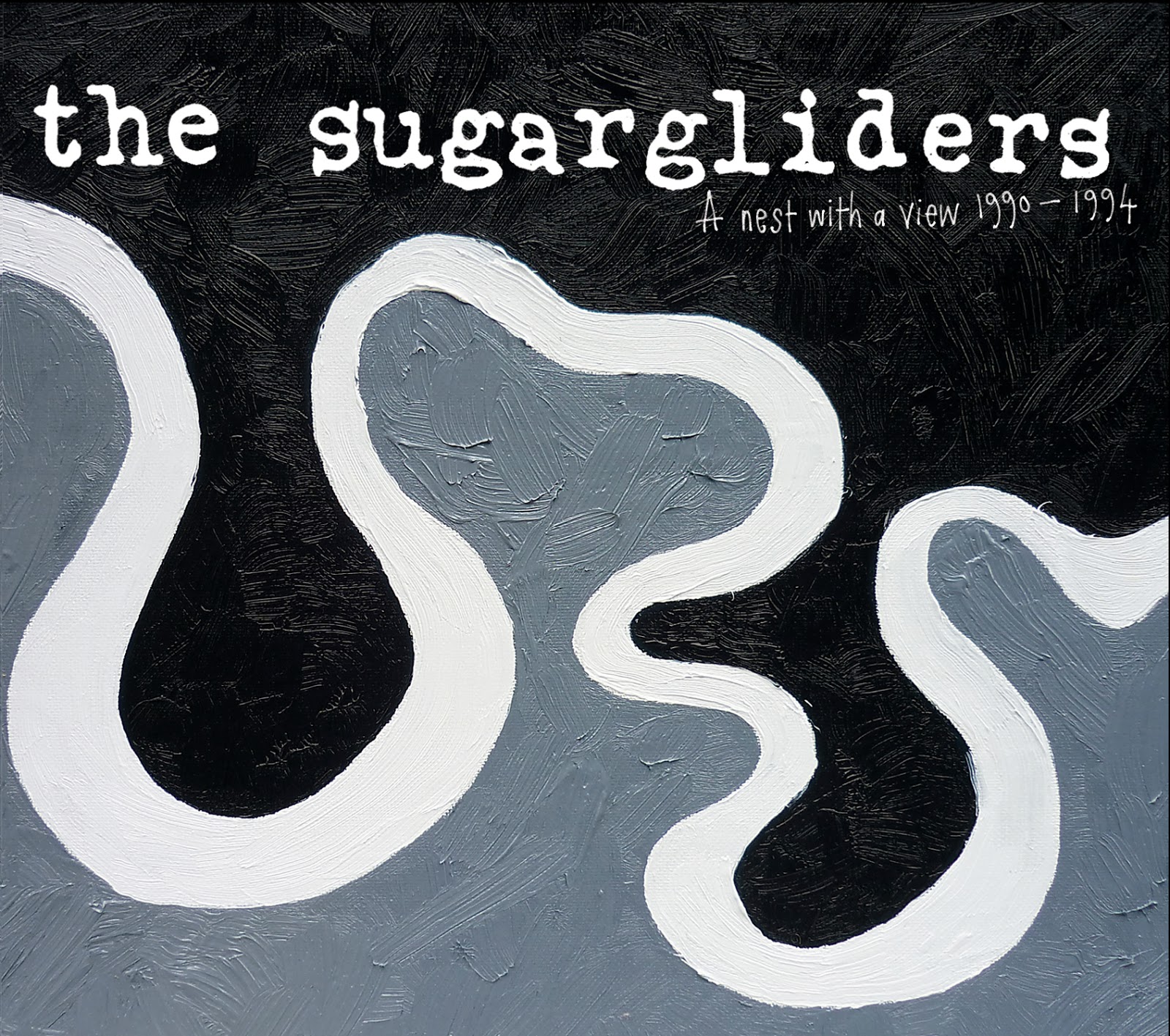
The Sugargliders – A Nest With a View: 1990-1994

Rating: ★★★☆☆

Writing about a compilation is no easy task, especially when the output of said band, The Sugargliders in this case, was so limited, especially to ears on American soil.  Luckily for us, the hardworking folks over at Matinee Recordings have just released A Nest With a View, a collection of the Melbourne group’s singles and their one LP from 1990-1994.  If you’re looking to get your hands on a classic indie pop record that sounds just as relevant today as it did when it originally was released, then this is precisely the album for you.

“Ahprahran” begins our re-introduction to The Sugargliders, basically the project of the young Meadows brothers.  What struck me on this first track is how much I can see this being a vital part of any indie pop collection in the present day.  String arrangements accentuate the incredible melody, and the fact that the guitar sounds like it’s being carefully picked rather than sung only thrills me more.  It’s not the only standout track, in fact, most of these tracks hold up well on their own, but my current favorite is “Letter from a Lifeboat.”  There’s this minimal percussive element, and the guitar is carefully picked from the opening minute, almost like a classical guitar player.  Then the Meadows brothers combine their vocals to craft this fluid harmony that continues to fascinate me the more I play it.

But, for all my love of the aforementioned tracks, there’s plenty within the confines of A Nest With a View to capture your ears. I like how “Sway” opens with this wayward harmonica, crafting a melancholy time that’s reinforced by the lyrical content of a person moving on from their loved one.  You also have to appreciate the earnestness of the songwriting in “Police Me,” a song that reaches its climax when the lyric of “it’s true” is shouted amidst the intricate guitar playing of the group.  Of course, I’m always a sucker for added instrumentation like horns and strings, such as those little flourishes you find on the collections final track, “Top 40 Sculpture.”

I know that not everyone has the same fascination I do with brilliant indie pop music, but I’m glad that modern technology allows us to go back in time and expose the heart and soul of the movement.  I’m always amazed at the work accomplished by bands like The Sugargliders long ago, and although it’s nearly two decades from their time, it still sounds every bit as relevant in today’s genre.  A Nest With a View is an exquisite snapshot of a band that left us with a brief career, but one that, as evidenced here, surely stands the test of time.  You can only say that about the greatest of tunes.

[audio:https://austintownhall.com/wp-content/uploads/2012/10/01-Ahprahran.mp3]

Download:The Sugargliders – Ahprahran [MP3]

A Nest With a View is available now from Matinee Recordings.

1 11 12 13 14 15 61
Social Media Auto Publish Powered By : XYZScripts.com