Cat Power – Sun

Rating: ★★★½☆

Cat Power, or rather, the woman behind the moniker, Charlyn Marie Marshall, is essentially a staple in a great deal of self-professed indie music fans. Since as early as 1995, Cat Power has been releasing albums, though the success of Marshall has been debated over the years, as her live performances showed signs of her degradation from problems with alcohol. That was back in ’06; in ’08 Jukebox surfaced and showed signs of revival, though far from a knockout record. Now it is 2012…has this front woman and backing band put the “power” back in their name?

Starting things off on a wonderfully groovy note, “Cherokee” opens on a bubbly note. Simmering in its slow, rolling drumbeat and its angled guitars, it slowly builds, layering sounds so that you focus on Marshall’s purr of vocals, whose transfixing, yet subtle elements blow other female vocalists (i.e. Lana Del Ray) out of the water. The tone of the track is kept pretty mellow throughout due to the steady percussion, but the vocals push it further and further, each chorus swelling. Marshall spits her words out quickly, relying on assonance to aid her in the flow of the lyrics and you’ll be singing along with her, joining in on the chill and yet stimulating opener. Akin to that hiss you hear when you twist the cap on an ice-cold soda, “Cherokee” is a sure sign of good things to come.

A similarly catchy number that follows a song later is “Ruin,” on which the fluidity is still present, but the song comes across with more a pop sound due to piano sounds, and a more casual approach to the percussive elements. The instruments all bleed into one another, and yet have their place at some point at center stage in the song, which is owed to the tone that the group has established early on in the album. As the album progresses, Cat Power hits you back to back to back with effortless, yet stylistically complex tracks that allow for total immersion in the music a quality that felt a little lost on past efforts.

So the answer to the question aforementioned is yes—Marshall is on point in her songwriting and the instrumentation on Sun enhances the seductive, but never lewd, prowess of such a front woman.  Fans of Cat Power will rejoice, while newcomers will find another artist to enjoy; it’s a solid enough of an album to induce interest in the entirety of the songs created by this band, which is what any already established band can hope for.
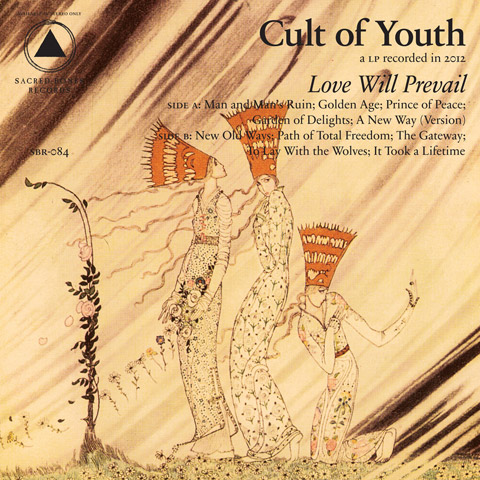
Cult of Youth – Love Will Prevail

Rating: ★★★½☆

There seems to be a lot to the storied past and present of Sean Ragon, the lead man behind the Cult of Youth outfit, but I wonder if that’s even relevant nowadays.  Where he began is probably not nearly as important as where he’s ended up, crafting another beautiful record, Love Will Prevail, that combines elements of folk, punk and perhaps even hints of more experimental works we needn’t delve into at this point.

“Man and Man’s Ruin” begins the entire affair with a dominant strummed guitar while a tribal tom echoes in the background, setting the scene for Ragon’s deep vocal to tell the story.  For me, there’s a great bit of restraint shown in his delivery, something that came often on the last Cult of Youth record, but not quite often enough.  Of course, he can’t hold back forever, unleashing his throaty yell as a female counterpart fades in and out.  As an opener, it demonstrates a warmth on Love Will Prevail; it’s almost a quieted affair.  A similar demonstration of this touch comes in the way of “Prince of Peace,” which uses a vocal effect (recording procedure) that creates a backing group for his voice.  Personally, I’m always affected when his first grows deeper and louder in the mix.

But, while Love Will Prevail spends a great deal of its time on the softer folk side of Ragon’s influences, there’s still some punk ethos in what he does.  “Path of Total Freedom” is a short number, but it earns its inclusion here with its usage of horns atop the rocking sea shanty.  Just listening to it I can imagine my old friends stomping about as beer spills from their hands onto the floor…a nostalgic image, but a good one.  Earlier tracks such as “Garden of Delights” also provide an element of darkness that I’ve come to appreciate in Sean’s music.  The interesting bit is the electronic feedback that’s used in the middle of the track, adding that experimental touch to the group’s neo-folk-punk sound; blaring horns continue to up the ante.

While Cult of Youth definitely holds onto a heavier side of folk, I will always fawn over tracks like “To Lay With the Wolves.”  On this number, the group perfects the loud quiet loud quiet formula that’s been fashioned by their forefathers. Interestingly, it always has this live emotion to it, as if the recording process has allowed Ragon to stand before you, presenting you with his craft.  In my eyes, this is the statement track of the record, giving you hard and soft qualities, while still playing with bits of creativity that are sure to be appreciated.

In the end, Love Will Prevail is more than successful.  On many accounts, it would be easy to lump the group in as just any other folk revivalist group fronted by a former punk rocker, but there’s so much more to it.  Splashes of experimental sounds, light backing vocals and appropriate horn usage push the envelope, and in doing so allow for Cult of Youth to make a statement: they’re more than just your average neo-folk group, and we’re all better off for it.

[audio:https://austintownhall.com/wp-content/uploads/2012/07/01-Man-and-Mans-Ruin-1.mp3]

Download:Cult of Youth – Man and Man’s Ruin [MP3]

Love Will Prevail is out now via Sacred Bones Records.

The Fresh & Onlys – Long Slow Dance

Rating: ★★★★☆

I listened to this record 8 or 9 times, all along thinking it was on the verge of either a 3.5, but not quite.  I figured my love and adoration might just push it over the edge, so I gave it a few more spins. Then it hit me, Long Slow Dance is perhaps the most focused and complete the Fresh & Onlys have completed up to this point in their short career.  Given, they’ve stripped away a little bit of the reverb, but it makes way for a clarity that is really appreciated by those following Tim Cohen and company.

“20 Days and 20 nights” opens with a bit of a catchy jangle, holding back on the pace just a bit.  It allows for the perfect introduction to a more polished-sounding Tim Cohen. His voice sounds steady, rather than wavering in the hazy distance as you’ve come to find on Fresh & Onlys records. If you listen closely this time around, you might even catch a bit more emotion in his voice–it’s barely audible, but listen closely.  For me, an avid fan, it all indicates a more confident singer, and group for that matter.  Years ago I couldn’t have imagine them creating tunes like “Long Slow Dance,” which closely resembles a folk ballad.  Percussion is turned down low, giving the strum of the guitar and the dancing tambourine a little bit more emphasis.  While they hold back in spots, they do unleash a little bit more power in various spots.

My first notice was “Yes or No?”  Once that guitar enters accompanied by the drum, you know exactly that these guys mean business.  Like most tunes on Long Slow Dance, it’s clearly linked to the annals of the band’s previous works, just with more punch. Or, you can listen to “Euphoria,” which again utilizes more pronounced drum work, not to mention some cascading guitar-lines. Honestly, the first ten second almost gave me a punk rock feel–that’s until Tim came into haunt the track with his heavy vocals. And, such emphatic songs are great in the scheme of things, but I really like the extra touches outside of the group’s normalcy that they’ve chosen to include.

Have you listened to “Fire Alarm?” It’s got a strong electronic bent to begin, and while that remains slightly in the back, there’s a definite groove that doesn’t sound too familiar on most Fresh & Onlys albums, being one of the reasons I really like it.  Take the group’s psychedelic touch, mix it in with hints of the 80s swatch, and you have one of the most intriguing songs on the record. Or you might want to take a look at “Foolish Person,” where you’ll find the band flirting with touches of modern pop construction, using Tim’s vocal to captivate listeners while the rest of the posse work their magic…and then it just blasts off into experimental noise to wrap out the 6 minute track.  There’s not much else like it in the band’s catalogue.

While I may have been on the fence a bit, that’s just my own idiocy. Long Slow Dance finds the San Francisco group mixing in newer influences and stronger studio production to knock this one out of the park.  You know Fresh & Onlys can write great songs, but this time they’ve written twelve, using every bit of their influences to create a refreshing record that only gets better the more you listen.

Poor Moon – s/t

Rating: ★★★☆☆

Side project of two members of Fleet Foxes or not, Poor Moon is essentially the child of Christian Wargo, bassist/vocalist for the aforementioned band. For years, Wargo wrote and recorded songs on his own before he decided to bring along Casey Wescott, as well as Ian and Peter Murray to help bring his bank of demos and songs to fruition. Thus was born Poor Moon—a band to adapt a collection of songs into a collective album.

Naturally, with musicians from such a well-known band in the folksy/indie scene, people will be drawn to Poor Moon for its ties, but those who come looking for the vast dependency on warm harmonies and big, swelling folk sounds will have to keep on looking, because for the most part, this effort showcases folk sound on a smaller, minimalist scale. Take the first song “Clouds Below” for example, begins with some gentle guitar plucking and the soft vocals of Wargo, which meander in coolly, harmonizing with the impossibly higher backing vocal to create a serene and simple opener. This sets the tone for the album, alluding to signs of a peaceful, folksy sound.

But, the band picks it up a bit from where they leave you after “Clouds Below” especially on the third track “Same Way,” where things get groovy. One of the strongest on the album, the song employs some opening ‘ooh’s’ and is backed by strong melodic xylophonic sound as well as big echoing drums that fill the previously empty background of the song. There is a quite an enjoyable breakdown towards the end of the song that is just long enough to give you a taste of the musical ability of the members of this band and it makes you desire a bit more depth from the songs of Poor Moon. Through the rest of the album, you listen for little pieces of this depth that the band demonstrated on this song, but sadly they are in short supply. It isn’t the lengthy and full storytelling and serene folk album that feels right for the genre and it comes across as a group of songs that were forced to sound similar, as opposed to the authentic and natural production of an album.

Most of the songs are relatively short for folk numbers that are reaching to be meaningful and impress a feeling upon their listeners, which leads me to my biggest complaint about this album; there just isn’t enough on here to really make an impression on those who take a listen the first way through. With repeated listens, it’s possible to grasp and really hold on to the music that has been so meticulously laid out for its audience.

Wild Nothing – Nocturne

Rating: ★★★★☆

Perhaps one of the greatest things about listening to Wild Nothing is being aware that the project began as an intimate bedroom affair, possibly not even meant for mass consumption.  But, as with all good things, it’s made its way to our ears, and with Nocturne the sounds have become more fleshed out, creating a more dynamic sound that bodes well for Jack and friends.

With a title like Nocturne, you immediately get a darker image than what you might have gotten from the early works such as Gemini.  “Shadow” works with that meaning, both in title and in its emotional pull.  Sure, there’s still a bit of an angular guitar chiming in, but the lush string arrangements bring out an undercurrent of heavier sentiment.   Similarly, the title of “Midnight Song” implies the exact sentiment, but there’s something more energetic lurking here.  I’m not sure if it’s the guitar sounds, or Jack’s vocals, but I feel as if there’s more emphasis in this tune; it’s a personal standout for me.

But, one of the things I like from this new recording by Wild Nothing is the smallest of tweaks that demonstrate a branching out of sorts for the group.  If you skip through the album to “Paradise” you’re going to find an entirely different guitar line than what you’re used to from the band.  It’s almost as if Jack switched up his homage to C86 bands, trading it in for some Northern Soul guitar licks.  That being said, the electronic wash present on the track, and the deeper vocal tones still tie it nicely into the thematic darkness of the entire album.  It’s a good song to contrast with earlier numbers like “Only Heather,” which gains its energy from the frenetic pace of the drumming here.  I can see how the vocals have a similar weight to them, but the guitars are much brighter, and your toes won’t be able to avoid a bit of tapping as you listen to the record at your desk.

Personally, I think there’s sort of a magical quality to Nocturne, and I don’t mean in the sense that it’s going to possess your soul, though it just might.  Lyrically and emotionally it seems to carry with it an other-worldly quality that combines bits and pieces of the group’s earlier works with touchstones of its contemporaries.  Yet, with all those bits and pieces, something inevitably captures you, pushing your thoughts beyond the mundane.  Perhaps wistful is a fitting term to use here, as the title and the mood are affected by a feeling of sadness; I honestly don’t know how to put my finger on it, but I think listeners will completely understand the sentiment after a few runs through.

For those that expected Nocturne to be a complete return to where Wild Nothing left off with Gemini, you might be disappointed.  It’s definitely an album consumed by the nature of the title, offering a fair balance between beauty and the vague hints of darkness.  Light splashes of energy come and go, but what you’re left with is a record that immediately transports you beyond your status quo; such is the quality of truly great music that can consume us wholly, yet still maintain its intimate qualities.

[audio:https://austintownhall.com/wp-content/uploads/2012/08/08-Paradise.mp3]

Download:Wild Nothing – Paradise [MP3]

Ariel Pink’s Haunted Graffiti – Mature Themes

Rating: ★★★★☆

Ever since I first caught wind of Ariel Pink’s Haunted Graffiti it always seemed like (it actually was) one man’s recording project.  It was steeped in lo-fi recordings, occasionally allowing for the pop elements to leak out into the listener’s ear.  On Mature Themes, throw all your preconceived notions out the window and get ready for Ariel Pink’s pop extravaganza.

I swear that the first time I heard album opener “Kinski Assassin” I thought I had stumbled upon some rare Magnetic Fields track.  Deep vocal tones backed by keyboard backbones are most prevalent, fueled by witty bits of lyrics that might only connect with the songwriter.  It’s actually a solid tune, just not what I expected here. From here it blasts off with “Is This the Best Spot,” which definitely sounds more like Ariel Pink’s Haunted Graffiti have opted to make a video game piece…it’s like the oddball version of Blank Dogs–not necessarily a bad thing.

While the group’s received a lot of praise for their work in the past, I feel as if the accessibility of Mature Themes alone warrants more fans and listeners, though that might steer away the hipster cognoscenti.  “Only In My Dreams” approximates the group’s quirky psych hits, but the production has made way for clarity that makes the record leaps and bounds better than its predecessor.  There’s warm tones from the guitar, relaxed backing vocals and a central pop element…yet it’s definitely still as playful as ever.  “Farewell American Primitive” is another track where the clarity of the pop element provides listeners with a chance to really sink themselves into the song. You can just take one listen to the vocals and you’ll see that this track is moving the band in a more direct approach to songwriting, and that will vastly benefit anyone who picks this up.

Still, I’m not going to get rid of the allusions to Stephin Merritt, though there’s slight differences present.  “Symphony of the Nymph” is another example of a track where Ariel Pink are flirting with more sincerity in their songwriting, using simple rhyme with the lyrics to provide a much-needed hook.  But, of course, the group’s always been built upon pushing the limits of their craft, and even within this track they do it successfully, happily letting the tune take turns left and right, only to return to the central pop song.

Admittedly, I can see that Mature Themes is not nearly as weird and out there as many listeners thought Before Today was.  You’ll find more tunes that allow you to sink your teeth into the lyrics, rather than coat them in meaningless atmospherics and yelps. For some, that’s going to be a detractor, as they want Ariel Pink’s Haunted Graffiti to be their own secret joy, but with some of the best song the band’s constructed to date, that’s not going to be the case this go round.  Ignore the recent drama of the group and ignore the ideas you already have about the group.  If you do so, you’re going to find yourself pleased with a pop record that’s got far more longevity than anything the group’s put together before.

[audio:https://austintownhall.com/wp-content/uploads/2012/08/04-Only-In-My-Dreams.mp3]

Download:Ariel Pink’s Haunted Graffiti – Only In My Dreams [MP3]

Nude Beach – II

Rating: ★★★★½

There’s very few records out there that force you to pause and take a deep breath, momentarily reflecting upon the great possibilities that await you.  This is precisely what happened to me when I first put on II, the latest release from New York’s Nude Beach.  For me, it’s exactly everything I love in music…a little bit punk, a little bit pub and a whole lot of hooks; isn’t that what we all want?

“Radio” is the opener for II, and it’s a great way to start things; it’s sort of power-pop, but the type that was sung by your older brother when he was hanging out doing Springsteen covers with his friends. This vocal’s not punk rock; there’s a bit of classic American pop sensibility, which is refreshing in this genre.  And of course, the band moves into a bit of their Elvis Costello work on the following track “Walking Down My Street,” but I like the slight bit of yelp that comes through; it balances out with the smoothness of the song’s chorus.

But, as much as I love to write about great power-pop tunes, Nude Beach adds an extra bit of pop that lays outside the tried-and-true formula. You take a  tune like “You Make It So Easy,” and you can tell that this group isn’t defined by the historical context of the tunes they obviously favor.  I like the mellower approach, the touches of keyboard bouncing in the background and I don’t even mind the guitar solo.  You’ll also find hints of a good old-fashioned ballad by way of “Don’t Have to Try,” which is pretty much just a slow jam to close down the night at the bars, again with a late touch of organ in the background.

While it’s refreshing to see that II isn’t fueled by pure energy through and through, the peppy songs don’t hurt the release by any means. “Cathedral Echoes” is perhaps the most punk rock jam on the album, with furious pacing by the percussion section and a bratty bent on the vocals.  I like the swagger you can feel coming through the speakers on this tune, adding a bit of bounce to the record as it’s stuck between a few softer tunes. Album closer “Loser in the Game” has a similar edgy punch to it, but the song itself is a bit steadier, with a bit of that pub-rock swoon swinging atop the instruments.  For me, it’s all good fun, and that’s what I want from my rock n’ roll.

Nude Beach may have been bouncing around their local scene, but they’ve executed a pretty flawless album with II.  There are songs with a romantic leaning, there are tunes with energy, but it’s all done with a working class sensibility, making it one of the most enjoyable records I’ve written about in a long time. Now’s the time for these dudes, and this effort shows that times are good…and they’ll only get better.

[audio:https://austintownhall.com/wp-content/uploads/2012/06/Walkin_Down_My_Street.mp3]

Download:Nude Beach – Walkin Down My Street [MP3]

Lorelei – Enterprising Sidewalks

Rating: ★★★☆☆

DC’s Lorelei have a somewhat storied past, though it seems more steeped in the history of their label, Slumberland Records, since the band only released one LP during their  time.  But, they’re back with their second LP, Enterprising Sidewalks; it’s interesting, as the record feels a bit like it has a more modern influence than their previous release(s).  Lets take a look.

The first song that stuck out to me was “Majority Stakes,” the second track on the record.  When it begins, the vocals are draped neatly over a distant drum roll, giving off a haunting mood, but as it progresses it blasts off into what I would deem Interpol territory.  I know Paul Banks came later in life, but I swear he’s the one singing this tune. Still, the ringing guitar makes it a solid jam, though it might carry on a bit too long.  The inherent darkness subsides a bit when you move into the next song, “Wound Up.”  While I’m not overly sold on the vocal (it sounds a bit flat to me), I can’t get over the way the words wrap around the guitar lines.  There’s something classic about the way Matthew Dingee plays guitar, and it’s executed perfectly here, demonstrating why the band’s name has made it this far.

As I spend more time with Lorelei, I realize that the band’s really a guitar based band.  In listening to a song like “Sorry for the Patience,” you can tell that the time spent writing the track revolved around the guitar.  I’d kill for more songs to sound like the opening twenty seconds with that bright angular guitar ringing in the foreground. I guess it’s the group pushing songs a bit too far that sometimes gets me, but their more concise songs are worthy of repeated listens.  Another song that really gets me is “Dismissal Conversation.”  There’s a trickling guitar meandering in from the beginning, but it takes a step to the side for spoken word lyrics to break out, but they wrap it up neatly, giving you a succinct example of the talents they have in their hands.

I’ve spent several hours with Enterprising Sidewalks, and there’s something just a bit off, for me.  I love the fact that the group combines elements of bands like The Wedding Present and Interpol, which would normally make them a shoo-in for one of my favorite groups, but what is that thing that’s amiss? As I’ve tried to figure it out, I’ve come to the realization that it could be one of two things, or perhaps both.  The vocals often sound flat, and don’t always seem to fit in with the feeling of the songs.  But, the songs also carry on a bit too long for me.  Only one song goes under the 4 minute mark, and that’s my favorite one.  I guess I just feel like they’re trying to fit too much into a limited space.

In the end, I like the record, and I know I’ll listen to it for times to come, but I’m not entirely sold on the group’s complete return to form.  In time, I reckon Enterprising Sidewalks will grow on old fans, but they’ve got a little work to do in order to completely win over fans who are just now getting to meet Lorelei.

[audio:https://austintownhall.com/wp-content/uploads/2012/06/01-Hammer-Meets-Tongs.mp3]

Download:Lorelei – Hammer Meets Tongs [MP3]

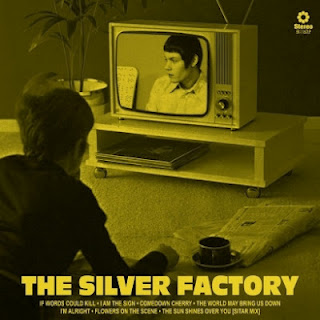
The Silver Factory – If Words Could Kill

Rating: ★★★☆☆

Over the last few years, the music scene has blossomed with bands foraging through their record collections, looking to find a sound from the past that they can adapt to their own projects.  When Fran Feely set about organizing The Silver Factory he might have struggled to find precisely that perfect formula, since his interests, musically speaking, were abundant.  But, with If Words Could Kill, it seems he’s found the perfect sound that reflects both his ambitions and his penchant for nostalgia.

“If Words Could Kill” begins with sort of a jangling guitar, combining it with singer Marc Johnston’s soft voice.  Yet, listening closely, you’ll see that the guitar sounds has a bit of a wayward California rambling, rather than that sharp-edged jangle from the C86 era that’s often associated with his group.  It’s a love dealing with the oft visited theme of unrequited love, but I’ve chosen to focus on that the guitar sound.  If Words Could Kill continues its foray into a juxtaposed pop sound with Western guitar on “I Am the Sign.” While the guitars do harken to a more pristine era in classic rock, the group’s rhythm section definitely propels the group into a more modern sound.  The drumming, in particular, provides a steady stomping beat that allows the song to remove itself from fashionable nostalgic rock n’ roll.

I think one of the reasons I’m enjoying this mini-LP from The Silver Factory is the lyrical delivery from Johnston.  “The World May Bring Us Down” visits the common theme of mistrust, both in love and in the world.  But, Fran has this interesting vocal that really seems like the music could almost be secondary, as if he constructed the vocals prior to asking the rest of the group to join in on the fun.  It’s an interesting sound that I know other’s use, but it really seems more prevalent within the confines of If Words Could Kill.  Personally, it all comes to fruition when the band offer you “Flowers on the Scene,” perhaps the best song on the record.  For what I believe is the second time on the record, a vocal counterpart faintly joins in on the action, providing an extra bit of emphasis on Marc’s vocals.  He even changes the pace and delivery from time to time within the track, which really ties in nicely to the track, making it my personal standout.

As you listen through If Words Could Kill, you’ll probably notice the sincerity of singer Marc Johnston, which is a facet appreciated by lovers of great indie pop, myself included.  Combine that with the indie pop cum classic Cali rock and you’re going to find yourself swooning over this recent release by The Silver Factory.  It might just be the beginning for the group, but they’ve created a strong foundation that will only see the band grow in our hearts in time to come.

[audio:https://austintownhall.com/wp-content/uploads/2012/08/01-If-Words-Could-Kill.mp3]

If Words Could Kill is out now via Elefant Records.


Fergus and Geronimo – Funky Was the State of Affairs

Rating: ★★★½☆

Last time out, Fergus and Geronimo seemed intent upon playing themselves into the artier side of the garage rock game, but such attributes will rarely be seen on their newest effort.  They set off to make Funky Was the State of Affairs a complete album, and after spending days with this record, their work has revealed a group intent upon making their own way in the indie sphere, compiling bits of proto-punk with hints of Devo and snippets of enhanced messages for the listener.

“No Parties” is the first traditional song, following the album’s opening bit of quirky messaging.  While there’s a bent towards the proto-punk of Wire, Fergus and Geronimo are intent early on to reveal their notes to the fans.  Themes of mass-consumption and indifference to the greater Earth seem prevalent, and it’s something that only grows stronger as the record progresses.  “Roman Tick” soon follows with a brattier rock n’ roll moment, but this time the boys are aiming their guns at the trials and tribulations of modern dating.  I like the propulsive drum beat and the vocal delivery on this note, harkening back to one of my favorite periods in music history.

You could probably skip around on some of the tunes, or tidbits, from Funky Was the State of Affairs, but you might miss some of the elements that run through the entirety of the album.  For instance, “Roman Numerals/Wiretapping Muzak I” wouldn’t make much sense when listened to by skipping the snipped that precedes it, but when it’s all tied in, it makes for a special moment where listeners can see the dedication to tying everything together. Would “Earthling Women” make any sense if we ignored “Earthling Men?” In truth, probably not, but that’s just one of the special attributes of such an intellectually accomplished effort.

I mean, if you’re looking for solid songs from Fergus and Geronimo, those definitely exist within the woven fabric, and it’s not like you have to search for them.  Aside from the previously mentioned tracks, “Drones” is another solid track you’ll find yourself tapping your toes to while you press play.  Nice work on the high-hat gives the song it’s rhythm, and the vocal delivery is sort of spoken word, matching the pace of the track itself.  This one here is probably one of my favorite songs.  Or, maybe you’re looking with something funkier? You’ll find that in “Marky Move,” a track that opens with handclaps and a bobbing bass line.  Just to keep things interesting, the group throws in a nice horn solo to coincide with the stomping delivery of the lyrics.  These are just a few moments of the clever songwriting present throughout.

Funky Was the State of Affairs is probably one of the first records to be put out there that really sticks to the point.  Fergus and Geronimo set out to make a record with thematic elements that hit the listener from start to finish, and their execution is spot on; each song ties into the album somehow, somewhere.  It might not be the album for everyday listening, but it’s an album that requires your attention and dedication to completing your experience from start to finish.  Should you accept the mission, you’ll be rewarded.

[audio:https://austintownhall.com/wp-content/uploads/2012/07/02-No-Parties.mp3]

Download: Fergus & Geronimo – No Parties [MP3]

Funky Was the State of Affairs is now available from Hardly Art.

1 15 16 17 18 19 61
Social Media Auto Publish Powered By : XYZScripts.com