Grass Widow – Internal Logic

Rating: ★★★★☆

Judging by the bio that Grass Widow throws up, you’d expect them to be sort of your run-of-the-mill post-punk girl group, but that’s a whole lot of cliche in one sentence; there’s so much more to the group’s album, Internal Logic, that it stands against your attempt to pigeonhole the group.  No matter what, this is something you’ve got to get behind, and you’ve got to do it right now.

All in all, the album clock in at just under 30 minutes, so you don’t have too much time to dwell on particular songs, and that works in the favor of this San Fran trio.  There’s a dark bubbling bass that opens “Goldilocks Zone,” the record’s first track, and the sparse guitar lines provide an added level of demonic pretense; it’s completely offset by the female vocals–possibly the best of the female vocals I’ve heard this year.  Near the end of the track it shoots off in a more guitar driven direction–it’s a nice little touch. For my money, I think the only thing that makes these girls post-punk is the fact that they’re writing songs thirty years after the initial explosion; these girls write punk songs.  “Milo Minute” is probably one of the most enjoyable punk rock songs I’ve heard in awhile, but I suppose some detractors might say the vocals are anything but punk rock.  That’s the attitude Grass Widow seems to take for the entirety of this album; they use what they have (3 girls singing) and apply it to the punk rock they love.

Of course, that’s just one dynamic on Internal Logic.  Other times, these girls don’t seem to have any interest in punk rock, rather they steer in a more alternative direction with warm vocals and somewhat discordant guitar sounds.  “Under the Atmosphere” utilizes some similar skills from earlier on in the record, but the construction of the song definitely lends to a more pop-centric feel: one that will surely win adoring fans. Still, they have the ability to combine both their favorite worlds, which is why the record’s such a refreshing bit of music to play over and over again.

The second side of the affair hits a lot harder and faster, yet still holds onto the girlishness that makes Grass Widow so endearing.  And in playing faster, they also illustrate some remarkable musicianship, shifting pace and styles within songs.  For some reason, I listen to songs like “Advice” or “Disappearing Industries” and I hear bits of Wire with the modern popularity of girl-pop thrown in to it.  It’s a unique combination of sounds, and one that makes listeners of Internal Logic beg for more.  We all love a lady and her guitar, but give me three chicks who can clearly outplay a lot of the boys, and I’m blown away.  Do yourself a favor and turn this up on the old stereo, and witness the prowess of a band at the top of their game.

[audio:https://austintownhall.com/wp-content/uploads/2011/07/GrassWidow-MiloMinute.mp3]

Download:Grass Widow – Milo Minute [MP3]

JBM – Stray Ashes

Rating: ★★★☆☆

Truly heartfelt emotion is difficult to insert into a song, but it seems that Jesse Marchant, aka JBM, really excels in this sphere of the musical world.  His newest album, Stray Ashes (Western Vinyl) is soaked with emotion, and a lot of that has to do with Marchant’s voice, but he also implements careful accents to each song, giving listeners with an active ear pure joy.

Make no mistake about it, listening to Stray Ashes is probably going to leave you in a sullen/somber mood; there’s very few tracks that could even be described as upbeat, but that’s what will enable listeners to completely lose themselves in the work of Marchant. “Only Now,” which is a piano driven tune, is one of the few numbers on the record that I could see as even remotely light-hearted, and that revolved around the mood created by the pounding piano (and the brief drill of the snare drum). Still, Marchant’s vocals do their best to sway you away from feeling light-hearted; it’s as if he wants you to sink into the tracks, just as he dove into writing them, lost in his own world.  “Forests” is the other tune that I feel has a brighter quality.  I really enjoy the opening guitar line, and the way it sort of trickles in and out of your consciousness as you go to focus on Jesse’s voice; this song is my personal favorite.

Clearly, JBM‘s art is personal; you don’t write songs of this sort without completely investing your soul in the composition.  So when listening, it’s hard not to look deep inside of these songs, and yet close examination just lets you lose yourself in the construction of the song.  For instance, the opener, “Ferry” has this shaker that comes in and out of the track, then disappears, only to be replaced by a thinly veiled backing vocal.  Each time I listen, I try to search to see where, or if, they overlap, and each time, I’m more and more involved in the track; well played Jesse Marchant.  This a theme throughout the entirety of Stray Ashes, which is what helps you escape the occasionally monotonous tones of Jesse’s voice, which, by the way, I can’t entirely place.  It’s definitely familiar and been referenced to Jim James, but I’m not sure that’s what I’m thinking.  Anyways, aside, aside. Even the gently strummed tracks like “You Always Keep Around” or “Crooked Branches” have these faint flourishes (slide guitar, random percussion, etc) that are barely audible, but they’ll guide you to the immeasurable joy you’ll take out of each individual song; I can attest to this.

Initially, I couldn’t get into Stray Ashes as a whole.  It had some standout moments, but I wasn’t sold entirely on Jesse Marchant’s voice (might not be still).  However, the wonderful thing I discovered about JBM, as I’ve alluded to, is that he has the innate knack to draw you in emotionally with the song itself, then bring you in deeper with those extra touches that only come from truly gifted songwriters.  Each time I listen to a track, I immediately play it again to see if I heard what I thought I heard initially, and in the end, I find myself falling aimlessly into the song, and into the record itself.

[audio:https://austintownhall.com/wp-content/uploads/2012/03/JBM-Winter_Ghosts.mp3]

Download:JBM – Winter Ghosts [MP3]

Dana Buoy – Summer Bodies

Rating: ★★★½☆

Having been a fan of Akron/Family for some time now, it’s interesting to see where their music leaves off and Dana Buoy takes over.  Summer Bodies is a great bit sunnier in its construction than any of the work he’s done with his band up until now.  That being said, you can definitely see the lineage between his solo work and his work elsewhere.

I wasn’t really sure what to expect from Dana Buoy‘s solo outing until I made it beyond the first minute of the opening track, “Anatomy of Now.”  For that minute, you get little more than vocals, but then a sort of indie-clad tribal element comes in to join Buoy.  There’s definitely a light-hearted mood created, but it’s not overly exuberant…I like a little restraint. “Call to Be” follows it up with another emphatic number, though this one is a touch darker in its musical quality.  The chorus line of the rising oh into “this is just a call to be” is possibly one of my favorite moments on the record.

One of the great things about Summer Bodies is Buoy’s ability to build anticipation for the listener, leading you into the glorious hooks slowly.  He does this with the opening track, and he does it again with “So Lucky.” But, while those two tracks have heavier (sort of) beats kick in, he can also build into a slow jam like he does with “Sattelite Ozone,” a song that mellows just as it begins to pick up.  It might go too far at time, as the formulaic approach begins to grow a bit expected, but it’s a cool touch that I definitely appreciate.

And as much as I enjoy the beats that encourage me to tap my feet, I appreciated Dana Buoy‘s ability to go in a different direction altogether.  “Futures Part” is one such song, again building slowly, yet there’s a gentle touch to the track as it unfolds.  Time and time again, you think Dana could just go far off into rhythmic bliss, but he’s showing his ability to hold back just enough and explore softer sides.  You’re probably going to overlook such tiny nuances, but in a day and age where songs come fast and heavy-handed (in regards to hooks and beats), it’s nice to find someone pulling up short.

Listening to Summer Bodies comes off a bit like a two-sided affair, yet it definitely has enough to tie everything together. Side A has the tendency to hit hard, using beats to catch your ears.  Side B wanders a bit, in a pleasant sense, showing that Dana Buoy still has the wish to use his gifts as a writer of exploratory pop songs.  Tied in together, the whole record has the ability to thrill and uplift, time and time again.  Label me a pleasantly surprised fan of Dana’s solo work.

[audio:https://austintownhall.com/wp-content/uploads/2012/04/03-So-Lucky.mp3]

Download:Dana Buoy – So Lucky [MP3]

Led Er Est – The Diver

Rating: ★★★☆☆

One would imagine that the temperature and the greater environment of New York City would have a huge impact on the band’s coming out of the scene there, and listening to The Diver, you’re assumption would be right.  Led Er Est have constructed their second album, this time on Sacred Bones, with a very metallic cold sheen, further propelling them into the minimalist electronic scene.

“Animal Smear” opens with a very quick paces electronic rhythm, soon joined by a dark guitar line.  It’s vocal presence is a bit difficult to completely grasp at first, with Samuel Kklovenhoof’s voice maintaining a sterile echo that is present throughout.  For all intents and purposes, the record begins simply, not pushing the group’s sound too much further than Dust on Common, their first effort. However, there’s a pop sensibility that soon emerges for the group, which may garner more attention in the long run.

Your first glimpse at a progressing sound comes via “Kaiyo Maru.” The opening beat is a little bit basic, but the effects of implemented keyboards combined with Kklovenhoof’s voice give the track a softer pop underbelly.  If you could turn up the bass just a hint, and sharpen the dully synthesized drum beats, you might just have a glorified hit.  Interestingly, other tracks such as this one exist, such as “Iron the Mandala,” portraying the softer side of the band.  A great deal of The Diver seems like the band is just on the verge of pushing beyond their cold minimal sheen, yet they never take that full plunge over the edge; they choose to evoke emotions with the bare necessities…and the more I’m involved with the listening process, the more I see that it works.

Led Er Est‘s restraint in the overall production of the album demonstrates that their willing to remain subdued in light of the resurgence in bright electronic pop.  Listening to title track, “The Diver,” there’s an emptiness to the song.  I keep imagining myself walking through some large industrial landscape, one that’s been left barren and destroyed.  It’s a haunting number, and when followed by the impending doom of “Bladiator,” you begin to understand the dark sentiment that establishes the mood of the entire album.  It’s the perfect background music for a cold moment in life; one that doesn’t necessarily require the chilling weather of NYC in the winter.

The Diver, for me, finds Led Er Est in the middle ground, balancing somewhere between cold industrial electronic and dark pop.  Personally, I dig the entire thing as an album, but my ears definitely lean closer to the speakers during the poppier moments of the album.  Seeing as the group hasn’t been around for too long, you can see as this record as a band finding their way through the darkness in their music.  Perhaps in the future there’s a darker side, but I’m hoping for a little bit of light to continue to shine through.

Best Coast – The Only Place

Rating: ★★★★☆

Chances are, if you know anything about Best Coast, it’s that front woman Bethany Cosentino really likes cats.  Or perhaps you’ve delved into the tuneage of said cat-obsessed female and found that she also creates some pretty sunny California pop jams. Best Coast have shown they can crank out some quick paced and fun jangly pop, but can they be more than that?

Substance has never really been Best Coast’s style; their first album, Crazy For You barely passes the thirty-minute mark, with each of the thirteen songs not averaging much more than two minutes apiece. If length of songs is any indication of the changes that this band has undergone, than it’s clear that they’ve grown up a bit. The Only Place has a range of songs, but the majority reach three minutes. Even at this first glance, you can see that the second time around this group is straying from dropping into the pattern of becoming the same old same old. The first song and title track, “The Only Place” sets things off on the right foot. From the moment you press play, it’s like opening a bag of sunshine and ocean spray into your speakers. It’s classic Best Coast: we’re still having fun, we’re still hitting the beach and those guitar riffs are still surfy.

The biggest difference between this sophomore release and Crazy For You is maturity. Yes, the songs aren’t chock full with lyrics of eloquent diction and complex syntax, but Cosentino has definitely stepped it up. She has moved past the overt simplicity of songs like “Happy,” in which repetition was the song’s key lyric. On The Only Place, even on one of the shorter numbers, “My Life,” there’s still an immense amount more of actual lyrics that make sense to generate some kind of story instead of just the moody emotions of a California Girl.

Another sign of this maturity is a big push for stronger, slower songs on this album. One of my favorite numbers, “How They Want Me,” combines Cosentino rocking the ballad, with the continuation of the groovy guitar of the rest of the tracks, some interestingly detailed percussion topped with some “oohs” and “ahhs,” that layer to give this song that extra punch. It’s tracks like these and others like “Do You Still Love Me Like You Used To,” which lead me to believe in the longevity of this album. Whereas Crazy for You got a little tired a little fast, this albums packs a greater punch than just a few listens.

It’s a perfect album for the upcoming heat and freedom of summertime. So roll down your windows and savor those last few weeks of a breeze with Best Coast.

Mystery Jets – Radlands

Rating: ★★★★½

The boys in Mystery Jets have come quite a long way, staring first with their angular guitar pop and moving forward into a full-fledged pop group.  But, with all their success, the band needed a move to Texas for a different perspective, leading to their most accomplished album to date.  Radlands, despite some roots in Texas, remains a uniquely MJ affiar, one that shows the group far advanced in their songwriting prowess.  For my ears, they’ve crafted a pop album that hits on almost every note, from start to finish, a feat worthy of high praise alone.

“Radlands” opens the album with just the echo of a guitar, soon joined by Blaine Harrison’s vocals.  It takes a moment before you hear the slight introduction of strummed guitar, which then bursts into a full-band affair.  As the guitar rings, you hear Blaine take control with his soaring vocals, but then the group settles back down to the vocal/guitar approach again; few people are making such well-crafted pop songs like this. And it doesn’t just stop here, with the first several tracks from Radlands easily being called knockout punches.  You’ll find a bit of a Texas jangle when you listen to “You Had Me at Hello,” which features perhaps one of my favorite choruses from the group’s career.  Personally, I dig the fragility in Harrison’s voice on songs such as “Someone Purer.”  He can belt out a chorus with great strength, but a great deal of his power comes from his ability to reign that in when it’s needed most.  If you’re looking for a traditional pop moment with verse chorus verse chorus, just give this track a listen to find yourself pure pop gold–it even has some “ooh oohs.”

One thing I’ve always appreciated about Mystery Jets is that while there’s some elements of high brow music, they still remain youthful and playful.  This album’s playfullness comes via “Greatest Hits.” It’s a song for writers, answering the age old question of the influences for the band as a whole; at one point, the group gives a nod to Neutral Milk Hotel, Belle and Sebastian, The Kinks and the Minutemen all in a twenty-second span.  There’s whimsy all over these tracks, which is one reason why I think the group writes some of the best pop tunes around–they’re songwriting is serious, but their heart still says music should be fun. Radlands also indicates the band’s willing to takes risks, especially when you look at the duet between Sophie Rose and Blaine.  It’s definitely a tune that seems influenced by the group’s recording in Texas, and like all songs on this record, it succeeds; it’s clever, and yet heartfelt. 

Sitting here writing this review, I’m trying to think of how to include every single song in this review, as I know I left off some hits like “Sister Everett.” But, it’s probably too long-winded to try and touch on all the highlights of this album, although  I easily could do so.  Radlands is one of the best simple pop albums to come my way in a long time.  There’s no spectacle, there’s no hype, it’s just great songwriting wrapped up in the perfect way.  For this reason, and a ton of others, Mystery Jets remain high upon my list of best pop groups; cheers to you lads.

[audio:https://austintownhall.com/wp-content/uploads/2012/04/03-Someone-Purer-1.mp3]

Download: Mystery Jets – Someone Purer [MP3]

Beach House – Bloom

Rating: ★★★½☆

Let’s face it, there’s no one out there crafting music just like Beach House.  That is, except Beach House.  Seems redundant doesn’t it? Well, if you’re looking for a fault on the band’s fourth LP, then it might be that the group seems a bit cornered on Bloom.  While the music itself is beautifully emotional, it’s not too far from where they left off with Teen Dream; that’s going to appease hordes of folks, but it might also leave some detractors this go round.

Beach House has a knack of opening an album with brilliance, much like they do here with “Myth.” That twinkling keyboard line complimented by the lofty vocals of Victoria Legrand demonstrate that the duo will continue to find themselves atop year-lists, with few songs capturing the eloquent pop of this track.  When the group takes a slight turn near the 2 minute mark it’s clear to any listener that few songs can eclipse this one.  Bloom is filled with similar moments like this opener, but it’s hard to top your first impression of this listening experience.

“Lazuli” seems to have a bit more sparkle to its construction, which enables the track to stand out from many others on the record.  There’s an underlying quality of brightness to this track that’s not always present with regards to the wistful quality of Legrand.  You get the feeling that she pushed herself here in the studio, and it pays off huge dividends…these are the moments you long for from a group with such a distinctive sound.  Other moments such as this one exist on the record, and Bloom succeeds due to their presence.  “The Hours” is the shortest of the tracks on the record, and its brevity definitely is filled by the group pushing for a slightly different sound, be it the vocals or the guitar work.  And near the end, “On The Sea” gives us a completely different side of Beach House, using a less electronic side of the keyboard.  Really it’s Victoria who steals the show, and while there’s still that element of smoky fuzz in her voice, you’ll also notice a songstress giving the recording of a lifetime (in my opinion).

You see, Bloom has absolutely fantastic elements sprinkled here and there for the listener, so be sure to listen to the record through and through.  However, other tracks do find the group in some middling territory, seemingly unable to escape the remarkably distinct sounds they’ve created in the past few years.  Those moments were beautiful, but at times they do come across as a bit of audio overkill. Beach House is growing here, showing glimpses of new dynamics in their songwriting; they just haven’t completely distanced themselves from Teen Dream.  For some, that’s exactly what you’re looking for this go round; others, like myself, love it, but can’t wait to see where the group takes us on the next go round.

[audio:https://austintownhall.com/wp-content/uploads/2012/05/01-Myth.mp3]

Download:Beach House – Myth [MP3]

Here We Go Magic – A Different Ship

Rating: ★★½☆☆

When Here We Go Magic first jumped onto the scene, it was clear that the work was mostly done by Luke Temple.  But, through two albums it has become clear that the band’s blossomed into more of a group effort. So with their third proper release, A Different Ship, would the title indicate a final change in the music itself? The answer to that question can go both ways, and therein lays the problem.

“Hard to Be Close” is the first track, and while there’s that inherent beauty that you find in Here We Go Magic tracks, but it seems rather subdued.  The percussion is fitting and tight, as I expect from a group of this stature, but there’s not a whole lot else to the song; it’s missing that, oh how do you say, magic. They follow it up with “Make Up Your Mind,” a groovier number than the rest, yet still missing that extra bit of emphasis that early HWGM numbers like “Fangela” contained.  It’s something that seems to be stuck in the overall emotion of A Different Ship.

Take, for instance, “I Believe in Action,” a song that definitely has a bit of a groove living within it, but for some reason, that sound is completely contained within, never being unleashed. Perhaps this is the sort of jam that unfolds before your eyes in the live setting (if you’re to go off the song’s ending), but the recording just doesn’t have a kick to it.  In fact, there’s really not a kick to this entire affair; it’s a slow burner to say the least.  I guess in my listening experience with the band this is the most subdued they’ve come across on record…and that might only be my perception.  Still, Here We Go Magic do possess the craftsmanship to write upbeat tunes that catch your ear.

“How Do I Know” is the lone standout jam.  From the moment Luke Temple sings, you get the feeling that he’s more passionate in this performance than he is on any of the other tracks within A Different Ship.  Even the percussion seems a bit more pronounced on this one, giving a more vibrant mood to the listener.  Honestly, this is the reason I adore the band as a whole, and I think I expected more gems like this one.

I know that bands are allowed to grow and progress throughout their careers, and that’s always appreciated, and in the very least, understood.  Sometimes, however, a group can take it too far, and I feel as if that’s what Here We Go Magic did on A Different Ship.  They took a turn in their recording that may sound cleaner than previous outings, but it left out some of the group’s strengths.  If you’re looking for a calmer, steadier version of the band, you’ll probably find this meets your fancy, but if you’re a nostalgic fan of the group, you might be a little let down. Better luck next time.

[audio:https://austintownhall.com/wp-content/uploads/2012/02/Make-Up-Your-Mind-1.mp3]

Download:Here We Go Magic – Make Up Your Mind [MP3]

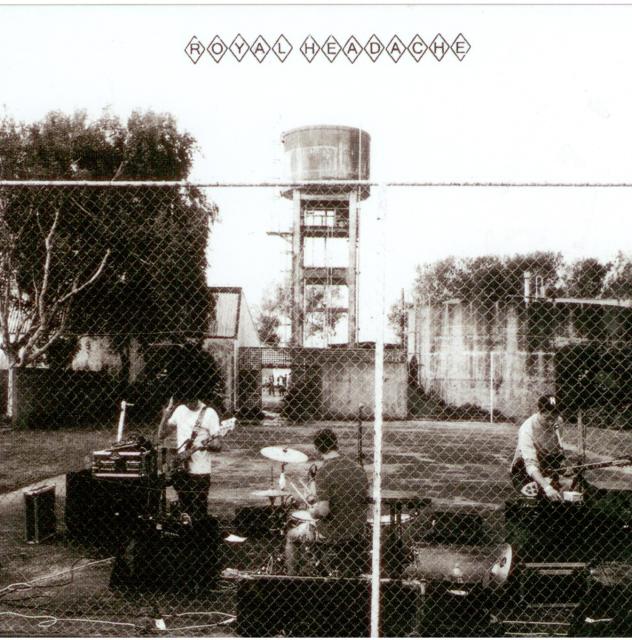
Royal Headache – S/T

Rating: ★★★★½

Lo-fi recordings and accompanying jangle pop rock have been the rage for sometime, and that’s all well and good, but sometimes you just want to have a little bit of a twist on tried-and-true fashions. When you head to your local record store, and you should do so immediately, to pick up the self-titled record from Royal Headache you’ll find exactly what you’ve need. This album’s furious and fun, but just different enough to make the group stand out among the masses.

Side A of this excellent LP opens just as you would expect from a band with garage leanings, furiously paced by the gritty guitar sound.  But, then enters frontman Shogun, using his voice to take you back to the nostalgic soulful recordings of the 50s/60s.  Perhaps you’ll hear bits of angular post-rock similar to Cloud Nothings, but the vocals take you somewhere else entirely.  Oddly, the powerful dynamic between Shogun and the rest of the band fits the mood of Royal Headache perfectly.  From start to finish, Side A is a winning adventure of six incredible tracks, with the frenetic “Girls” remaining my personal favorite.  That being said, the exuberance isn’t always a pummeling in-your-face affair as evidenced by the somewhat slowly paced “Kinds of Love.” The fact that there aren’t any lyrics might come as a surprise after the first five tracks, but it’s the perfect cleansing before you flip the record on its backside.

If you fell for Side A then Side B is absolutely going reaffirm that Royal Headache  are your new favorite band.  “Down the Lane” definitely fits into the modern musical spectrum though it has a tendency to sound dated–in an absolutely good way.  At times, Shogun even sounds a bit like Robert Pollard stretching his vocals to the maximum; it’s perhaps one of the most emotionally captivating songs on the entire record.  Plus, you don’t want to miss the closer, “Pity,” another track that seems to have ingrained itself in my mind.  I definitely enjoy the steadiness in the vocals on this number, leaving you with the sentiment that the group has evolved with regards to the conceptual aspect of the record.

Nowadays it seems that a lot of people can record in their bedroom or make an album of lo-fi tracks that quickly burst into a huge success, but you’re not going to find anything at all like Royal Headache.  That alone is one reason that you need to get your hands on this LP, but you couple that with the fact that there’s not a single track on this record that you could skip, and you have a winning group of songs that you might not ever escape.  Each song is infectious, whether you base that on the inherent hooks or Shogun’s performance; you’re not going to want to listen to anything else for some time to come.  Yeah, I said it; it really is that good.

[audio:https://austintownhall.com/wp-content/uploads/2012/02/RoyalHeadache_Girls.mp3]

Download:Royal Headache – Girls [MP3]

Allo Darlin – Europe

Rating: ★★★★☆

Allo Darlin are a four piece indie/twee pop band that hail from London, and if you haven’t gotten to know their dazzlingly sweet tunes, then it is time you started. Their self-titled first album was released back in 2010, but if you want to get to know the sweet and groovy tunes of this band then look no further, Europe is an excellent place to start.        

On opener “Neil Armstrong,” it’s easy to see the similiarities of Allo Darlin’ to other indie-pop legends. The vocals of Elizabeth Morris share the discreet power that Camera Obscura’s Tracyanne Campbell has perfected and the delicate guitars reminisce of that of Belle and Sebastian. Though this band is not simply a culmination of other groups, they have their own flair as well. The ukulele that is ever-present on this first song is an aspect that gives this group the playfulness that such a genre begs for. For a first track, it’s a pretty good representation of this band’s style; gentle pop that still manages to bubble in sunshine.

Later on, you have an even softer, but no less equally delightful tune in “Tallulah,” where Elizabeth Morris and her uke step away from things. The result is a plain and simple tasty song, whose simplicity is what makes it as Morris sings a tale of a summer past. Sure, you’re missing the other jangling elements that Allo Darlin’ have become masters of, but it’s a lovely little break from the bright pop and a side trip to a more grounded sound. It’s a good reminder that this band can do a little more than all sunshine all the time.

However, it’s clear that what this band does best is easily music that bathes you in light. On the very next song after “Talulah,” they jump right back into their warmth with “The Letter.” The guitar feels further up in the mix of things on this song, at times dueling with Morris’ vocals for the lead of the song. Meanwhile the drums roll steady on, with the prominent cymbal crash to complete the overall bright atmosphere. That being said, Allo Darlin’ isn’t that easily pegged with the label of cheery pop songs. No, if you listen to the intricate lyrics that Morris spouts out, you’ll find that not all that she has to say matches the surface level observation of peppy.

Like the bands aforementioned, and essentially any band that is really worth listening to, there is more to be found here than can be acquired on first listen. After some time spent traveling around Europe, you’ll find that it was worth the trip.

1 19 20 21 22 23 61
Social Media Auto Publish Powered By : XYZScripts.com