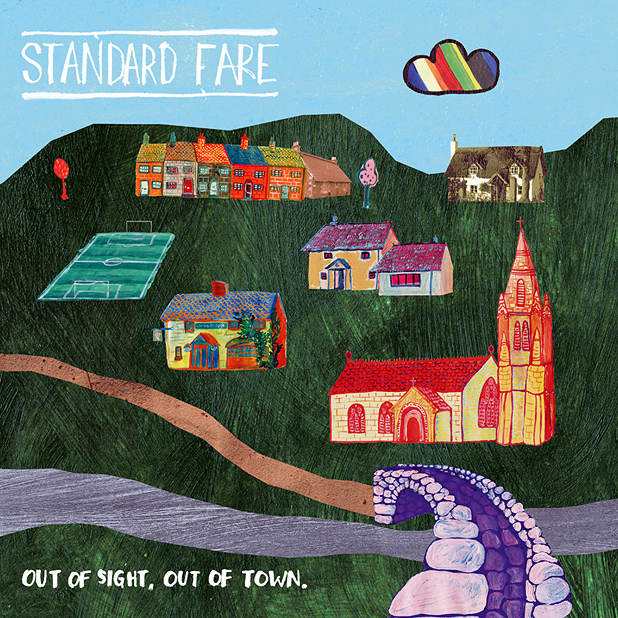
Standard Fare – Out of Sight, Out of Town
Rating: ★★★★☆

Recent years have seen a reemergence of power-pop, which really just adds up to kicking out hard-rocking tunes with a whole lot of sheen.  Sheffield’s Standard Fare definitely have an affinity for the purity of pop, and their newest album Out of Sight, Out of Town, will have you applauding for both its simplicity and quality.

Trickling guitar lines introduce you to Out of Sight, Out of Town by way of “The Look of Lust,” just as you meet the attractive vocals of Emma Cooper.  For a few moments, the band shows some restraint, softly approaching the main part of the song, which features a certain sharpness in song composition.  Little flares, such as changes in the vocal delivery and the addition of strings make this a track you’ll listen to years from now. As they move into “05 11 07” the pace is picked up, but the plot’s still the same, using the charming lyrics of Cooper to unite splendid guitar play.

But, just as you start to fall for the pattern, Standard Fare throw in a little bit more of a jangle your step, and theirs.  Clearly Emma is the star of the show on “Suitcase,” with an underlying bit of sexuality lurking beneath her vocals, reminiscent of Victoria Bergsman in a much more playful manner. However, the band isn’t content to just give you bubblegum pop from the female sort, as Danny How takes over on “Kicking Puddles.” This track has a real familiar feel to it, just with a heavier dose of guitars; it’s like Beach Fossils crashed into the UK pop museum. How also takes a lead role on “Bad Temper,” a song that definitely hits furious and fast.

While there’s a nice straight-forward pop theme on Out of Sight, Out of Town, it’s the band’s playfulness that really gives them the extra step above many of their peers.  The reggae rifts that permeate “Half Sister” demonstrate that the band’s still working on fleshing out their sound as a whole, especially with a small dose of catchy hand-claps.  And while they’re willing to push the envelope a bit with their music, Standard Fare can also kick out traditional ballads like on “Early That Night.” It’s the slowest track on the whole album, but one you all the hip kids should definitely play while their hosting the next hip dance party…you know, just so you can actually get to touch the opposite sex.

One of the best thing about writing record reviews is finding a record you can repeatedly go through from start to finish, wanting to write about every single song, and that’s precisely what Standard Fare have accomplished here. Out of Sight, Out of Town is an effort that’s sharp, clever and ultimately enjoyable for all fans of pop music.  It’s the best type of record there is, so have fun enjoying this wondrous gem for some time to come.

[audio:https://austintownhall.com/wp-content/uploads/2012/01/03-Suitcase.mp3]

Download:Standard Fare – Suitcase [MP3]

Laura Gibson – La Grande

Rating: ★★★½☆

The folk soundings of Laura Gibson are marked by a variety of sounds. While the words simple yet elegant seem fitting to describe such an artist, I think intricate and raw also have their place in the description of La Grande. However, through all of this soft and roughness, Gibson’s sugary vocals remain constant, serving as the syrup to run between the sounds. In its folk genre, this album seems to go a lot of places and somehow stay in one place.

Strewn through La Grande are various instances of gentle serenity, which seems to be the bigger of the two paths that this album takes. You have moments of subtle beauty apart from the obvious pretty voice of Gibson of herself and the accompanying, soft acoustic guitar. On the second song, “Milk-Heavy, Pollen-Eyed,” these subtleties culminate to produce a solid, slow moving gem; the quiet xylophone, Gibson’s meek voice meandering through the song, the bare minimum percussive elements make the track feel a little sleepy, and yet ever enjoyable. Another instance of this chill folksy combination is on the later track, “Crow/Swallow” in which Gibson croons simply over some guitar plucking, which makes for a calming listen.

On the rowdier side of things are songs like opener and title track “La Grande,” on which the emphasized percussion reminds me a bit of The Dodos; the very base of the song is the constant, stomper of a beat. Of course, Gibson’s vocals prove a start contrast to the deep drums that resound deeply towards the end of the song, giving it that edge to avoid the song turning into a mess of beats and dulcet tones. Another song that rides the rowdier waves in a stronger percussive sense is my personal favorite, “Skin, Warming Skin.” On this track, you’ll find the build to a climax that is lacking in places elsewhere on the album. Gibson’s voice contrasts with the likes of drawn out guitar sound and eerie backing “oohs.” It’s easily the most interesting song on here.

Overall, this album isn’t entirely overwhelming, but it will present you with moments that can overwhelm you. Sure, you will have some instances in which you are even underwhelmed a tad, but the music is presented in many forms and Gibson leaves it up to you to discern your favorite—the simple combination of honeyed vocals and guitar plucking explored in a slightly new light in some instances and shining in the same glow in others.

Matt Pryor – May Day

Rating: ★★★½☆

I’ll admit that there’s definitely a soft spot in my heart for Matt Pryor, though I was less than enthralled with his last effort with former band The Get Up Kids.  Yet, despite that misstep, he’s always had a great ability to craft songs with lyrics that somehow find attachment to my heart. Love him or hate him, you can’t deny that he’s been warming his way into our hearts from the get-go, and May Day is just another example of his perfectly executed work.

“Don’t Let the Bastards Get You Down” opens the record, and the title alone should make it a timeless song, as we’ve all been in those shoes.  But, what really stuck out to me is the rough quality of the recording that’s present.  It sets the tone for May Day, providing listeners with a personal experience that’s both raw and beautiful.  “The Lies Are Keeping Me Here” similarly accomplishes the same note, particularly when Pryor’s vocals strain in the middle track.  You’ve got to appreciate a singer who’s willing to give his all on the microphone and his music.

While Matt Pryor’s work of the last few years has definitely held a hint of melancholy, he’ll craft a nice little ditty to catch you in its hooks.  Such a song is exemplified in “Where Do We Go From Here,” a song that features a playful piano line that works its way behind a nicely strummed guitar.  I think he even makes a nod to “worse for the wear,” which old Pryor fans will surely recognize (I hope!).  For the most part, this is about as bright a moment as you’ll find lurking on the album, as the rest takes on a rather serious tone.

Still, one of the things fans of Matt’s solo work will appreciate is his ability to really step outside our expectations with inclusions of multiple instruments on his solo outings, such as harmonica, banjo and various other nice touches.  “As If I Could Fall In Love Again” might do it’s best to incorporate all these elements into one song–but Matt’s background vocals are probably the best touch to this particular track.  But, just as he’s likely to fill up a song with instruments, he’s also willing to strip everything down to its rawest form on May Day.  “As Lies Go..This Ones Beautiful” is basically a stripped down, personal ballad, with Pryor’s voice taking the lead role here.  He’s always been a little off-pitch, but that’s always been something that made him endearing.  Here, you’ll find him as stark-naked as a musician as you’ve probably seen him, and you’ll be rewarded.

I’m predisposed to love Matt Pryor, but I’ll admit dissatisfaction when it’s warranted.  However, there’s not a bad track on the duration of May Day; each track has its special moments, some more so than others.  I suppose you could complain that there’s no incredible songs blowing you away, but it’s better to look at this record as one full of really good tracks.  Whether you grew up listening to the old emo, of which TGUK and Pryor owned, or you’re just encountering him, one listen here will bring you vast listening pleasure, the likes you won’t really find elsewhere in the current climate.

[audio:https://austintownhall.com/wp-content/uploads/2012/01/09-Your-New-Favorite.mp3]

Download:Matt Pryor – Your New Favorite [MP3]

Nada Surf – The Stars Are Indifferent to Astronomy

Rating: ★★★½☆

When a band releases their seventh album in well over a decade, you have to wonder, what’s left to prove?  Those of you who’ve followed the endearing path of Nada Surf for the duration will find that The Stars Are Indifferent to Astronomy is indicative of a band still willing to go out and have a blast in the studio; they’re completely willing to play to their strengths and bring you pure pop goodness.

While their last two outings might have come across as a bit subdued, Nada Surf has no intentions of resting on the middling ground of pop, so they bust forth with some of their most powerful tracks in years.  “Clear Eyed Clouded Mind” jumps into your ears, pummeling forward, as much as the band is wont to do.  Still, it’s Mathew Caws’ performance during the chorus that completely wins your heart over, just as he’s always done.  They kick right into “Waiting for Something,” which comes across like a softer, but equally as powerful, Superchunk.  Those guitar lines unleash melody after melody, accentuated by Caws.  Surely, long-time fans, as well as newcomers, will hear the noticeable effort the band has created in putting these tracks together.

The Stars Are Indifferent to Astronomy might have just the perfect balance in song order, kicking things off energetically, then pulling back just a little bit whilst maintaining a whole lot of fluidity. “Jules and Jim” has a chiming guitar intro before Caws goes off into personal reflection lyrically.  Still, the slightest touches of detailing such as the faintest sound of bells and far off vocal accompaniment prove Nada Surf is still focused on providing listeners with a complete sound in each track.  But for all that, this is very much a guitar-oriented record.

“Teenage Dreams” has a nice bit of guitar choppiness correlating to the stomping drums, before the song searches for steadier pastures.  And then “Looking Through” bursts through with a quick paced bit of the purest pop, the likes that only Nada Surf seem to have mastered.  But, as much the guitars play a starring role throughout, The Stars Are Indifferent to Astronomy still holds dear to the tried-and-true principals the band has always stuck with: pop goodness. “Let the Fight Do the Fighting” is a return to the solemnity and melody that always drew me to the group. It sounds more polished than a lot of the other tracks, and the accompaniment of strings only serves to emotionally impact the listener.  Pop music’s not supposed to be hard; it’s supposed to be good–this definitely falls into that category.

Whether you’re a long time fan or a newbie, Nada Surf are one of the few bands that have always seemed to offer up perfect albums.  They write pop songs you can sing to; they give you hooks you can sink your teeth into; and their albums will still be enjoyed years after your favorite current fad is gone.  Such is the power of great songwriting, the sort that’s present for the entirety of The Stars Are Indifferent to Astronomy.

[audio:https://austintownhall.com/wp-content/uploads/2012/01/03-When-I-Was-Young-1.mp3]

Download:Nada Surf – When I Was Young [MP3]

Cloud Nothings – Attack on Memory

Rating: ★★★★☆

Dylan Baldi is hot right now, there’s no mistake about it.  Ever since releasing the self-titled Cloud Nothings album, his star has continued to rise, and deservedly so.  Now, his band returns with their latest album, Attack on Memory, determined to shift gears a little bit by going into the studio with the heralded Steve Albini.  The collaboration definitely alters the group’s sound, yet through it all we’re watching the evolution of a talented band.

Immediately upon hearing the first track, “No Future/No Past,” you’ll realize there’s a drastic change in the overall sound.  Where the band was once brash and pummeling, you find them here in a more brooding state, building the listener towards the emotional release of the song.  What’s great about the track is that you can feel it coming, you’re just not sure when that moment will come to fruition.  Rest assured, the time will come.  And from there you blast off into what is probably the most dynamic track on Attack on Memory, “Wasted Days.”  For a brief moment, it seems as if a more hammering approach to the stylings of Cloud Nothings has evolved, but as the song is well over 8 minutes, one can’t hope to hold that ferocious energy for too long.  And they don’t, offering up some jammy post-punk moments that wear a little bit towards the end.

Still, despite the altered sound on the record, there remains that knack for creating a sharp-edged hook that really captures listeners, such as the opening “fall in, fall in” line that comes with “Fall In.”  Okay, so perhaps it’s redundant a bit, but the drumming and Baldi’s voice are sufficient in carrying out the immense pleasure in this number.  “Stay Useless” offers up a more mature sound overall, though it definitely harkens back to the prominently more energetic times of early Cloud Nothings. Again, Dylan’s forte seems to be his ability to craft momentary hooks in the midst of a track that do more than enough, even with just brief lyrics like “I need time to stop moving, I need time to stay useless.”

Although the album seems brief, at least in the number of tracks – eight, there’s definitely more attention to detail in the fleshing out of tracks, giving more depth and vibrance to Attack on Memory.  You’ve also have to love the slight alterations that really craft beautiful moments like the album’s closer,  “Cut You.”  This song definitely lives somewhere in the post-grunge workings of 90s indie rock, and yet the group sounds refreshing, perhaps because of all the work they’ve put in leading up to this track. It might be the unassuming best track on the album.

For all the hubbub surrounding the usage of Albini and crafting a record around the influences on Cloud Nothings, they’ve really crafted a record that makes them seem a bit louder, a bit more thoughtful, and every bit themselves.  It’s difficult to live up the expectations of the masses, especially when you’ve risen to popularity so quickly, but Attack on Memory serves notice that the group is growing in confidence, both in sound and personality; we’re all better off for it.

[audio:https://austintownhall.com/wp-content/uploads/2011/11/01_No_Future_No_Past.mp3]

Download:Cloud Nothings – No Future No Past [MP3]

Cate Le Bon – CYRK

Rating: ★★★★☆

It’s possible that you haven’t yet heard of any work from Cate Le Bon, nor even heard of her, for that matter, as this is only her sophomore effort from her and her backing band. Some things you should know before we proceed: Yes that is a Welsh accent. Yes, Le Bon’s debut EP was a Welsh language release. Yes, her voice is exquisitely interesting. No, it is not the only thing worth talking about on CYRK.

Le Bon wastes no time what-so-ever in jumping straight into the jams. Forget intro tracks or minute long build-ups, “Falcon-Eyed” is everything, all at once without so much as a few seconds notice. It is roaring first track, quick and snappy in nature, filled with Le Bon’s swirling vocals, paired with racing drum beats and jangling, fast paced guitars. It comes across as one of the most ‘rock’ songs on this album, when viewed along with the others, and it leaves you thirsty for more when the two minutes and forty-nine seconds comes to a close.

Although the Speed Racer pace isn’t held for the next song, the slower, cooled “Puts Me To Work,” highlights the vocals as well as the instrumentation, while setting a more appropriate pace for the rest of the album. The smooth vocals combine with twang-y guitars to bring each element to a happy medium, while the drums and keys fill in the spaces. This continues to the title track, which spirals and twirls in an eerie fashion along to a methodic beat, which essentially carries through for the duration of the album; it’s easy to find yourself twirling along with Le Bon, lost in her ironically dreary lyrics in respect to her airy vocals.

Sure, the first thing that you will notice upon listening to CYRK is the vocals. When Le Bon strikes the opening notes, you are instantly drawn into whatever she is singing; her eerily bleak voice carrying the rhythm resides in the background. I mean, on first listen, you could really care less what is going on behind that enigma of sound. You are so focused on the oddly tender yet fierce voice that it’s easy to let the rest of the music just sort of fade away in your entranced state. While it is easy, and also sort of the point of this release, to be daunted by Cate Le Bon, give this album two listens; one to marvel at the vocals and another to appreciate the instruments backing them. What you’ll find is something darker than the whimsical vocals convey on the surface level, something distorted and fanciful, akin to the title’s translation of “circus posters.”

Seeker Lover Keeper – s/t

Rating: ★★★½☆

Consisting of three ladies each established in their own field of the music industry, Seeker Lover Keeper fundamentally sounds like a good idea. Sarah Blasko, Holly Throsby and Sally Seltmann are currently some of the biggest Australian songwriters, previously writing songs for artists like Fiest, and touring with Lykke Li, The Tallest Man on Earth, Broken Social Scene and more. However, it takes more than apt songwriting and knowing a lot of great musicians to be great yourself, which poses the biggest question: do these credentials add up to a good album.

The self-titled album begins on a soft note; gentle strumming of guitar pieced together with ghastly “oohs,” before the sweet vocals jump into the song. First up, “Bring Me Back,” lets the audience find their way to this band and their elegant charms before they pick things up, serving as the getting your toes wet experience for the listener so they can jump in. On the next number “Light All My Lights,” some synthesizer gives the tune a little bit more of a life than the first song, but the real first standout isn’t apparent until the third track “Even Though I’m a Woman.” The piano that sounds at the beginning of the track carries it along, but the vocals, a touch raspy and whispery, yet dangerously sugared are, of course, the main focus and I’m reminded a bit of Regina Spektor in this piano/vocals combo. Some great harmonies can be found here, and the main chorus will have you singing along, or trying to, as it’s not very easy to keep up.

Throughout the whole album, the ladies change places as lead singer, writing songs for each other. Along with this passing of lead, there is also a transition from the overall sound of the band, which keeps the group from falling into a pattern, but also prevents one solid identity to be formed for these ladies and if you are a person who isn’t okay with change, then this may not be an album for you. However, I find most of the variety to be enjoyable and interesting, keeping me guessing as to what these power females will do next to change things up a bit. My favorite transition is the one from the edgy and rhythmic “Everytime” to the soft and wispy “We Will Know What It Is,” that follows immediately. Here, you can see the combined talent of this group.

Seeker Lover Keeper do not disappoint their credentials; you have some brilliant writing on this album, and delicate tracks that will catch your ear. As far as a first album, you get essentially what you would expect—a good start.

Black Twig – Paper Trees

Rating: ★★★½☆

It’s clear from the recent rise in Finnish music trickling overseas that there’s quite a bit of great music being created in the country; Black Twig is another act determined to share their creativity with the world.  Paper Trees is their first proper album for the newly created Soliti Music, and while the label may be small, they’ve got some huge sounds to promote.

There’s definitely a diverse sound when you take your first trip through Paper Trees. For me, the biggest standout track was “Death Scene,” the albums fourth track.  It’s got a certain earnestness to fit as much as possible into the song, not unlike recent releases from Cloud Nothings.  Yet, you’ll find one large unifying force lurking in this song, and the album itself; the pleasant vocals help maintain a perfect sense of pop sensibility.

Going back to the beginning, you’ll realize that this seemingly effortless bit of cool was present all along.  Album opener “Four Notes” has a decently jangling guitar line, but the breathy vocals keep the song steadying in the waters of traditional pop tunes. But, just as you think the band’s settled into traditionalism, they warp up the song with squalls of feedback and noise, though not in an overbearing sense.  Such touches are present off and on throughout Paper Trees, demonstrating that Black Twig are definitely working out their sound. And in playing with such sounds, you end up with experimental tracks that seemingly come out of nowhere.

“Kouvala (Slow)” is one such track; it’s a sprawling piece of post rock stretching over seven minutes long.  Vocals on this track are practically non-existent, but the restraint the band displays in the songs construction perfectly displays their supposed intentions, leaving listeners with a taste that is more than just your average pop record.  It’s also indicative of the second-half of the record, which seems to hold a dark, nosier side of things in place. You’ll just have to listen to album closer “Antichrist” to see that the band can sufficiently produce edgier moments with chords knifing in and out of atmospheric negative space.  It will also leave you with the feeling that Robert Pollard just wrote a four minute track, as the vocal stylings and mixture of noise and traditional pop fare both lean towards the aforementioned musician’s work.

Paper Trees seemingly goes all over the place, from screeching post-rock to quieter moments of blissful pop, and yet it’s tied together so well that you’ll hardly notice the change in mood from one point to another.  Black Twig surely are a potent songwriting force; it’s clear in the way the songs are written, and the way the record plays out: you’ll find yourself jamming to this one over and over again, grateful that Finland is finally making its musical mark abroad.

[audio:https://austintownhall.com/wp-content/uploads/2011/12/04-Death-Scene.mp3]

Download: Black Twig – Death Scene [MP3]

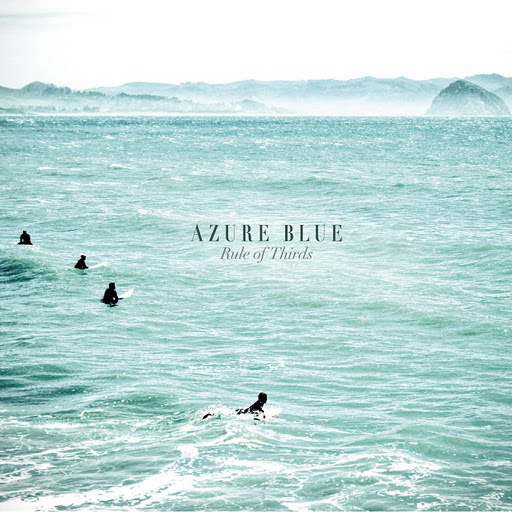
Azure Blue – Rule of Thirds

Rating: ★★★½☆

Tobias Isaksson might not have the biggest name recognition here in the United States, but he’s been plying his trade in pop songwriting for some time with his former bands Irene and Laurel Music.  His debut record for the excellent Matinee Recordings is titled Rule of Thirds playfully maneuvers back and forth between traditional new wave and modern electro-pop, all the while referencing heartbreak through various allusions.

Album opener “Fingers” clearly defines the scope of Rule of Thirds from the get-go, offering a trickling bit of synth work as Isaksson warmly whispers his lyrics of love lost.  While the pacing of the track is slow, it provides a precursor to what will follow, establishing a strong foundation for the record’s entirety.  Immediately following is one of the standout tracks present here, “Catcher in the Rye.”  Musically, the electronic work almost builds to an arm-swinging dance hit, but what’s interesting is the juxtaposed vocal presence, begging you to remain a bit subdued; it becomes more of a genuine pop gem rather than a dance floor banger. For a bit, the album kind of walks this same line, which at times can be to its detriment, being a bit too complacent, but pushing through reveals much more depth waiting on the latter half.

One of the tracks that immediately stood out to me on the first several listens was “Long Way Down.”  The opening synth sequence was enough to hook me originally, yet it continued to evolve more into a traditional pop song, forcing me to realize that my Azure Blue listening experience may have been all wrong from the start, as it’s more carefully crafted pop tunes that rise above the label of mere synth pop.  “Dreamy Eyes” might completely contradict that little offering, as it’s definitely one of the most upbeat, danceable tracks, but the following track, “The Shore,” is anything but electro-pop.  Musically, yes, there’s some electronics here, but the minute details applied to “The Shore” demonstrate that this could easily be transferred into some genius guitar ballad.  Tobias seems to carefully consider the way his lyrics are delivered, with pitch and tone harmoniously fitting into the musical background.

The more you fall victim to the genius of Rule of Thirds, the more you realize that you could easily replace every bit of electronics with traditional guitar and drums, creating wondrous pop tunes, yet Isaksson as Azure Blue doesn’t seem to be content with normalcy.  He’s carefully crafted an album of love lost around intricate electronic details, providing listeners with track after track of gorgeous, melodious songs, the type that will sink deep into your soul the more you listen.  For this, amongst other reasons, the record is a huge success and worthy of many hours of your time.

[audio:https://austintownhall.com/wp-content/uploads/2011/10/azure01.mp3]

Download: Azure Blue – The Catcher in the Rye [MP3]

The Beets – Let the Poison Out

Rating: ★★★½☆

Three years ago, back in 2008, The Beets began their garage-y, sporadic, and minimalist percussion rock up in New York. After a few years of scraping under the radar and keeping to punk scene of up north, The Beets have made their way into the eye of those previously unfamiliar with their lo-fi stylings. Although still lo-fi in nature, this band has come a long way from their original sound, which was muddied to the extent that it consumed the entirety of the music. After cleaning up their sound and holding on to the best bits, they are able to emerge as skilled crafters of the garage sound.

First up is “You Don’t Want The Kids To Be Dead,” which gently eases you into the fuzzy, campy sound that the Beets are doling out. Juan Wauters’ mousy voice wavers with the jangle of the guitar and the soft drum beats barely making themselves apparent. It establishes the lighthearted attitude that is the backbone of the sound on this album, and allows you get familiar with this breezy style of jam, if you hadn’t already waded into the waters of The Beets. Up next is “Now I Live,” relying on the vocals to carry it through the minute and a half in which it lasts, until the third track “Preso Voy,” is up. Third up, this song is entirely in Spanish, which if anything increases the interest level, latching onto syllables belted out with heightened emotion.

As far as this style of records go, The Beets follow the pattern that has become synonymous with punk-garage rock: more than ten songs of which only one reaches above the three minute mark. However, whereas most bands tend to fall victim to this structure, The Beets manage to use it to their advantage, avoiding that dreaded repetitive monotony that can sometimes accompany such choppy albums. You have songs coupled together such as “As The World,” which relies on feminine ooh’s to keep it chugging along, and “I Don’t Know,” which comes across as one of, if not the most, old-timey songs on this album. Together, they balance each other out, to make for a meet in the middle groove, keeping The Beets above banal sound and makes for a standout among other releases of this genre.

Let the Poison Out is sure to live in your CD player for a while; its brevity ensuring that you’ll be singing right along in no time.

1 23 24 25 26 27 61
Social Media Auto Publish Powered By : XYZScripts.com