Banjo or Freakout – s/t

Rating: ★★☆☆☆

The bedroom effort of Alessio Natalizia, Banjo or Freakout has become fully realized with this debut release. With a touch of professional production, the spacey and atmospheric sounds of this group feel tangible, yet still far away in their nature. A mix of electronic and physical sounds mesh fairly well on this album, and for some of the time, the band maintains that tightrope of emptiness.

Starting out strong, the band doesn’t sound very atmospheric. On “105,” the only hollow element that is prevalent in the song would have to be Natalizia’s pale and borderline falsetto voice that intensifies the buzzing guitar. Some synthesized dulcent undertones gradually trickle into the song, and pull it away from its humble beginning into the deep void of electronic emptiness. The synth undertones meander their way to “Go Ahead,” which is one of my favorite tracks on the album. A little bit muddier than that of the first track, it really focuses on a slightly playful quality in the mumbled vocals of Mr. Natalizia. Even though it’s shift towards a more electronic style, which I’m normally inclined to disgust, it takes a step in a fulfilling direction and becomes an enticing narrative marked by effervescing synthesizer and the dull roar of fuzz.

 Despite its promise at the beginning, there are some huge setbacks to this album. While it is a good start for a band like this, it is nowhere near perfection. Like other albums similar in style, the golden qualities that are presented in the beginning fizzle out, leaving the rest of the songs to sound overlookable and boring. The atmospheric levels of noise that interest and seem so intricate during the first few tracks slip easily into the recess of the listeners mind. Too simply it becomes background music that only serves for filling space, not for bedroom listening. Tracks at the very end like “Dear Me” lose the boundary between vocals and hollow sound, so that the two mold into one. The song loses its edginess and becomes just a bunch of noise that sounds thrown together with much haste.

 Some may say that this album falls under the chillwave category, or at least the latter part. While it does offer a relaxing break from a stressful day, it doesn’t stimulate the senses, save the first few songs. Perhaps I stand alone in the desire for music that will push and pull me places, all while maintaining entertaining qualities. Banjo or Freakout just leaves my brain hanging alone in the cold void of outer space. With some work, their next release could be stellar, so long as they focus on what makes the start sound so good.

Toro y Moi – Underneath the Pine

Rating: ★★★★☆

Despite the deception that the name brings, Toro Y Moi is actually just one person: Chazwick Bundick. Last year, he gained attention through his first release Causers of This. Only a year later, Toro Y Moi is back with a whole new set of songs, which is fairly ambitious, even if the band is only really made up of one person. Ambitious or not, Bundick has made a fairly decent sophomore effort with Underneath the Pine.

Starting with “Intro/ Chi Chi,” Bundick looks to slowly ease you into his style, submersing the listener slowly into his groovy and chill world of sound. He is careful not to throw too much at you, but allows the two minute and twenty five seconds of quite bass and head nod- inducing slow beats. Almost hypnotizing, the first track lulls you into a state of calm, Zen feelings, if only so he can pull you out on the next song. When the last noises of the intro fade out, the positively 70’s disco sounds of “New Beat” kick in. Suddenly, you’re lost in the synthesizer and muted vocals of Bundick, whirling wherever the groovy sounds take you. By the end of the second song, Toro Y Moi has full control, and it is only a matter of what experimental beats he will daunt with next.

On shorter songs such as “Divina,” and “Good Hold,” this band keeps it eloquent. “Divina” is purely instrumental and “Good Hold” relies on a messy piano line that would feel otherwise too chaotic if prolonged for any more than it is. Despite the shortness of these two tracks, both of them are still chalked full of the entrancing qualities of this sound. Contrarily, on the longer side of songs you have surface goodies like “How I Know,” which just feels like summer all wrapped up into a ball. When you press play on this song, it feels like the annual first jump off the diving board and into the cool water that relieves the sweat from your brow. Deeper cuts like “Light Black” are also present: the beat may not be as bumping, but as the gritty sound creeps its way under your skin it makes for a echo-y few minutes of soothing noise.

 It’s the variety of songs on Underneath the Pine that makes it so interesting and enjoyable. While it doesn’t feel like Bundick is trying to permeate your subconscious, he does just so with his coy disco/pop/alternative smooth rock sound. Cool trance beats mix with lukewarm vocals to make it feel like spring in the midst of winter, much like February in Austin.

Tim Cohen – Magic Trick

Rating: ★★★★☆

For most listeners, you’re probably expecting anything coming from Tim Cohen to somewhat resemble his haunting vocal performances from his main gig, The Fresh & Onlys.  But, while that dark tinted vocal is still there, Tim’s been creating music on his own for some time, this being his second solo release in about a year (making that 3 in a year, all work included).  Magic Trick establishes itself as his most timeless release to date, making Cohen a hot commodity in the small indie rock community.

“I Am Never Going to Die” sounds precisely like something your father might have listened to if he grew up in the late 60s.  It was probably a track played by his roommate while they sat in some bong circle, promising one another that they were going to make themselves happy.  Yet you won’t have to travel back in time to enjoy this piece, nor do you necessarily have to partake in recreational drugs; Tim’s music, as well as the themes throughout Magic Trick, apply just as much now as they did then.

The haunting vision of Tim Cohen that I have in my head revolves around those vocals, teetering on the edge of despair, such as you get on a song like “The Flower.”  Still, even with his songs having this shady quality, a track like this reminds you of dark crooners such as Richard Hawley, giving you dense pop songs in a simply beautiful format.  Similarly, “Ledgerdemain” operates in the same spectrum, using a heavy vocal to discuss themes of love as seen through one man’s perspective.  The light piano touches and floating female vocal accompaniment definitely bring an extra punch to this number.

But, perhaps the most notable style present on Magic Trick are the allusions to the psychedelia of years past, only viewed through a more modern lens. It’s hard to go through listening to a track like “The Spirit’s Inside” without noticing the cascading guitars that go with the moody electronic piano.  Not only that, but it hints back at those low-budget movies during the black-and-white era where your hero has a pack of cigarettes rolled up in his sleeve.  “Season of Fires” definitely has some California vibe to it, almost as if it’s the long lost Doors demo, except a tad bit better, as Cohen’s a better poet in my mind.

One of the remarkable things about listening to Magic Trick in its entirety is that you want to put some many songs in certain generic boxes, pushing influences onto the Tim Cohen, but where he seems to have progressed greatly on this album are the darker pop tracks, like those mentioned above or the album closer, “I Looked Up.”  Such touches of songwriting demonstrate that he’s more than just a one-trick pony.  While it may seem that Cohen’s been around for quite some time, this record is the first one that really shows he’s heading in the right direction, even if we didn’t see them coming right away.  Tim Cohen might be a man who loves the past, but he’s certainly the man of the moment.

[audio:https://austintownhall.com/wp-content/uploads/2011/02/Tim-Cohen-Dont-Give-Up.mp3]

Download: Tim Cohen – Don’t Give Up [MP3]

The Luyas – Too Beautiful to Work

Rating: ★★★½☆

While some people claim that Canada is just a cold place with Moose, and people that say “eh,” we all know that Canada is perfect for supplying us with excellent indie bands, such as The Luyas. With their interesting combination of noise, keyboards, and occasional horns and string work, they are sure to differentiate themselves from the other Canadians.

The first song and title track, “Too Beautiful to Work,” starts off with an infectious electric melody that is mirrored at every note with the candied vocals of Jessie Stein. Her vocals are choppy and match the mechanical sound as playfully light drums dally through the song. All the while through the sharpness of the vocals, the screech of violin resounds; even when the song breaks down before its finish, the violin elegantly juxtaposes with the feedback and gritty noise, and compliments the tight drumming. The sound stays relatively the same on the next few numbers, wavering to more chill numbers like “Worth Mentioning” and “Tiny Head.”

The next strong track comes with “Moodslayer,” as the crash of cymbals fill the space where the electronic beats were. Some classic guitar and ghostly “oohs” mark this sound different from the previous tracks, and shows the listener that The Luyas are not simply a one trick-pony of ‘experimental’ electronic sounds; there are some poppy elements to their sound by means of with some fine horns and xylophone parts that keep things light and fresh. With the voice of Stein, it doesn’t seem like this would be a very hard task for this band to accomplish, but with all the layers of noise that they create, it is easy to be bogged down by the weight of the instruments alone.

Evidence of the instruments growing slightly too heavy comes towards the end of the album. With some of the longer tracks, like “Cold Canada,” where the electronic noises stifle the song slightly, making it feel overdone and tired. Perhaps it is simply the distinct voice of Stein that allows this album to slide to boring and laborious. However, The Luyas kick out this streak of monotony with the last song “Seeing Things.” The simplicity alone of this track sets it apart from the others in that it lets the audience breathe a little bit. Soothing and delicate, it provides a lovely endnote for Too Beautiful to Work.

All in all, this sophomore effort from The Luyas wasn’t a door buster, or a flat creation. Somewhere in the middle, they made a fairly entertaining album whose standouts will surely linger in their ears of their listeners.

[audio:https://austintownhall.com/wp-content/uploads/2011/01/01-Too-Beautiful-To-Work.mp3]

Download: The Luyas – Too Beautiful To Work [MP3]

King Creosote – Thrawn

Rating: ★★★★½

In all likelihood, you’ve probably heard very little about Kenny Anderson up until this point in time; I was definitely in the same boat.  However, the release of Thrawn, the first King Creosote album to make its way overseas should hopefully change that, at least if you’re listening closely to the album.  It’s a Scottish influenced folk affair from a man who doesn’t seem to be seeking out the fame and fortune of other bands, instead he’s quietly releasing his own music, whether we pay attention or not.

Once you play the opening track “Bootprints,” you might find yourself thinking of cleverly crafted pop music a la Sondre Lerche.  Anderson’s voice is so perfect, in both pitch and tone.  The music has a hint of cocktail lounge, giving a little hint at some sort of modern tropicalia. But, Thrawn isn’t a record that’s going to stay in one place for too long.

“You’ve No Clue Do You” recalls Van Occupanther-era Midlake, or one could throw Fleetwood Mac into that too.  However, it’s Anderson’s slight change in pitch during the chorus, going just a tad bit higher, that really makes such a track truly remarkable. Then it moves off into “King Bubble’s in Sand,” which has more of an oddball folk appeal, though not in an overly quirky sense.  It’s a short track, and it uses some non-traditional percussion to go along with slight piano dancing in the background, then it’s over in less than two minutes.  But, that’s okay, as King Creosote offers up one of the album’s greatest tracks, “Missionary.”  You’ll probably notice some similarities in the vocal performance here, and the strumming for some reason reminds me of innocent campfire scenes surrounded by fans.  There’s nothing contrived or dishonest here…just straight-ahead pop glory.

One of the unique things about Thrawn is that despite various nod to other musicians, whether intentional or not, the entire record sounds perfectly fresh.  You get a song like “Little Heart,” which sounds like a great deal of Scottish janglers, yet it’s one of those songs that rises out of such an homage, establishing itself on its own merits.  There’s some backing vocals to provide more-depth, and the pacing just fits perfectly with the overall mood of the song.  I mean, listening to this song, “what’s with the frown?”

For the little I know about King Creosote, despite my research and press bios, I wasn’t entirely prepared for such heartfelt songs like “My Favourite Girl.”  It’s a pretty simple ballad, similar to many marking the twists and turns of this album, but there’s something emotionally moving about the track.  It’s an unexplainable thing; it’s not the piano atop the gentle strumming, or the softness of Anderson’s vocals; its just got that “it” factor that we all yearn for in our everyday listening experience.  You’ll find many tracks like this throughout the whole of Thrawn, probably different than the ones that stood out to my ears.  Such is the force of this record, appearing out of nowhere to win over countless listeners, on the recommendation of one man alone. Hopefully this great work will not go unnoticed any longer; go check out the King.

[audio:https://austintownhall.com/wp-content/uploads/2011/02/04-Missionary.mp3]

Download: King Creosote – Missionary [MP3]

Mogwai – Hardcore Will Never Die, But You Will

Rating: ★★★☆☆

You know that old addage, if it works, don’t change it?  Well, for long-time fans of Mogwai, it seems that this has sort of been their mantra for quite a while.  Hardcore Will Never Die, But You Will is the band’s seventh studio album, and while I honestly can’t say that I hate this record (not in the least), I also don’t think I’ll be able to say that I’m going to fawn over it for any lengthy period.  That being said, it’s one of their better releases, of the last three or four.

“White Noise” sort of begins where you’d expect a new Mogwai album to lift off.  It’s got some nice little guitar lines, one of those cymbal-heavy drum pieces, and then electronics begin to burst forth, though not in an overbearing fashion. It never really goes anywhere, yet it’s not like you’re asking the song to take you on some journey necessarily.

When you arrive at “Rano Pano,” that distorted guitar humming in the foreground really makes you hopeful, praying that the band’s just going to unleash a wall of sheer noise on you.  And I suppose that in some manner, this is what they do provide, building guitar line upon guitar line, adding synthetic noise atop it all.  However, the one thing that’s been unfortunate is that the band has such great prowess with their songwriting that they almost always show a fair amount of restraint.  Hardcore Will Never Die, But You Will is filled with songs that leave open the space for some sort of sonic explosion, like “Rano Pano,” yet they hold back.  I reckon they’re probably laughing at us all, knowing that we’re here pleading for them to unleash some fury.  If you’re looking for that, you’ll probably find that “San Pedro” is one of the tracks on this effort that fits the bill, and it’s sure to be one of those Mogwai stage songs where the band completely let loose, as they’ve been known to do on occasion.

Perhaps one of the oddballs in this collection, though one you should listen to, is “Letters to the Metro.”  It’s by far one the quietest moment on Hardcore, and it’s possibly the most beautiful, if only in the sense that it doesn’t have the same tension building tactic that other songs utilize.  These are the sort of tracks that you wish Mogwai would infuse in their albums more often, and not solely because they’re deemed “pretty,” but because they provide a more subtle step in the album’s pacing as a whole.  They can clearly still show their craftsmanship as a band here, but it provides for a more dynamic listen.

As with all Mogwai records, I know that I’ll break this out at some point in my year, yearning for something that will just clear my head for a little bit, allowing the musical part of my brain empty out.  Hardcore Will Never Die, But You Will should be seen as a band that seems to always maintain their skills, yet never forage into new territories.  Perhaps, if you’re looking for a fault, it’s that this record, as well as a few in the past, doesn’t see the band trying to break into anything new and bold.  Instead, it’s a good album, but nothing that will have us asking why aren’t there more bands like this one?

The Cave Singers – No Witch

Rating: ★★★★☆

Hailing from the Pacific Northwest, The Cave Singers have a different blend of folk than most of the more traditional stuff coming out of the East.  No Witch is their third proper album, and it continues to further the band’s sound, this time adding some newer elements that give a bit of a twist to their sound.

Beginning the album is “Gifts and the Raft,” which has an extremely quiet whispering element to it, perhaps reinforced by placing vocals atop vocals.  String arrangements give the song more depth, especially when they sound like a shimmer, rather than the more pristine parts that come later. Quiet folk presides with the second track, “Swim Club,” barely changing things up from the first track.  This isn’t a knock by any means, as this song uses some more production twists that enhance The Cave Singers on this adventure.

“Black Leaf” gives No Witch a bit of a lift, with a grittier bit of guitar.  For the whole of the song, you can feel a bit of a folk-stomp building, and this allows for some differentiation before the sound is swallowed up.  However, this song shares so many sonic similarities to “At the Cut” from Welcome Joy that it’s hard to get past the track as a bit of a rehash from the previous record. Still, it allows the group to go beyond just this gentle folk with raspy vocals, moving into a slightly haunting “Falls.”  Here, the pacing alone forces you to fill in the empty space.  Pete Quirk definitely shows off a bit more range here, or at least a bit more technique.  And then suddenly the band heads off into a bit of a psychedelic folk groove mid-track, even using some organ.

It is, of course, great to have some of the past living here, especially with songs like “Outer Realms,” but one would be mistaken to call the rest of the album more run of the mill Cave Singers tracks.  For instance, you have “Clever Creatures,” a song that uses a more present drum track than I remember the band utilizing in the past.  Put that alongside Quirk giving more of a forceful vocal performance throughout the entirety of No Witch, and you have the band moving in a more complete direction.  In the past, while I’ve loved everything, there’s always seemed to be just one thing missing, but this is not the case here at all.  “Haystacks” is one of the record’s stronger offerings, beginning with some harmonica to open it all up.  But, in the middle, you get the feeling of a gospel-influenced folk song, much as they’ve all been traditionally.  It now seems that band have completely moved from being labeled as just a post-punk folk outing.

Whether or not you’re familiar with The Cave Singers is probably irrelevant by this point, as the band seem to have really pushed themselves forward on No Witch.  Yes, you’ll find pleasurable, yet traditional, tracks like “Swim Club” to keep around old fans, but there seems to be so much more within the folds of these tracks.  Just take the brief shrieks on closing track “No Prosecution if We Bail,” and you’ll see that a more rocking element is beginning to emerge.  In the end, the band seems to have grown, filling out their sound with new elements, giving us a record that is anything but incomplete.

[audio:https://austintownhall.com/wp-content/uploads/2010/11/02_Swim_Club_1.mp3]

Download: The Cave Singers – Swim Club [MP3]

Yuck – s/t

Rating: ★★★★☆

Listening to Yuck time and time again makes it one of the easiest albums to review.  The band hs influences all across the alternative rock spectrum, and while the majority of those are from bands of yesteryear, their spin provides some refreshing energy into a sound we’re all familiar with at this point.

Everyone should immediately recognize that there is one drawback, and only one to the first album from Yuck: it’s got really obvious influences.  This isn’t necessarily a bad thing, however, as the band never go too far into mimicking their heroes, usually using various methods to further their own sonic pallate, which should be acceptable considering the band’s young age. Put that thought aside though from the get go because despite a perceived lack in originality, you’ll find everything you need in a great record: melodies, guitar hooks, edginess and anthem-like lyrics.

“Get Away” begins this self-titled affair with a bit of distorted guitar a la Dinosaur Jr., with a hint of Kim Deal playing bass beneath it.  It’s a reminder of innocence that we often associate with early purveyors of indie rock, doing what they can just to show off their musicianship and guarantee us a good time.  It’s been awhile since I’ve enjoyed listening to this sort of chugging, jagged guitar riffage.

Three tracks into Yuck and the band offers up a different spin with their tribute to the past.  This time around, they bring in the melodic moments of Teenage Fanclub, and they’re successful in precisely the same way the TF is; they bring a warm breeze into the guitar playing, which is odd considering the rain and fog associated with Great Britain.  But, the band also uses a nice little jaunt into a guitar solo to take the song to a different level, giving it more power than your normal tribute-style track.  You’ll find a similar stylistic presence on “Sunday,” as well, which is one of my faves here.

There are some different spins on this record though, one’s that show Yuck finding their own ground.  “Sucidie Policeman” comes off as a nice little ditty, but having a female foil to challenge the male vocals gives this song more depth overall.  It doesn’t read as just a stopping point in mid-album, rather it’s a place for the band to hang their own hat as they continue to flesh out their very own distinctive sound in the near future.  That also comes into play with the album’s original single, “Georgia.”  Perhaps it does fall into an more distorted version of C86 bands, but the important thing is that combining male/female vocals demonstrates the band’s willingness to mess with their own formula…and with tracks like all the ones on here, Yuck are sure to come across a horizon filled with gems for our ears.

The bottom line of it all is that Yuck is a band you should really pay close attention to for the time being.  Sure, songs like “Operation” definitely have a nod to Pavement, but who really cares?  I mean, are you going to tell me if you heard a record full of solid new tracks from your favorite nostalgic act that you’d be upset?  The bottom line is that despite all its nods to the past, Yuck is a record full of amazing songs that never bore you, that never seem dated.  It’s just a sign of great things to come, as there doesn’t seem to be many ways this band can go wrong.

[audio:https://austintownhall.com/wp-content/uploads/2010/10/Georgia-wavv-1.mp3]

Download: Yuck – Georgia [MP3]

Asobi Seksu – Flourescence

Rating: ★★★½☆

With Fluorescence as their fifth studio album, Asobi Seksu has been around since approximately 2001, crafting dream pop music that is sure to stand out from anything else you’ve heard from the genre. It isn’t because the music is that drastically different from the others, it’s due to the voice of front woman Yuki Chikudate. At points the vocals don’t really feel like they match, but it’s this sort of calculated chaos that Asobi Seksu has ridden upon since their beginning.

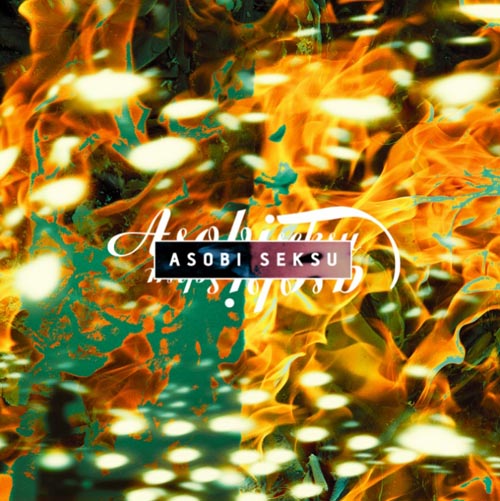
 From the start of this album, you can grasp a clear idea of what this group is aiming for with this release: shoe gaze/psychedelic pop that resonates with their listeners. Hell, you could grasp this from the title and album art alone. The first song, “Coming Up,” begins with a bit of synth, some rolling drum beats, the shake of some tambourine and the borderline falsetto vocals of Chikudate. After a few moments the distorted and swirling guitar kicks in, surrounding the listener with its dreamy aura. From here, the song really takes off, mixing the already present high-pitched vocals of Chikudate, with that of James Hanna for some contrast. For a start, you can get much better than this: the buzzing hooks of the guitar entice, while the vocals make you wonder where else the group can go with the album.

Following this lush first number comes an example of the calculated chaos that I mentioned earlier. While the instruments take a grungier, dug in sound, the vocals do not and are left to waver over the top. One might think that a whispery vocal would be the compliment to such a sound, but instead it is accompanied with a full voice, oscillating a lot between highs and lows. For some parts of “Trails,” it comes across as slightly disjointed, but at others it feels so right. Towards the end of the number comes a breakdown that should surely prove amazing live. While not the highest pitch, the vocals are entrenched and dripping with emotion and feeling, as though they are being pushed to their very limit.

The rest of the album follows suit of these two songs, but some do not quite reach their caliber. Depending on your personal flavor, that could mean that the songs that delight me fall flat to you; there are so many elements to this shoe-gazy sound that everyone can find something that they like about it. Whether it be on the long epic track of “Leave the Drummer Out,” or on the short “Deep Weird Sleep,” there is bound to be something that sticks with you.

While Flourescence is not the most interesting album that is going to come out this year, or maybe even this week, it is still good enough to merit some of your time. It’s light and fluffy music that is perfect for the start of spring lingering around the corner.

[audio:https://austintownhall.com/wp-content/uploads/2010/12/02-Trails-1.mp3]

Download: Asobi Seksu – Trails [MP3]

Dream Diary – You Are the Beat

Rating: ★½☆☆☆

When you think of recent lo-fi/dream pop releases of the past few years, of the various names that come to mind, one of them is bound to be the sweet sounds of The Pains of Being Pure at Heart. So what could be better than a band that sounds exactly like them, save some different members? Nothing right?  

Right off the bat, it’s easy to see the similarities between Dream Diary and The Pains of Being Pure at Heart. On “Paper Flowers,” you have the same bright guitars, synthesizer hum, and breathy-whispered vocals. However, it’s missing the element that makes all the instruments and vocals connect seamlessly, and it comes off exactly like a cheap knockoff karaoke POBPAH song; even the pacing is akin to that of “Stay Alive.” Halfway through I wanted to know where Kip and Peggy were.  Everything that the band is doing in terms of their sound is right and euphonic; it doesn’t sound repulsive, it just feels wrong. The vocals fall flat and the melodic shoe-gaze pop rhythms just resound emptily with nothing to carry them.

A standout song, regardless of whether it sounds original or not is found in “Something Tells Her.” Tambourine shimmers and shakes it’s way around the track, and with the female vocal presence layering over the top of the male, the normal flatness is expelled. This makes for a twee tune that actually goes somewhere that feels right and I feel like if Dream Diary focused on making more tunes that sounded like this, they could have made this album so much better. A few tweaks here, a few changes there and they could have just made pop jams in their own way, avoiding the dreaded criticism of sounding too much like another group. Sorry Dream Diary.

Take it this way: when you want the horribly unhealthy neon orange macaroni and cheese from a box do you reach for the mediocre store brand? Hell no, you get Annie’s or even Kraft for that matter. In some instances name brand matters, and this is one of them. So as the last track of You Are the Beat, “Audrey of Spirits,” fades to its mediocre shoe-gaze ending, calmly scroll down your iTunes to P, and listen to the real version. If anything, this album made me hungry for upcoming release of POBPAH.

[audio:https://austintownhall.com/wp-content/uploads/2010/11/Dream-Diary-Something-Tells-Her.mp3]

Download: Dream Diary – Something Tells Her [MP3]

1 36 37 38 39 40 61
Social Media Auto Publish Powered By : XYZScripts.com