Belle and Sebastian – Write About Love

Rating: ★★★★½

Belle and Sebastian are the darlings of the indie pop scene, which has been basically known for the past decade. This being their eighth studio release, they reinforce that they are not a band plagued by maturity and ten years of being indie pop superstars, they are Belle and Sebastian: always fresh and never ceasing to make youthful music.

The first track is “I Didn’t See It Coming” and starts the album with Sarah Martin’s vocals leading, which is a surprising, as one would think Stuart Murdoch’s infamous tone would be first heard. It turns out to be an enticing and creative surprise, as she and Stuart harmonize and play off of each other’s words, with bluesy guitar work in the background. During the build to the chorus they nod to everyone’s current economic situation: “we don’t have the money/ money makes the wheels of nowhere go ‘round,” but instead of this song becoming a pity party, these two tell you to “forget about it, honey,” and the song builds to a fantastic and joyful climax, with synthesizer echoing, giving it that twee-pop sound. Belle and Sebastian continue this happy mood with “Come On Sister,” which brings more synth and poppy goodness, sure to have you bobbing your head to the soft drum beats.

Then things slow things down a little with “Calculating Bimbo.” The percussion elements are more clearly heard in this song, and the slow drum rolls through as Murdoch pushes his voice to the limit and meets up with backing vocals for more harmonious moments. More of these vocally excellent moments come on “I Want The World To Stop,” where Stevie Jackson joins Martin in echoing Murdoch and you want to echo him too.

The rest of this album continues in this style, with “Write About Love, that has sort of the same idea of “I Didn’t See It Coming” and it makes you feel all warm and fuzzy inside, as if all of your problems don’t seem so bad anymore. This is the general feel and tone of this whole work; looking past those things that put you down with a proverbial screw it; I’m not going to be down.

On the last two songs, Belle and Sebastian finish ever so strongly. In “I Can See Your Future,” they incorporate majestic horn work and some orchestral elements effortlessly so that this complex song feels simple and elegant. But Belle and Sebastian aren’t done, they bring a tangy guitar sound and whispery vocals on “Sunday’s Pretty Icons,” finishing in their classic style, and leaving you wanting more, in a totally good way.

Belle and Sebastian have come a long way since Tigermilk, but have shown that they will always make excellent, witty and classic indie pop that can brighten any day. If Write About Love isn’t proof of this, I’m not sure what is. As expected, it is most definitely a contender for a spot on my list of top albums this year.

[audio:https://austintownhall.com/wp-content/uploads/2010/09/write-about-love-hq.mp3]

Download: Belle and Sebastian – Write About Love [MP3]

The Authors – Get Haunted

Rating: ★★★★☆

A few weeks into fall, cooler temperatures are surprisingly here and you feel lost in the jumble of work or school, missing those summer days that are not so far gone. What better way to fall back into the relaxing mood of summer than to listen to music that feels like sunshine and ocean waves? With only an EP released prior to this, The Authors look to establish themselves as experts of the beach-pop, summer feeling genre. With Get Haunted, they do just this.

 “Timebomb” kicks off the album strong and fast right from the start. The guitars buzz away the background while slightly fuzzy lyrics float on top of all the other components of the song, swimming to the beat. Next comes “Never Know,” which is great in its vocals, almost a yelp, to the high pitched noise that blends in with the rest of the song, yet gives a “haunted” feeling, as does the raspy vocals at points.

But perhaps in all the jangly guitars and the hyper drum beats, Get Haunted would become banal, like some of the dog days of summer? False. “Feels Like Running,” an excellent song, starts with a hooking guitar rift that takes turns dominating with the vocals. The drums sit back in the spectrum of what the listener will notice, but they drive the whole of this song, as well as the album; simple, yet refined and precise enough to add en element of constant clarity. They then transition to slightly groovier tunes with “Battles” and “Lonely Ways.” The bass line is quite prominent in these songs, giving them the less washed out feel of previous songs and a more solid foundation, which is an enjoyable turn for this album to take as the band continues with their garage rhythms.

The Authors finish just as strong as they started with “The Night.” This brings the album full circle, from quick shadowy beats to a softer and less fuzzy end. They finally kind of slow down with the last few seconds of the song reserved to some ambient noises. Those melancholic ending notes the same as those final days before fall.

This album reminds me a lot of Surfer Blood’s album from earlier in the year. Like that album, it is a sharp and high speed chase from start to finish, but The Authors prove their distinctive sound with clearer vocals, all while staying inside the garage rock jangle that is Get Haunted; a true trip back to those blissful summer days.  

[audio:https://austintownhall.com/wp-content/uploads/2010/08/01-Timebomb.mp3]

Download: The Authors – Timebomb [MP3]

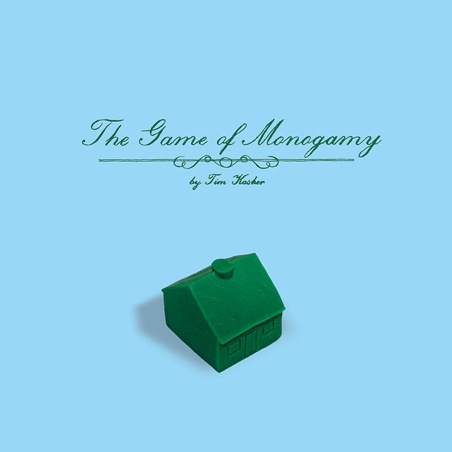
Tim Kasher – The Game of Monogamy

Rating: ★★½☆☆

It seems like Tim Kasher has been at it for years and years. His most renown projects include Cursive and The Good Life, but he finally wants the glory all to himself.  His first release under his own name, The Game of Monogamy, seems to work like much of his other projects, pulling auto-biographical references from his own life, laying them before the ears of the listener.

Oddly, “A Grown Man” begins with Tim’s statement: “I’m a grown man/I don’t know what I want,” which really puts the purpose of this entire album out in the open.  It seems that age hasn’t brought Tim too much clarity, though such difficulty has typically benefited his musical aspirations.  While he moves into brighter moments musically with “I’m Afraid I’m Gonna Die Here,” a song that uses a nice horn opening moment, the thematic element of struggling with self-worth once again dominates the lyrics.

It’s funny, but if you’ve been listening to Tim for years, as you probably should have been, it all seems like territory to easily visited time and time again.  The Game of Monogamy appears like a re-hash of a lot of his older songs, at least when it comes to the subject matter.  That being said, Tim’s storytelling never gets boring, despite the redundancy of ideas from album to album.  Keeping that in mind, the one thing that really lacks on this record, if you look through the lyrical homage to early works, is the music.  Even with The Good Life, Tim crafted these sweeping movements within his songs, mostly based upon the melody of his voice, but these new songs don’t seem to be as developed.  “Bad, Bad Dreams” has a nice horn arrangement, which seems to have become a favorite go-to move for Tim as of the last several years, but overall, the rest of the songs just doesn’t come off as elaborate as the work you would associate with him.  The guitar lines are just basic streaming, and the horns dominate a lot of the moments that used to seem intimate.

Of course, Tim Kasher always has a way to suck you back in with his openness, such as he does with “The Prodigal Husband.”  His memorable voice is able to carry the entire song, even with the light string (read: harp) work that softly dances in the background of the song.  Mid-song appears a nice little female accompaniment, which really gives a bit more depth to the song, making it one of the strongest pieces on this album.  Similarly, “Cold Love” is exactly the song you wanted Tim to write time and time again.  It’s got a nice little synthesizer in the background, and Tim’s voice changes pitch and tone, giving way to that heartache we all know he feels.  The man can still write a great track when he wants, and we’re all grateful for that.

Perhaps its old age, and perhaps its just that we’re all as jaded as Tim Kasher, but something about this record just really leaves you wanting more.  Usually his solo work relies upon his voice, with other instruments bringing the songs to life, but here, while much is the same, the horns and strings just don’t hold up to a guitar or throbbing electronic beat ; even his guitar seems absent throughout the entirety of The Game of Monogamy. While there are several great songs here, sadly, this is one Tim Kasher release, among the many I love, that I can’t whole-heartedly get behind.

[audio:https://austintownhall.com/wp-content/uploads/2010/08/05-Cold-Love.mp3]

Download: Tim Kasher – Cold Love [MP3]

Violens – Amoral

Rating: ★★★★☆

For years Violens have slowly been compiling EPs and mixtapes, all pleasing to a greater audience, allowing them to build up a fan base before releasing Amoral.  That it hit the shores of the UK is a sure sign that the band owes a great deal more of their musical influences to the British than to most American bands.  Regardless, they’ve earned their successes and praise, and these twelve songs remain just another example of the band’s craft.

Amoral opens with this ridiculously bass line, and then a twangy guitar comes in, joined by a bit of echo atmospherics. Here is where you notice the British touches, as the band seems to pay homage to the acid house/pop blend of bands like The Stone Roses.  You can almost dance to it, but the actual soundscape of opener, “The Dawn of Your Happiness is Rising,” is ultimately more rewarding than mile dance numbers.  They’ll stick with this stylistic approach, adding bits of funk to go along with a more soothing vocal, as they do in “Full Collision.”  Easily you can see the swaying hips of every hipster in town, especially when the gently obscured “oh oh ohs” rise and fall in the background.

“Acid Reign” is an easy choice for your modern single, as the guitar line definitely has this driving sensibility to it, but as is par for the course, the band covers the easily accessible pop elements beneath clever piano lines, adding a bit more of creativity.  Still, the gunfire drumming is phenomenal, which probably helps establish a good rapport with audiences looking for a little jangle and shimmy with their singles. Another winner of a track, though they all remain as such, is “Violent Sensation Descends,” a song that seems to hold a past with the darker psychedelic pop bands of the 60s, typically British, again.  But, what differentiates this track from simple rehash is the fact that the vocal delivery has a warmth to it, but in a catchy modern manner.  Something about this song will stick with you for days, or more.

Let’s not look at this record as merely a collection of singles, as that’s clearly not the point of Violens.  You can trace the band’s work all the way back to their previous careers in Lansing-Dreiden, what was then deemed an art-project of sorts.  Having that mentality allows for the band to experiment a bit more with modern song cycles, and while you’ll still find straight pop songs like “Another Strike Restrained,” the band still has it within themselves to offer up dark mini-collages such as the album’s title track, “Amoral.”  It’s their experimentation within modern boundaries that makes it all seem so clever, and unique. After all, that’s what we seem to be looking for from our modern indie heroes, a willingness to push boundaries of various genres, and Amoral does precisely that.   Perhaps this is yet another juncture in the band’s career before they shift gears and confound us all again, but they’ve earned that right.  Who really cares what how they shift and change when they can write pop songs so intimate and challenging simultaneoulsy?

[audio:https://austintownhall.com/wp-content/uploads/2010/06/03-Acid-Reign-1.mp3]

Download: Violens – Acid Reign [MP3]

Adam Haworth Stephens – We Live on Cliffs

Rating: ★★★½☆

Two Gallants is a rocking good time, so what would we see when Adam Haworth Stephens decided to go it alone for his first solo release, We Live on Cliffs.  It’s precisely what you don’t expect, as aside from his distinctive vocals, you find a young man fleshing out his sound, exploring territory that’s familiar to him, though not necessarily associated with his work.

When we first jump into his solo debut, you can immediately see that Stephens wasn’t too sure about how far he wished to take this venture, as opening “Praises In Your Name” definitely has some alignment with the tunes of his main gig.  It has that little bit of twangy swing to it, and you might find it hard to see his disassociate his recognizable vocals from his prior outings.

However, when you encounter the softly picked “Vengeance Come,” you begin to see that he does have the capability of establishing his own sound.  A female vocal accompaniment allows the song to take on a much for folk-rooted sound, coming off in the same genre as other bands like The Cave Singers.  The song has a subtle quality, giving the listener plenty of time to just sit back and absorb the melodies, and the ornate instrumentation.  Similarly, “Heights of Diamond” goes the route of a slow-walking number.  It’s at this point where Adam Haworth Stephens really begins to distance his vocal, using less of that throaty raspiness, giving off a more calming presence.  Using this approach definitely provides a mellower quality to the songs themselves, as Stephens doesn’t sound as urgently rushed as he has at times.

We Live on Cliffs definitely uses musical patterns that continue to build upon each other. “The Cities That You’ve Burned” slowly creeps along, but eventually bouncing drum beats and barroom piano sort of give the track a bit of extra momentum.  You can’t help but get carried away as Stephens’ vocals soar in and out with the rhythm of the song itself.  “Southern Lights” uses that same piano sound, with a little bit of a southern drawl to eek out the emotion, and the chorus will certainly grab you, if you haven’t been hooked by this slow jangle already.

By the time you’ve wrapped up the entire listen, you’ll probably note that there’s nothing wrong with any of the sounds or construction elements.  Given, at times there’s not a lot of differentiation from track to track, but its clear that Adam intended to take on an entirely different approach here, giving himself a warmer, fire-side folk appeal.  While you can knock that like-minded song pattern, you have to admit that as you pour through We Live on Cliffs, every song seems to have its own strength, its own ability to stand on its own merits.  Isn’t that really all you want from a good songwriter?  If we didn’t know Adam Haworth Stephens could write great songs, this album is yet another reminder for us all.

[audio:https://austintownhall.com/wp-content/uploads/2010/09/02-Second-Mind-1.mp3]

Download: Adam Haworth Stephens – Second Mind  [MP3]

Women – Public Strain

Rating: ★★★☆☆

As a Canadian indie band, Women made some waves with their self titled first release two years ago, be it a spot on “Pitchfork’s top songs of the 2000’s,” and comparisons of their sound to the likes of Deerhunter and, to stretch it, The Velvet Underground. Since then they have been hard at work with this new album, Public Strain, which would hopefully follow their debut in the combination of moody rock music.

Opening up the album is “Can’t You See,” which begins with an intense amount of feedback and ambient noise. This background noise continues through the whole song as somewhat monotonous vocals echo slightly above. The bass line throbs constantly, but those screeches in the background seem a bit too prominent for this simple of a song, and I find myself wishing they were gone about halfway through. “Heat Distraction” then loses the nasty noise in the background and moves to a faster, out right rock beat with repeating layers of guitar that serve as the main focus of the song.

Such is the main focus for this whole album, layers of sound topped with wavy guitars as icing on the cake (not your favorite kind of cake, but one that is still edible). Women vary between slow movers that showcase the dark sound that this band does so well, such as “Penal Colony,” whose melancholy lull carries over into a purely instrumental piece, leaving the listener to ponder where exactly the band is trying to lead you, but they attempt to give an answer to this question on exceptional tracks like “Locust Valley,” where intricate guitar playing and a simple chorus of just “oohs and aahs” make up the simple song. With songs like these, Women know where to put the builds in their album; it comes after another song that, I feel, has too much feedback and not enough actual music to hold it up.

They finish off with “Eyesore,” a rather long closer, but probably the best song on the whole album, as “Black Rice” was on their prior work. It seems like the singing and the guitars are almost equal, which gives this song an eloquent balance between pure instrumental and indie rock. There are breaks in the song in which the guitars outweigh the vocals, and in turn, bits where the vocals seem to be the main focus, which makes this song enjoyable for the six minutes and twenty five seconds it lasts.

This leads me to my biggest problem with this album: the vocals are not prominent enough, and they seem to blend together with each song. Every listen, it becomes more tolerable and the flaws become less noticeable. However, it just seems as though Women haven’t really made up their mind in terms of who they are.

[audio:https://austintownhall.com/wp-content/uploads/2010/09/women-narrow.mp3]

Download: Women – Narrow With the Hall [MP3]

Twin Shadow – Forget

Rating: ★★★★☆

It seems like nowadays, you throw a label on a band, give them a bit of hype, and sure enough, it usually works out for the band, deserving or not.  Finally, we’ve come to a band in 2010 who deserve this adoration, Twin Shadow.  While a great bit of Forget is dominated by electronic textures, there’s this underlying attention to details that equips the album with layer after layer of pure beauty.  Even when things don’t seem to fit altogether, somehow it’s tied in neatly, crafting one hell of a debut.

You walk right into a hint of synthesized darkness, mild beats, creating something of a somber sensation, just as George Lewis Jr. makes his first appearance.  Hidden behind the instrumentation, or barely intruding, Lewis’ vocals evoke that Murray Lightburn feel, warm and affecting. There’s all these odd touches of instrumentation, crafting something wonderfully unique, all as the song works its way towards a bliss-filled ending.

Everything about the way Lewis and Grizz Bear chap Chris Taylor built Forget makes it one of the most rewarding listens on this side of pop music.  “Shooting Holes at the Moon” jumps off with this groovy little work on the drums, then there’s some throbbing bass rhythm added in, along with all sorts of hints of string work in the background.  It’s all about the funk, yet as Lewis jumps in to join the party, he brings a suave element, giving the song a bit of a house party feeling, if that party was full of sweet tunes.  Those little guitar short shots in the background just make the element of electronics just rise above your typical cliched laptop band.  This is precisely where these sorts of bands should live; they should aspire to be Twin Shadow.

Seriously, “Yellow Balloon” recalls those late nights spent in dingy dancehalls with your friends, while whiskey poured from the bar.  And yet Lewis still wants you to do your thing, he just wants to add a touch of class, which usually comes by way of his soulful voice and the various textures.  Easily this could disappear as just another chillwaved track, but the fact that you can decipher the real instruments, brings this jam into the forefront.  Don’t forget the delivery of Lewis when he coos “the secret handshakes/the swimming hole/keep awake.” So right on.  Twin Shadow easily could border on the line cheesy, yet you have to return time and time again to the craft of the songwriting.  “Slow” has this Edge-influenced guitar line that runs in the background, which definitely harkens back to an era of innocent electronic music, but instead of sticking with his clean polished vocals, George decides to throw an echo-y yell in the background of the chorus. He’s challenging our conceptions, or rather challenging us to go back to the days of refreshing club hits.

Forget had the potential to fall flat on its face, a victim of its own hype.  But, George Lewis Jr. wasn’t going to let that happen, choosing to create music that he thought was both beautiful and fun.  In his pursuit, he created an album that rises above the doldrums of your everyday electronic music, providing us with our first vision of what Twin Shadow is really all about. After listening to this record, we’re all about what ever Lewis and company are all about, especially if sounds this ridiculously good.

[audio:https://austintownhall.com/wp-content/uploads/2010/01/Twin-Shadow-Yellow-Balloon.mp3]

Download: Twin Shadow – Yellow Balloon [MP3]

Cinema Red and Blue – s/t

Rating: ★★★★½

Honestly, this has been one of our most anticipated records for some time, ever since word hit the streets that members of Crystal Stilts and Comet Gain would unite to create Cinema Red and Blue.  While this might just be a brief off-shoot for all those involved, it’s got the feel of a classic record that will only get better as time goes by.

One of the members that needs mention here, as he’s the primary vocalist, is David Feck.  He’s always been able to carry tracks entirely on the foundation of his voice, much as he does on “Far Out Isn’t Far Enough,” the opening track on Cinema Red and Blue. But, just as you think he’ll do it all alone, the band kicks in just shy of the 2 minute mark, jangling their way to a solid ending, while Feck’s vocals strain to grab every drop of emotion.

Then you’ll hit the trilogy of “Ballads,” all named for different interests, and its the wordplay of Feck that wins out, as it usually does.  For instance, there’s something clever about the way he puts together “we’re trying hard to sound like the Swell Maps/what a terrible name for a pop group,” during “Ballad of a Vision Pure.” It’s not just his word slinging that’s clever, but his delivery has the perfect amount of inflection and soul to win listener’s over.  There’s something about his tone too, especially in “Ballad of a Bus Stop” when its accompanied by a female counterpart.

Cinema Red and Blue isn’t entirely about David Feck, however. While you can see the homage to their bands, with flourishes of indie pop and psychedelic darkness, they also pay tribute to their favorites, such as Vic Godard, Julian Cope and the Chills. One that everyone is sure to like is the group’s cover of “Same Mistakes” by Godard.  Their version was released as the first single on the record, and its filled with a bit of electronic organ and low-tempo jangle.  It doesn’t hurt that David gets to match his vocals up either with another soft female vocal.  Listening, its odd how the band doesn’t seem to try at all with what their doing; its a casual affair of great songwriters, which inevitably wins us all over.

Something about this record just seems so precious, even though its not even a week old.  Every song, every note, really hits home as you listen.  There’s a familiarity to it that quickly attaches itself to your ears and heart.  That female follow up vocals in “Love in the Altitude” just hits home.  Or maybe the mellow mood of “Charlie Clarke” is more your style.  What’s clear is that you can find something beautiful, or you should, in every single track here.  While the members all have their respective projects going on, coming across an album as special as this definitely makes you yearn for more.  At least we’ll always have that one perfect record created for us all by Cinema Red and Blue.

[audio:https://austintownhall.com/wp-content/uploads/2010/08/08-Same-Mistakes.mp3]

Download: Cinema Red and Blue – Same Mistakes [MP3]

Frankie Rose and the Outs – s/t

Rating: ★★★★☆

With all the great lo-fi bands floating around, something is to be said about making a space pop album that doesn’t sound like all the rest. Frankie Rose should know this the best out of anyone, as she has been a member of many successful pop bands herself:  Crystal Stilts and Vivian Girls. Other bands cast aside, Frankie proves her knowledge of this craft with this semi-solo project.

The album starts out on a gradual pace, with only bare instrumental to begin, slowly submersing you into each layer of the opening song. First heard is the quivering feedback, which holds steady until Frankie Rose comes in to soak the song in a tone of wonder and bemusement that her echoed vocals provide. Next, sleigh bells are added for an element of percussion that carries the music slowly on, as Frankie repeats the same simple words, over and over. Is this the same person who was apart of bands that brought light and jangly pop songs to the table? Apparently not, as “Hollow Life,” is a deeper and completely different sound than anything Frankie and any of her previous accompaniments have put out before. Different, but overwhelmingly good.

That being said, this solo effort is not a complete turn from Frankie’s prior works. “Little Brown Haired Girls,” shoots out of the gate with driving drum beats, crashing cymbals and girlish gang vocals; sort of a combination of elements from the first two songs. You have the softer vocals from “Hollow Life,” mixed with a more prominent guitar part that “Candy,” the song in between these two, brings. It is a sure sign that there are still excellent quality pop beats to be enjoyed on this album.

 The rest of the album mostly follows suit from these two songs. There are softer songs such as “Lullabye For Roads And Miles,” which is as expected from its title, reliant on the lack of the quick drum beat and more focused on leaving a little emptiness to carry the song instead. And there are instances of superior jams, like “Girlfriend Island.” On this number, some la la la’s add to the catchiness of the guitar and proves this to be a song that is difficult to stay still to; it is impossible for me to stop tapping along with that irresistible drum beat.

 From this point, Frankie Rose And The Outs move through the rest of the songs quickly and wrap up their first full length album gracefully. They successfully combine a new hollow sound with the well loved, classic low-fi pop that bands like Vivian Girls are known for. With the slow moving songs so effervescent and the fast paced songs reminiscent of the sunny summer days not too far gone, there isn’t a more perfect time for this album to debut; at the brink of fall.

Nobunny – First Blood

Rating: ★★★½☆

It’s funny, but Nobunny is probably more known for his stage antics, mainly wearing a bunny mask, than his music, but that’s all going to change.  His latest album for Goner Records, First Blood, has a sparkling sheen, erasing a touch of that garage sound that he hit you with on his earlier works.  But, this isn’t a bad thing by any means, rather it puts his songwriting on display, which you’ll finally realize is quite solid.

There’s a classic rock n’ roll sound ringing from the guitars on “Ain’t It a Shame,” sort of like Chuck Berry, but the jangle that continues brings a clean vibe with guitars, while his slightly off-tune vocals bring a touch of modernity.  He’ll continue the hint of swing on First Blood with “(Do the) Fuck Yourself,” which uses a nice little piano slide at key points to bring this track out of the garage and into your favorite dive bar.  Listening closely, you’ll probably realize that the “Fuck Yourself” is sort of a nice throwback bop.

You’ll get that sharp-knifed grit you’d recognize at his live shows once you arrive at “Gone for Good.”  It’s a fast paced number that just pushes ahead quickly, all the while Nobunny sort of gives the vocals a bit of a squeal–then you meet up with a nice little horn solo.  While he’s known for garage sounds, the influences here show that he’s really just out to have some fun, no matter what rock n’ roll cliches come about.  “Motorhead With Me” is almost exactly the same, though this is surely one of those tracks that will feature in the live setting.  Snappy drum rolls give the sense that you’ll be clapping along as the percussion bangs away, not to mention that catchy little chorus that’s easily sung loudly whilst spilling your Pabst on your neighbor.

Even though you’ve got bits and pieces of rock n’ roll history throughout, its the garage pop on First Blood that really stands out.  That opening guitar line on “Live it Up” just sucks you in, and right when the drums kick in, you’ll immediately be tapping your toes on the floor.  During the chorus, he has sort of a speak/sing delivery, which when placed alongside that killer opening guitar line just sounds sugary.  Still, if you want some evidence of solid songwriting, you can turn to the album’s closer, “I Was On (the Bozo Show).”  It’s a twangy strumming guitar that really holds the listener throughout here, slowing things down to let you reflect on the whole collection of tracks here, so just soak it on up.

You’ll probably won’t see shattering record sales for First Blood, which is sort of unfortunate, as almost every song on this has some classic appeal.  You also get the added bonus of knowing that the whole affair will be done in under a hour, so you really don’t have a thing to lose.  Since cleaning up the production quality, Nobunny has emerged from playing dirty pop in his garage to writing great songs you can sing along to while you and your buddies are drinking beer looking for the best night of your lives.

[audio:https://austintownhall.com/wp-content/uploads/2010/09/03-Blow-Dumb.mp3]

Download: Nobunny – Blow Dumb [MP3]

1 41 42 43 44 45 61
Social Media Auto Publish Powered By : XYZScripts.com