The Black Angels – Phosphene Dream

Rating: ★★★½☆

You’re probably reading about The Black Angels because you think you’re into psychedelia, but you know what, as much as the band seems to live up to the name in their own attitude, its about time we just focus on the music rather than stuffing it in some tired sack with the rest of the bands unfortunately labeled as such.  Phosphene Dream sticks with the same pastiche the band’s utilized in the past, so don’t necessarily expect to find a whole lot of new territory covered, unless you’re looking for the ghost of Arhtur Lee.

It’s always a brooding affair when you get involved with an Angel’s record, and right from the get go there’s this coating in feedback and atmospherics, probably the one that gets them tagged as psychedelic. It sounds like another run of the mill track for the band (not that that’s a bad thing), but with about a minute to go the band just jumps into this driving energetic trip down the highway, fueled by squalling guitar and heavy-handed drumming. A brilliant closing minute. But, of course, they’ve got to pay homage for a bit to their San Francisco brethren of the sixties, which means “Haunting at 1300 Mckinley” is going to show you that jangling guitar stomp covered with guttural vocal accompaniment. Maybe its par for the course, but its never bad with this group.

There’s some changes adrift for the group, but you think that The Black Angels could take it even further.  “Sunday Afternoon” only gets tied into their typical sonic attributes with that little organ grinding in the background, not to mention the hollow effect of the vocal, but its one stepped up from being super stripped down.  You’ll love that solo and the jam in the middle for its raucous power, but man, if they just got rid of all that noise, that could be ridiculous.  Wait, they do get rid of it.  Listen to “True Believers” and you’ll find the direction that seems most logical for the band following Phosphene Dream. Just because they peel back a few layers doesn’t make the track any less dangerous or ominous, especially if you use the closing moments as your measuring point. Perhaps you’ll even notice hints of Clutch, with an homage to Austin, of course, on “Entrance Song.”  The throbbing bass builds the momentum, and while its a touch repetitive withe “rolling fast down I-35” lyric, there’s a bit of a haunting to this presence, perhaps one that can only be felt by those cruising down one of the most dangerous stretches of American highway.

While it may seem like there’s some criticism for The Black Angels with this review, its far from that.  They’ve been so successful with their efforts in the past, and dominated this dark sixties influenced rock scene, that it’s hard to find things to say that haven’t been thrown around hundreds of times.  Personally, they sound a whole lot more like Love than 13th Floor Elevators, but that’s one man’s opinion.  Phosphene Dream is going to be just as successful as their last effort, and perhaps the records in the future. They’re a great band with great songs.  It’s just plain simple.

[audio:https://austintownhall.com/wp-content/uploads/2010/09/04-Sunday-Afternoon.mp3]

Download: The Black Angels – Sunday Afternoon [MP3]
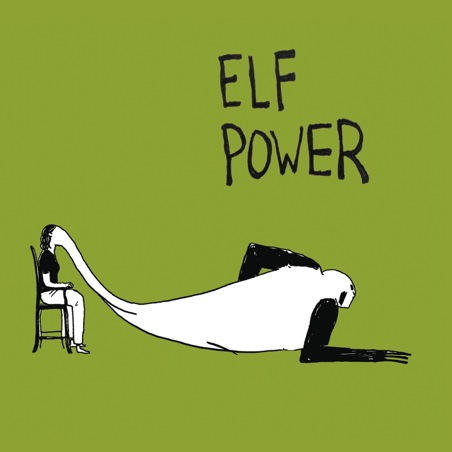
Elf Power – s/t

Rating: ★★★☆☆

The last time that we heard from Athens’ band Elf Power, they were trying to get a little bit more of an orchestrated sound on record, but it didn’t necessarily go over so well; it did sound a bit generic, if not mainstream, for fans familiar with the band’s earliest works. But, they return today with a self-titled record, hoping to get things going back on track. We’re hoping for the same.

When you walk into this record, it’s clear that there’s still that element of creative arrangements, held over for the last time.  “Boots of Lead” doesn’t necessarily push boundaries, but the meandering guitar line and Andrew Rieger’s softly hoarse vocals establish a bit of that old Elf Power magic.  We’re not entirely asking the band to abandon cleaner production, in fact, it probably has helped the band gain a larger audience.  So, when you get the electronic drenched “The Concrete and the Walls” you’re happy to see that the somewhat awkward delivery and rhythm have returned to the fold. They even have an odd bit of a breakdown near the end of the track, just to switch the mood for listeners, taking on a darker spirit.

They’ve definitely taken on a softer quality, or one that veers far from the lo-fi approach.  You can tell the work of Vic Chesnutt has definitely had an impact on their songwriting, especially with songs like “Ghost of John.”  They use a great melody to go with what appears to be quick strummed acoustic guitar, and Rieger’s voice has this whispering politeness to it, as if he’s asking your permission to go with the band as they push through Elf Power. Yet despite their subtle changes in songwriting, they can combine this new-found docile approach to their old clever ways.  “Stranger in the Window” is perhaps one of the best songs they’ve written thanks to such moves.  Once again, acoustic guitars appear, but atmospheric touches wash over the song, as a slide guitar quietly paces in the background.  It’s a combination of folk and experimentation that finally works for the band, so much so, that it makes all the bad memories fade away.

One thing to note, and this goes for the last several albums as well, is that the lyrical composition has improved for Elf Power.  Okay, sure, they definitely take liberty with the subject matter, like during “Tiny Insetcs” when we’re getting a synopsis of an individual writing as he watches tiny insects, sometimes in a bedroom, sometimes smashing into a windshield.  Still, they’re not disposable, like they were on “Loverboy’s Demise.”  We expect maturity, and that’s what we have here, so let’s be thankful for that.

It’s not that Elf Power have returned to the heyday of their lo-fi career, but it has finally become clear that that’s no longer the band we’re listening to anymore.  This is a mature band, who have grown, adapted and still hung on to their creativity as a unit.  They offer us a bit more insight into the evolution of all those band’s we’ve adored privately for so long, and despite their missteps, we can still proudly say we enjoy them every bit today as we did back then.

[audio:https://austintownhall.com/wp-content/uploads/2010/06/stranger-in-the-window.mp3]

Download: Elf Power – Stranger in the Window [MP3]

Les Savy Fav – Root for Ruin

Rating: ★★★★☆

Writing about Les Savy Fav is really difficult to do without keeping frontman Tim Harrington in mind.  It’s not just his vocals, but his overall performance attitude, making each show something to remember. Root for Ruin feels a great deal like an album made perfectly for one of Tim’s amazing stage shows, giving him plenty of fuel, and just enough time to breathe and drench the audience in his sweat.

Out of the gate, “Appetites” just straight ahead knocks you out.  It’s got sharp knifing guitars cutting across each other, and then Tim takes the stage.  You can envision him approaching the audience, shoving the microphone in our face as he screams “we still got our appetites,” making a statement that Les Savy Fav aren’t ready to call it a day–thank goodness. They won’t let up just yet either, bringing you pounding drums into the mix with “Dirty Knails.”  As those guitars fly into the mix, you can see the veteran band moving the audience to a passionate frenzy.

“Sleepless in Silverlake” is one of those sprawling songs where Tim would probably sit on the edge of the stage, toying with members of the audience, perhaps doing some sort of well-timed crouch/stomp across the stage.  Pristine guitars carry themselves with grace throughout this track, while Harrington’s vocals remain steady, serving more as the skeletal backbone of the song. Root for Ruin doesn’t just rush along either, as some of their albums have done, it lets the listener gather themselves up as well, much like “Let’s Get Out of Here,” using swinging high vocals and one of the strongest melodies the band’s offered us to date. It’s adult post-rock, but done with such vibrance and self-assuredness that you’ll swear it never sounded this good.

One of the things the band has managed to do so well is balance the juxtaposition of their quieter, subdued moments with edgy rockers.  Thrown back to back, “High and Unhinged” and “Excess Energies” demonstrate the perfect contrast in the band’s work, with the former using sort of a staccato guitar line to correlate with Tim’s stop and start vocal delivery.  It’s not nearly as in your face as the other work on Root for Ruin, but it surely falls in line with some of the group’s more accomplished numbers.  “Excess Energies” just hits you from the opening seconds, using violent imagery to give a bit of resonation to the ferocity with which the band exhibits, both in this song and live.

You see, you can’t possibly approach writing about Les Savy Fav without incorporating some aspect of the band’s live performances, as they’re surely one of the most original and invigorating live acts around at the moment.  All of Root for Ruin feels precisely like a well lined-up showcase of everything the group has to offer listeners, using  pummeling numbers alongside songs that tend to meander, albeit with an edginess you’re not likely to find elsewhere.  After years of playing together, they’ve finally seemed to encompass in the live recording everything we’ve all known about them all along, bottling up their fury and creativity in one glorious collection of eleven tracks.

[audio:https://austintownhall.com/wp-content/uploads/2010/09/04-Lets-Get-Out-of-Here.mp3]

Download: Les Savy Fav – Let’s Get Out of Here [MP3]

The Vaselines – Sex With an X

Rating: ★★★☆☆

Twenty years ago, after bridging the gap from small, unknown Glaswegian noise pop group, to indie stars, The Vaselines broke up, leaving their fans in awe of why a band at their prime would dissolve so quickly after their sudden success. Now, they’re back, twenty years wiser and hoping to make an album that holds the distinct and fast sound from their previous release, while adapting it ever so slightly so that it might fit in with the current music scene. It is a feat that may prove easier said than done.

After a brief, lullaby-esque, introduction, “Ruined,” picks up right where The Vaselines left off; rocking and rolling. With low grinding guitars and steady drums, pounding away in the background, Eugene Kelly and Frances Mckee harmonize to tell us the ever positive reminder that “you’ll die, we’ll all sigh.” While not the most upbeat of lyrics, the ever present drums juxtapose with said lyrics to balance the song, a great start to the album. Following this is the title track, which is also a song with a darker tone lyrically, yet comes across almost cheery. Mckee’s honey-sweet vocals serve as the temptation to which Kelly’s self deprecating words try so desperately to get away from, yet gives into at the end of each chorus, just as the listener gives into the enticing empathy of feeling completely controlled by desires.

Then, Sex with an X takes a turn to a slower pace, and begins to lose me.

At four minutes and thirty four seconds, “The Devil’s Inside Me” seems to hang on about two minutes entirely too long for a song that doesn’t have that much meat musically, or lyrically. Next, they follow up with another fast paced song, which disappointingly sounds much too similar to the title track, only without the depth and hooks that dueling vocals in the earlier song provided. This is the pattern for the next two songs “Overweight But Over You” and “Poison Pen.”

“I Hate the 80’s,” comes with some form of change: a layer of tambourine and high pitched organ for parts of the song, which serves as a sort of awakening from the lull that the past four songs doled out. This then leads up to “Mouth to Mouth,” which holds a tone of desperation that carries this song into the distinct category where “Ruined,” and “Sex With an X” reside. It has a strong build up to the chorus, yet doesn’t feel too worn by the end of the song.

Sadly, following the ninth song on this album, it feels almost as if The Vaselines have given up, with three songs left. “Whitechapel” drags on for a little too long like “The Devil’s Inside Me,” followed by another attempt to pick up the pace before closing the album with the same melody in which it began.

In the end, there just isn’t enough depth to this album. Yes, my feet are tapping vigorously and the lyrics are pretty damn catchy, but it is too difficult to keep all the songs from running together in my head. This is what makes Sex With An X a good collection of songs, but not a cohesive album that I will want to listen all the way through repeatedly. I applaud The Vaselines in their attempt at a comeback, but I am bored by the lack of variation that seemed to get lost with the passage of such a long period of time.

[audio:https://austintownhall.com/wp-content/uploads/2010/08/The-Vaselines-Sex-With-An-X.mp3]

Download: The Vaselines – Sex With An X [MP3]

Review written by Nicole Baumann

Superchunk – Majesty Shredding

Rating: ★★★★½

When you’re putting out records by the likes of Arcade Fire, Spoon and Destroyer, one would think you could easily get influenced by the great songwriting, unless of course, you’re Mac McCaughan, founder of Merge Records.  But, let’s not forget that Mac’s been jamming with his band Superchunk for close to two decades, and their newest album, Majesty Shredding, shows that no matter how often they pop up, they’re always going to be awesome.  Period.

Perhaps this whole record owes to perfect timing, but then again, as soon as you hear the squall of feedback that opens “Digging for Something,” you are met with a barrage of powerful gunshot drums and pure pop sensibility.  Mac’s voice sounds as youthful as ever, and who’s going to argue when he’s tossing up sing-a-long choruses so tasty?  Of course, the band isn’t solely intent upon giving you quick guitars that cut straight to that pop spot in your heart, they’ve got other offerings.

“Rosemarie” takes a softer approach, almost one that lives in the vein of The Replacements, which is completely acceptable, if not utterly awesome.  The balance between Mac and Laura sounds as tight as ever, and they’re not tossing in frills just for the sake of doing so; there’s a purpose in every single musical note on the plate.  You’ll find “Crossed Wires” coming at you in the similar territory, using the most basic formula with guitar interplay to keep it more than interesting.  Hopefully everyone will find themselves enjoying the clarity of the vocals, enjoying the fact that you can turn this album way up, and scream along to the fact that we’ve all got “crossed wires.”

Its funny, as you probably won’t look at Majesty Shredding and think to yourself that this band is breaking new ground, kicking all those tired genres to the curb, but at the same time, they’re not just resting on their laurels, sitting back waiting for you to love them. “Learned to Surf” opens with some great guitar work thats both angular and heavy, things we’ve seen other people do, but not this earnestly.  Superchunk will also throw traditional ballads, of their own personality, at you, like in “Fracture.”  This is the first time you can see a bit of the age in Mac’s vocal performance, not that we’re seeing this as a bad thing by any means.  Even with that, it’s a song that seems forever innocent, almost timeless.  Shouldn’t it all sound just like this?  And, if you want that in your face rocker, then you can visit “Rope Light” late in the record, just in case you weren’t sure how much you would love this album.

Occasionally we find a band like Weezer rehashing the same tired sound, but nothing about the work on Majesty Shredding seems dated, or even throwback.  Time has treated Superchunk with the appropriate amount of wisdom, allowing them to craft an album that isn’t trying to be anything other than good, simple as that.  It’s god ballads you can sing to in your car, its got rockers to get your energy going, and its just a joy to listen to a band who has no intent other than to offer up a great collection of songs that can stand the true test of time. Bands like this make it easy to write about; they just offer up good old fashioned killer rock n’ roll.

[audio:https://austintownhall.com/wp-content/uploads/2010/09/1-01-Digging-For-Something-1.mp3]

Download: Superchunk – Digging for Something [MP3]

Cloudland Canyon – Fin Eaves

Rating: ★☆☆☆☆

If you’re looking for some sort of genre where you can place Cloudland Canyon, well, you’re probably best just placing it alongside soudnscape music–then again, some will want to lump it in with noise-pop.  On the newest effort, Fin Eaves, it’s really a blend of both,  but there is one that sticks out predominantly like  a sore thumb as the album draws to a close.

The first seven minutes of the album really doesn’t do much to distinguish anything for the listener.  It’s made up of two songs, neither of which will stand out as either a single, or as something overbearingly musical.  On “No One Else Around” you can clearly hear the faintest bit of warmth, due solely on the vocals, but its coated in extensive electronic dabbling and atmospheric noise.  It’s probably a great piece of sonic experimentation, but personally, that’s not really what I’m looking for nowadays.  The fact that it goes through to the second song without me even noticing is either pure genius, or just lazy album editing.  Really, you can have a song that’s just 7 minutes.

“Sister” is the first song that actually resembles a bit of a song.  You can kind of make out the vague lyrics, or at least you can hear the word “sister” in there, so it leads you to come to that conclusion.  There’s even some faint percussion hiding beneath the squalls of noise that goes nowhere and returns to nowhere. It all just seems like directionless drivel, going somewhere, yet really not going anywhere special.  It’s much the same case when you get to “Pinlike,” as the song begins with sort of that psychedelic rythm and a bit of haunting vocal.  Then, its like someone just presssed record, and looped over and over for about five minutes, and honestly, its a bit excruciating. 

So apparently it’s like we’ve all just become huge Steve Reich fans, enjoying the fact that looipng tapes and adding textural noises can be called art.  I get that, and I get the allusion to various levels of “gaze” music, but very few people have been able to pull this off successfully, let alone Mr. Reich himself, thus why he is considered agenius.  There’s a great bit of affection for this sort of thing, and its understandable….but listenable?  This person is leaning towards an emphatic no.

Cloudland Canyon, despite the better efforts, haven’t really given you much to listen to as you browse your way through Fin Eaves, searching for something redeeming. If you wan’t this sound, it seems like all you need to do is take a boom-box, toss in your old Erasure tapes, wrap it in plastic for protection, and stick inside of the noisiest washer/dryer combo you can find.  You’ll end up with a record that sounds a lot like this one, and one you will immediately want to return.  Sorry to be harsh, but some projects are better off confined to your bedroom. That being said, bet this sounds good if I’m baked.

Of Montreal – False Priest

Rating: ★★½☆☆

What can a band due ten albums into their career to mix it up?  Well, Of Montreal seem to use a bit of a stronger R&B influence on False Priest to add a little twist to their traditionally humorous pop smorgasbord.  This album lives fairly close to the group’s pastiche, and to top it off, it’s a lot more cohesive than their last record, Skeletal Lamping.

Groovy Kevin Barnes brings his high-pitched falsetto to the forefront right from the get go on “I Feel Ya Stutter,” but he also utilizes his speak-sing formula, much as he will do throughout the record.  Fans of the group will notice the traditional hooks still remain, as well as the effortless layering of various harmonies, but its the vocals that seem more experimental here, trying to toss a bit of soul into it all. “Coquet Coquette,” while groovier in its composition, going back to the R&B influence perhaps, is probably the strongest number on False Priest, and one resembling the band’s previous hits.  It has a building guitar and a bit of suave, taking Barne’s driving vocal to push the song through to its space-age ending.

One of the things that differentiates this effort is the presence of guess vocalists, namely Janelle Monae.  Her smooth voice does add a nice little touch to “Enemy Gene,” but the song overall isn’t quite as successful as it could be.  There’s no huge battle between pop and catastrophe that Kevin has walked so well in the past, rather its just sort of a straight ahead pop track that really just stands in one place. Solange Knowles also pops her head up in “Sex Karma,” and while her performance might not be nearly as attractive as Monae’s, the song uses clever bass lines and electronic touches to actually construct the song, not to mention the call-and response vocals add a touch of playfulness. That being said, its nice to see Of Montreal trying to incorporate new ideas to mix it up, though they’ve always sort of been mixing it up, right?

While the past of the group has had all these incredible shifts in sonic approaches from record to record, they group has never really taken a straight approach at writing indie pop songs of the  ordinary sort.  But, take “Famine Affair,” one of the finer tracks on False Priest, and you should notice that this is about as simple as KB can write.  You could easily pump this in the morning to get you going, though you’ll never claim it to be one of the band’s greatest hits. Still, catchy tracks never hurt.

It’s always great to see the journey that Kevin Barnes and Of Montreal will take us on, as they always have something up their sleeve, but this effort isn’t one of the most successful efforts in sonic exploration the group has put together.  It’s uneven in a lot of places, if not all of them.  False Priest, of course, has high points like “Coquet Coquette” and “Famine Affair,” but perhaps a bit of editing here and there might have made it all seem a bit tighter, a bit less scattered.  All that said, you’re going to buy it, as you should, just to make sure Kevin Barnes keeps coming up with crazy ideas with which to present to his adoring audience.

[audio:https://austintownhall.com/wp-content/uploads/2010/06/03-Coquet-Coquette-1.mp3]

Download: Of Montreal – Coquet Coquette [MP3]

The Walkmen – Lisbon

Rating: ★★★★½

Honestly, one of the best known songs from The Walkmen is “The Rat,” and it seems that many of us have waited for the band to replicate such powerful tracks for the duration of several albums. But, while we’ve had our issues, Hamilton and his posse have slowly began to focus on recreating nothing, simply pushing ahead whilst writing some of the moving records; Lisbon is just another killer notch in the proverbial belt.

A rolling drum beat lightly kicks off “Juveniles,” giving the listener a bit of a slow-sway before the twangy guitars unite with Hamilton’s vocal appearance.  It’s amazing how great his voice sounds nowadays, when it used to be the one disposable aspect in the group’s repertoire. His control as he changes pitches and tones from note to note let’s us all know that he’s in control; so be it good sir.  You’ll find a similar drum roll entrance on “Angela Surf City,” but the band spends the first minute building tension, just before exploding upon us.  The drums sounds like well-crafted gunfire, and the guitars chug along in unison.  Still, there’s a light touch in the moments where the track rests, due mostly to Hamilton’s now credible vocal display.  If you’re not in love with Lisbon already, you’re already behind, so start over.

There’s a darkness bred by the guitar lines at the opening seconds of “Blue as Your Blood.”  You get the sense that your traveling down a dark highway through some desert valley, and the wind blowing in your hair is Leithauser’s voice.  String arrangements arise in the background, giving an extra depth to your night drive.  While it’s musical tone is a touch haunting, there’s a warmth to everything within this number. You’ve driven all the way to “Stranded,” which has an echo of a sad funeral march, implied by the horns. Yet, as Hamilton exclaims that “I’m the bigger man here,” you get the feeling that despite trials and tribulations, he’s not sitting around reflecting on it all; he’s ready to go forth.  After such emotion, The Walkmen take it upon themselves to brighten the mood with “Victory.”  The guitars alone are some of the brightest you’ll find on the record, crisp and clear, giving us all hope.  This is our victory too, so enjoy the rise and fall, especially the rise; those guitars and crashing cymbals just clear everything out of the way.

In the past, we might have searched for the powerful moments to erupt for the group, but they’ve spent so much time crafting their sound over the years, that when they slow it down, you put your ear to the speaker, hoping to grasp every last sonic stroke. “Torch Song” and “Lisbon” have a bit of studio tinkering in their background, but the emotive quality in Leithauser’s voice on each song provides us with a final moment to contemplate every word, every change in pace, every single track.  You’ll arrive at the end, a bit slower than how you got here, but dammit if you won’t have enjoyed everything about the latest travels with The Walkmen.  Honestly, most people should struggle to find anything wrong with this record, making Lisbon one of the most complete, and gorgeous, records of 2010.  Press play, and listen again and again.

[audio:https://austintownhall.com/wp-content/uploads/2010/07/The-Walkmen-Stranded.mp3]

Download: The Walkmen – Stranded [MP3]

Electric Sunset – s/t

Rating: ★★★½☆

Usually when the name of a band involves something with the word in electric, its usually a signal that there’s going to be far too much electronic flourishes in it, which goes against my new personal disdain for laptop accompanied bands. But, knowing that Electric Sunset was once part of Desolation Wilderness made it easy to get into the self-titled record, as I enjoyed Nic Zwart’s other band, prior to his departure. So why not give the guy a good honest look-see, or listen-see I suppose.

It begins with “Palace,” which does begin in the traditional way as most of the recent chill-wave releases have gone, with that odd sunshine dancing on the keyboard effect, but the one thing that immediately sticks out is the emphasis on the beats.  They’ve got this driving power to them, which leads to more toe-tapping as opposed to annoyance.  To top it off, Zwart’s voice had a depth to it that you might not get from the album cover.

Gentle touches of the electronic elements on “Morning City” make the song much powerful, giving Nic’s voice a little bit more room to roam about, and allowing for a bit of space to creep into the collage of beats and guitars.  Songs such as this, like the majority of Electric Sunset, benefit from the fact that he’s not forcing every little aspect that comes into his mind into his tracks.  He’s leaving a bit of an ambiguity to the song, asking listeners to extract what they want. You’ll see it again immediately afterwards on “Infinity Avenue,” a song that allows the empty space to create a brooding bit of tension, before taking off on a magic carpet of perfect melodies. This one might just make you clap your hands together.

Electric Sunset‘s first single “Soda” really does exemplify everything I’ve enjoyed while listening to this together.  Zwart’s vocals rise really high in the mix, and they’re solid vocals, with what seem to be minimal tonal effects. The song itself has this strong groove that relies upon his electronic work, but once again, it’s not overbearing by any means, even as layer upon layer is placed atop the various elements.  Closing this whole sonic array with a song like “Prayer” reaches out to the audience via the narrator’s reflection of being alone in a new city.  It asks us to identify with our own lives in a way that closely relates to Electric Sunset itself; leave your expectations at the door please, this is a seemingly new adventure.

Perhaps being jaded is not the best attitude to have when approaching electronic music, but perhaps tired sounding redundant recording tricks should be passed on the way side.  That being said, Electric Sunset has given us an electric-fied album that doesn’t resemble every other band out there, giving us lots of empty space for reflection, and great melodies crafted from Nic Zwart’s voice.  At the end of the day, you’ll realize that sometimes music is simply good, no matter where it comes from, or what instruments are utilized.

[audio:https://austintownhall.com/wp-content/uploads/2010/06/electricsunsetsoda.mp3]

Download: Electric Sunset – Soda [MP3]

The Acorn – No Ghost

Rating: ★★★½☆

After their extremely successful Glory Hope Mountain, this group of Ottawans retired to a secluded area, focusing on each other and their songwriting.  The result is the Acorn‘s third full-length, No Ghost, and its a recorded moment of a band working closely together, tying together the loose ends, and pushing themselves to the max; it all turns out pretty successful.

Guitars barely trickle in at the opening moments of “Cobbled From Dust,” while singer Rolf Klausener kicks things off.  Slowly, you can feel the mood begin to change again, and as it does, Rolf’s voice soars off, meeting up with the soft percussive accompaniment.  It’s an unassuming opening, but one that reveals the attention to details throughout No Ghost.   Even the touches of distorted feedback seem to have a place here.

For the most part, this a quiet affair, and even the loud moments seem super soft.  “Misplaced” really narrows it all down to the barebones effects, just using Klausener, backing vocals, guitar, and minor percussion appearances.  Still, something special manages to escape to the ears of the listener, especially as Rolf sings “I know I know I know I won’t be misplaced.”  It’s an extremely gentle vocal, yet one that drives home the lyrical and musical message, allowing you to absorb it together as one unified piece. Similarly, “On the Line” reminds one of those old home recordings Sam Beam used to give us in his early days.  There’s a bit of vocal harmony here, but you get the sense that the band probably all just sat in a little circle, cuddled around a fire on a cold Canadian night, trying to craft the most beautiful song they could muster.

There’s not really a song, or a moment, where The Acorn doesn’t seem successful on this latest musical adventure, but it’s the home-stretch that makes it all worthwhile for every listener.  “Slippery When Wet,” aside from its atrocious hair band allusion, is perhaps one of the greatest moments of the year to come out of the down-trodden genre.  Light string arrangements dance alongside gentle picking of instruments, giving a more solemn tone to the track.  And Rolf’s vocal performance here is hands-down the best you’ll find on No Ghost.  But, they don’t stop here, filling out the back end of the record with remarkable moments that bring everything home for the audience. “Kindling to Cremation” definitely feels like the whole band got together to wrap up the whole affair, bringing in everyone’s skills to the table, utilizing their various talents, and giving us one final piece of quiet beauty. Just a great end to a great listen.

While some may yearn for a bit more variance in the songs and their writing style, sometimes its good to stick to what you know best.  The Acorn definitely know what their good at, and it appears to be writing bedroom listens full of beauty, if your bedroom just happens to be inside a nice log cabin.  No matter how long you listen to this record, one thing will always remain constant; No Ghost continue to craft delicate pieces of grandeur for all of us to enjoy.

[audio:https://austintownhall.com/wp-content/uploads/2010/05/Restoration.mp3]

Download: The Acorn – Restoration [MP3]

1 42 43 44 45 46 61
Social Media Auto Publish Powered By : XYZScripts.com