Lemuria – The Distance Is So Big

Lemuria-The-Distance-Is-So-BigRating: ★★★½☆

Lately the musical landscape has been peddling bands who’ve grown up on the alternative rock of the 90s.  Some of those sounds are great, while others sound outdated, but I think Lemuria have landed in a spot that nods to the past while looking forward.  Their new record, The Distance Is So Big, recalls great moments from Dear You-era Jawbreaker, yet includes a heavy dosage of male/female vocal interplay, catching your ear’s attention with every spin.

The first real song on the album beings with an ambling guitar, and really takes off when Sheena enters the scene.  Her entrance seems innocent at first, and then the group blasts off into a heavier spectrum, accented by a gang vocal shouting.  It hints at the excellence to come in just a few moments when “Clay Baby” begins to play.  Everything about this song is absolutely perfect, from the lyrics to the vocal delivery of Alex Kerns to the sound of the guitar.  Sure, there’s definitely a throwback feeling here, but it’s executed so perfectly that I’ll continue to play it for quite some time.

During my first few listens to The Distance Is So Big, I definitely gravitated towards the singing of Kerns as opposed to that of Sheena, but the more I play this album, the more I realize the record wouldn’t be complete if it was just one singer.  For instance, on “Paint the Youth, Sheena takes the show, winning you over with her bass lines and her casually sultry voice, but the appearance of Kerns off and on really ties the song together as a whole.  If they weren’t able to operate in the same realm, then perhaps the formula wouldn’t allow for the success of the release, which is wholly not the case.

Personally, I keep gravitating to the tracks that seem to have a louder force from the get-go, such as “Dream Eater,” which takes about 15 seconds before it lets you rock your way through the entire track.  Or you can look at “Public Opinion Bath,’ using discordant guitar sounds from the start to wear out your eardrums.  Yet, even with my tendency to rock, I like the fact that Lemuria also knows when to let a song sprawl to glory, as they do in “Oahu, Hawaii.”  If you’re looking for my opinion, this is the sure-fire hit that can’t be avoided, with the guitar building tension from the moment you press play.  As the tones get heavier, you expect an imminent explosion, yet the band never fully unleashes that sound.  Instead they rely on the female/male interplay to insert a nice hook during the chorus; it’s loud and it’s quiet and you’ve got a catchiness factor that all leads to a standout.

My first run through The Distance Is So Big was really all that I needed to catch on to this album.  There were songs that stood out like “Clay Baby,” “Ruby” and “Oahu, Hawaii” almost immediately, which is enough songs to keep me going back nowadays.  So I traveled back with this record, in more than one sense, and I found other gems and other qualities that showed Lemuria reveling in the past while pushing their sound forward.  Be grateful.

[audio:https://austintownhall.com/wp-content/uploads/2013/05/07-Oahu-Hawaii.mp3]

Download: Lemuria – Oahu, Hawaii [MP3]

Coma Cinema – Posthumous Release

comacinemaRating: ★★★★½

There comes a time in every music nerd’s life (hopefully more often than once) where you find a record that completely fulfills you, that brings you back time and time again to listen carefully; for me, that record is Posthumous Release.  Coma Cinema is the project of Mathew Cothran, and I’ll do my best to give justice to this incredible album, though I’m not sure if even words can suffice.

“VHS White Trash” opens up the entire affair, and it’s here where I first notice a resemblance to the old Elf Power, back when they were weird.  But, that being said, the simple accompaniment, the female backing vocals and simply strummed guitar don’t sound weird, other than the lyrical content.  Percussion enters midway through, as do some horn touches, making this the perfect opening number; I know I pressed play again and again just to make sure it was as perfect as I thought.  My ears also heard a bit of Elliott Smith in Posthumous Release, especially when I listened to “Virgin Veins.”  The sound of the guitar sounds eerily similar, as does the whispering quality of Cothran’s voice. There’s a fragility to his songwriting and his delivery, as if he’s bearing his soul before you; it’s a sincerity I’ve longed for for quite some time.  You’ll find that same sentiment in “Partners in Crime;” it stood out to me in this manner from the exhale of breath that opens the track, not to mention the slightest crackle in the voice.

While it may seem that Coma Cinema has a down-trodden attitude, Mat realizes that he’s also got a knack for combining his melodies with peppier bits tossed in sporadically throughout his latest effort. “She Keeps It Alive” has a fuzzed out guitar chug to it that provides more momentum than most of the songs you’ll find here, though it’s not quite a full on rock moment.  Still, you don’t have to turn things up loud in order to seduce me with your pop sensibility.  In “Satan Made a Mansion” I’ve met my match for my adoration of quirky lyrics and catchy melodies.  Build around a piano or keyboard, the song has a bounce, and the melody in the vocals does everything it can to make this the best song of the year (it is in my opinion). I like the cascading guitar solo near the end of the tune, but I’m not ever going to forget the lyric of “fuck me in the graveyard.”

You see, Posthumous Release might very well go unnoticed upon hitting the stores, and I’ll declare that a great tragedy.  This is one of those records that, while not perfect, has the precise amount of emotion and songwriting that makes you want to share it with all your friends.  You’ll want to make mixtapes with just this album; you’ll want to make sure everyone you meet knows all about Coma Cinema.  I hope that it’s a huge success, though at the same time, I won’t cry if I’m one of a handful of people who enjoys it.  I’ll continue to play this album until the day I die, and I’ll always have that sentiment…few records have had such an effect on me.

[audio:https://austintownhall.com/wp-content/uploads/2013/06/05-A05-Satan-Made-A-Mansion.mp3]

Download: Coma Cinema – Satan Made A Mansion [MP3]

Free Time – Free Time

freeRating: ★★★☆☆

It’s no surprise that Free Time has compiled a bunch of songs that sound an awful lot like Twerps, seeing as front-man Dion spent time with the group fleshing out their live sound.  But, make no mistake about it, he’s got a voice all his own, which makes Free Time a record that will wash over you with a bit of warmth and pop, fitting in perfectly to any daily listening occasion.

“I Lost Again” is the opening track, and it’s exactly what I expected from Dion.  There’s a leading guitar line that seems fitting for a day in observance of the ocean, with casually ringing guitar chords and vocals that seem drenched in an oceanic mist.  A slight vocal adjustment arrives during the chorus, allowing the song to drift to a certain degree.  However, “It’s Alright” is where Dion Nania puts his own stamp.  While there are some similarities to Aussie pop, there’s a bit more of a blues-y stomp/sway to the track; the track itself is a bit lighter, even playful.  I like the fact that you can feel a bit of an emotional swing to this tune. It’s these little touches that make Free Time escape a lot of its relationship with Twerps.

For instance, taking one listen to “World Without Love” will easily show you that Dion and his band aren’t content settling for an easy Aussie formula, not that I’d mind that either.  The vocal delivery is a bit more whimsical, using overlapping bits of spoken-word to maneuver in and out of the interwoven guitar parts…and is that a flute in the background? Or you can look at the track that serves as a precursor, “Just Once.”  On this number, things are a bit noisier, at least in regards to what’s going on in the background.  It takes a bit of formulaic indie pop and ups ante by coating the vocals in a bit of a wash, with strings striking hard in the distance.  These aren’t your run of the mill touches to what I expected from Dion.

That being said, one of my favorite pieces from Free Time does harken back to Nania’s musical relationships.  Opening with chiming guitars while he cooly, and casually, sings definitely works to the song’s benefit.  When the pace picks up, it’s hard not to get swept away in the track’s audial pull, directly latching onto your heart.  While listening to this tune, it’s easy to see where Dion’s been musically, but what I like about Free Time is the fact that it manages to stand out a bit on its own merit.  There are nods to friends and such, but as I’ve mentioned, he’s doing his best to make sure you know this is his band and his sound; for the most part, he’s extremely successful.

[audio:https://austintownhall.com/wp-content/uploads/2013/05/01-I-Lost-Again.mp3]

Download: Free Time – I Lost Again [MP3]


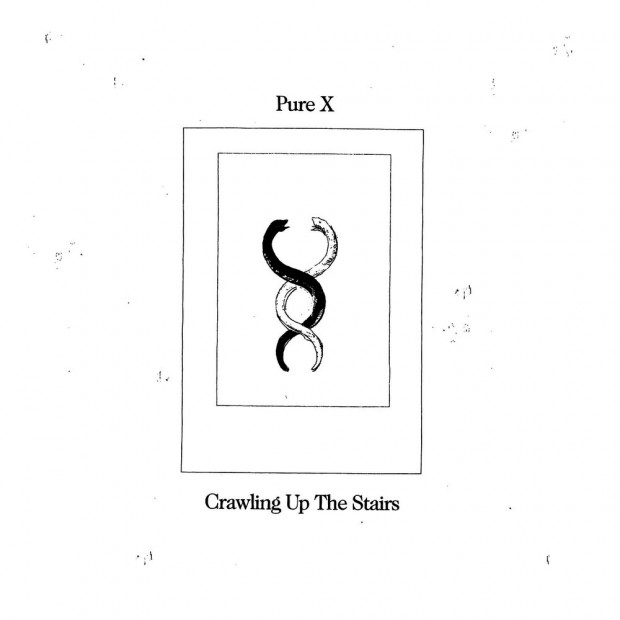
Pure X – Crawling Up the Stairs

Pure-X-Crawling-Up-The-StairsRating: ★★★½☆

When Pure X made waves with Pleasure, you knew that it would be easy for the group to go back into the studio and rehash that same old sound.  But, Crawling Up the Stairs definitely isn’t the same LP; in fact, while still bearing the mark of their early work, you find the group gradually coming out of their haze, creating a dramatic pop record that sees the band foraging into a world all their own.

Opening up with the titular track seems like a nod to the band’s past.  It begins with just light touches of noise, making way for Nate Grace to make his vocal appearance, virtually untouched, yet moments later he sinks back beneath waves of varying atmospheric/musical touches, all as the track gently fades away.  It set’s the stage for Crawling Up the Stairs, but it’s “Someone Else” that really breaks open the door.  Guitar chords trickle, and there’s very light percussion, while Grace operates between operatic crooner and throat-y troubadour.  It’s weird, but even though it plays a small part, the guitar sound on this tune is my favorite thing, once again illustrating how the careful touches of Pure X put a stamp on their sound.

There are definitely some songs throughout this release that I can see as grating, such as the pitch on “I Fear What I Feel,” which is purposefully out-of-key, yet still fits into the song.  But, when the vocals are executed perfectly, the tunes are enchanting.  One listen to “Things in My Head” and you will see precisely what I’m talking about; this track features a warmer tone on Nate’s voice, while the accompanying music wraps the voice in politely trickling guitar work.  Just a note: this is my favorite jam on the LP. Of course, some of the grating moments are pretty special, in so much as they evoke the emotional pull from the audience like the straining vocal on “Shadows and Lies,” which is where I think a lot of people are seeing the Conor Oberst connection.

For my ears, I think one of the remarkable things about this record is that it hold true to the sound Pure X established a few years back, but it’s pulled back the layers to reveal a shimmering pop sound. Those elements always lurked in the shadows on Pleasure, but we were all amazed at the way the atmospheric elements.  Now, the band has scrubbed themselves clean, leaving you with floating gems like “Thousand Year Old Child,” which still has a bit of that noise factor. In making nods to the early days, the band can hold onto old fans, but still push themselves creatively into their own future.  Such things are what makes Crawling Up the Stairs another hit from this Austin trio.

[audio:https://austintownhall.com/wp-content/uploads/2013/02/Pure-X-05-Things-in-my-Head.mp3]

Download: Pure X – Things in my Head [MP3]


Majcial Cloudz – Impersonator

Majical-Cloudz-Impersonator2Rating: ★★★★☆

Occasionally a voice is so striking, so brave, that it’s virtually impossible to ignore. From the moment you press play on Impersonator, you’ll find that you, too, are unable to turn your back on Devon Welsh.  His Majical Cloudz project is possibly not the most musical piece out there, but that voice will forever brand itself into your subconscious.

The title track from Impersonator sets the tone for your listening experience immediately; it has a light atmospheric wash and some vocal samples spun in reverse, all before Welsh makes his first appearance. “I’m a liar, I say I make music,” might resonate at this point, but his work within the realm of his vocals is so striking that your intrigue will win out, pushing you onto the next track.  “This Is Magic” ups the musical ante, utilizing a light pulse in the distance to make way for Devon to forever cement his voice in your life.  Within the first few lines, he comes in deep, then let’s the vocal soar to loftier heights, quietly repeating syllables.  There’s no going back.

Majical Cloudz isn’t a project that needs much more than just stripped down accompaniment to set the stage for everything in between.  On “Bugs Don’t Buzz,” the hammering of chords sets a stark tone, and besides the heavenly performance from Welsh, you won’t get too much more.  At times, his companion in arrangements, Matthew Otto, turns up some ambient noise, and it perfectly accentuates the performance, or clears space for re-introduction.  And then it’s gone. It’s over. Yet you quickly go back to check yourself, wanting to be sure that the moment you just experienced lives beyond a snapshot in the past.

One of the things I like about Impersonator is the self-deprecating seriousness of Welsh.  It’s clear at a certain point that he doesn’t entirely take this project, or at least the lyrics, as seriously as one would expect, considering the musical approach.  There’s a childishness, or perhaps a bit of whimsy that enables your ears/heart to attach themselves either to the vocal or the lyric, which happen to be two very different things. Simplicity is rarely as successful as it is throughout the entirety of this album, and you won’t be able to escape the pleasure, as it provides an absolute clarity that benefits the entire listen.

I can’t explain Impersonator to anyone; it has to be heard in order to be completely understood.  It’s existence, in a musical landscape burdened by “lo-fi” or “noise rock,” is extremely refreshing.  Each track begs to be heard, and in fact, deserves to be heard; you’re not going to find a song that’s worthy of skipping throughout.  Yes, in the end, Devon Welsh and his voice will be the force that wins you over.  But, the concept and the execution are so perfect that you’ll be hard-pressed to find anything this year as endearing as this release from Majical Cloudz.

[audio:https://austintownhall.com/wp-content/uploads/2013/03/majical_cloudz_childhoods_end.mp3]

Download: Majical Cloudz – Childhood’s End [MP3]

Black Lizard – s/t

blacklizard_frontcover-640x639Rating: ★★★½☆

In my mind, it’s got to be hard to start to craft your own sound, unburdened by the music one consumes, unless of course you’re in a semi-remote area, such as Finland.  It’s clear when listening to Black Lizard that they bear the touchstones of many acts, but their self-titled debut sees the group creating something entirely their own; it’s an album with diverse sound that will please any listener.

Sonic exploration seems to be the key to the album’s opener, “Honey, Please.” Like a storm, it rolls in quietly on the back of a ringing guitar, with happily haunting vocals drifting atop.  For me, the marvel is the restraint show on the tune, as Black Lizard seemingly stay in one mode for the entirety of the track; I’d be apt to just let go with a wall of noise. However, the band moves into more psychedelic territory on the following “Boundaries,” which is in danger of having some of the atmospheric guitars bleed all the way through your speakers.  Percussion on this tune takes a more tribal approach, while the vocals still have that foggy coating, even with a bit of clarity opening up briefly before the song fizzles out in a haze.

Even though the more broad reaching tracks on Black Lizard definitely hold a spot on my weekly playlist, I think that one of the facets that works best for the band is when they go for simplicity, such as on “Dead Light.  Sure, the pacing in the beginning has that slow opening, but when the chorus lets loose with distorted guitars and vocal swagger, it’s perhaps one of the best moments on the album: a sure hit. “Forever Gold” is similar, especially in the realm of length, but it’s a quick banger that allows the band to tightly weave their sound into a neat little package for listeners.  It’s not that the group gets too expansive, I just enjoy when they get a bang-on chorus that makes me bob my head, and that’s present in both these tunes.

If I were to counsel the group, I think my advice would be to allow for the vocals to shine through a bit more though, just a bit.  “Love is a Lie” is one of the most memorable tracks on the album, and it’s success is that it combines that stomping rhythm, bits of distortion, but also vocals you can attach yourself to, allowing listeners to fully invest themselves in the record.  But, aside from that small slight, Black Lizard clearly are defining a sound all their own, making this an effort worthy of your time. You want post-rock? Shoegaze? Psychedelia? It’s all here, and it’s all execute with a style that perhaps could only be captured in the land of Helsinki.

[audio:https://austintownhall.com/wp-content/uploads/2013/02/BLACK-LIZARD-Love-Is-A-Lie.mp3]

Download: BLACK LIZARD – Love Is A Lie [MP3]

Black Lizard is out now on Soliti Music.


Cowboy Indian Bear – Live Old, Die Young

Cowboy-Indian-BearRating: ★★★½☆

A four piece from Lawrence, Kansas, Cowboy Indian Bear have already put themselves and their music up for your purveyance. Back in 2010, they released Each Other All the Time, which gained them some fans through their faster folksy songs. Three years, and some supposed grueling touring and extravagant production later, they’re back with a sophomore effort that’s supposed to reflect these experiences. The result is Live Old, Die Young, whose title even sheds a little insight on how experience has shaped this band.

Before you even begin to listen, the title has already conveyed some darker theme that looms over the entire album. As you start, this theory changes into reality as “Washing,” the first track, comes on. Starting out slowly, the band wakes you up to their sound with a gentle lullaby of sorts. You have the delicate female/male combination harmonies and the waltz-esque beat covered with string work to top it all off. All these elements combine to create a beast of a tune that builds upon itself to end in a swirling culmination of folksy and old-timey sounding manner. It shows off the band’s strong suits and serves as a promising start to the album.

But is this a song that really encompasses the entire sound of Cowboy Indian Bear? Yes, but also no, in that they have a real mixture of genres and pacing on Live Old, Die Young. From track to track you have a general mix of what to expect, which is quite refreshing in terms of an album. The songs maintain the same combination of singular and strong male vocals with female focused complementation to back, but this is one of the main features that carry through all of the songs. Take the band’s single “Does Anybody See You Out?” and the song “Seventeen” that comes two tracks later. The first of these two is a drum driven song, with buzzy alterations of those male lead vocals you heard on the first track. This song comes with the lyrical tag that serves as the chorus, “I’ll grind you and spit you out—” a dark and edgy line within a mildly garage rock song. Then, on “Seventeen,” the band softens things up, focusing on the lighter harmonies and incorporating less rigid percussion in the form of jingly sleigh bells.

Point being, Live Old, Die Young, offers a lot to its listeners, and you can really feel the amount of intense effort that this group has put into their sophomore work. I expect great things from this band in the future and for them to garner some more fans with this album, so be sure to give it a spin.

Legs – Pass the Ringo

Legs-passtheringo-webRating: ★★★★☆

When a new label starts up, it’s great to have a stable band you can rely upon; a band that can write ridiculous hit after ridiculous hit.  After spending the last few weeks with Legs, I’m pretty sure that 3-year-old LogLady Records have found just that band.  There’s not a bad song on Pass the Ringo, leaving listeners with an astounding record that will carry your spirit for months and beyond.

“Friday Afternoon at the Zoo” is the perfect start to this listen, hazily drifting with bits of gypsy guitar and a slightly atmospherically affected vocal.  It’s a patient number, and the slightest bit of tonal change in the vocals really adds a dreamy pop element.  But, perfect openers only work if they can be followed by more perfect songs, so Legs are lucky they do just that with “Go Ask Your Mother.”  I don’t want to knock the band by any means, but this tune has the energy and passion of early Pains of Being Pure at Heart tracks if you forced them to run a psychedelic decathlon. Guitars here aren’t glistening with as much jangle and distortion, and there’s an organ being used, as opposed to the electronic keyboard element.  Altogether, this is the perfect one-two punch to kick off Pass the Ringo.

Personally, I’m partial to the swinging style of “Two Colours.” It’s one of the few tracks that features a female vocal, which adds a different dynamic to the album.  Lofty guitars float you in through the opening moment, while the drums continue to rhythmically pound their way into the ringing guitar sound.  I’d could take a nice helping of this tune any day for the rest of my life. Another track that uses the vocals of Amelia Adams successfully is the heavier “Time to Face the World.”  While Adams maintains that soft pop chanteuse quality, the song here has a muddier sound, in that endearing sort of way.  It’s like you’re trudging along through a murky swamp, all the while your mind thinks upon the love of your life.  Soft and hard work well in this case.

One of the attributes on Pass the Ringo is that while the narrative remains the same in a musical sense, the band never seems to get stuck wholly in one place, providing enough variance in the album to keep your attention whilst still pushing the envelope artistically.  It’s hard to skip a single song, especially when you have great hits like “Don’t Say a Word” hanging about at the end of the record.  Something about the guitar sound, and its movement, really makes this just another standout track on a solid outing from Legs.  It’s clear to me at this point, that the Oakland group is clearly a band you can rely upon, be you a label or just a consumer of great music.  Do yourself a favor and be sure you don’t skip over this most excellent release.

[audio:https://austintownhall.com/wp-content/uploads/2013/04/02-Go-Ask-Your-Mother.mp3]

Download: Legs – Go Ask Your Mother [MP3]

Beacon – The Ways We Separate

beaconRating: ★★½☆☆

There’s been a big push recently in the indie music scene for minimalist, vaguely R&B inspired, experimental electronic music. We’ve seen it from big names like Purity Ring and The XX, and now in lesser known, but by no means less worth listening to, bands such as Beacon. Composed of Brooklyn’s Thomas Mullarney and Jacob Gossett, Beacon released their first musical material last year in the form of two EP’s, both equally simple and stripped down thematic efforts. The Ways We Separate follows in their footsteps as an amplification of these traits, with interesting yet subtle music to fill your speakers.

Opening the album is “Bring You Back,” a single-esque track that introduces the band’s sound quite effortlessly. What begins as a simple electronic soundscape develops into a four minute, eighteen second track with a hooking chorus line for you to sing along to while you groove to the backing electronics. The high-pitched vocals juxtapose nicely with the deeper tones of the beat, to create a swirling combination that evens itself out. The track may seem mild, but it gives you a solid idea of what you are embarking upon in The Ways We Separate: an exploration of minimalism to describe and encapsulate some of the deepest emotions that are felt in love and loss. Such is felt through the deep lyrics that persistently attempt to iterate all the ‘ways’ as mentioned in the album title. Song after song is filled with little gems of lines that all abide by the same theme, collectively adding up to an album that meanders through the dark electronic

Though it tends to be on the meeker spectrum of music, there are some songs on here that make for solid dance numbers. Take the second track “Feeling’s Gone,” which starts on the same simple note as the song prior to it, but doesn’t stay as still as “Bring You Back” does. Towards the end of the track, you get this great little instrumental dance interlude that could easily be utilized on a dance floor to get your body moving.

However, instances such as this are not abundant on The Ways We Separate, leaving for a pretty one-note album, though a good one note. Some nuances can be appreciated and observed, while others seem to blur together in the overall scope of its length, which could potentially turn some listeners away from repeated listens.

Twin Tigers – Death Wish

twin-tigers-death-wishRating: ★★★☆☆

It seems like forever since we last heard from Twin Tigers; it’s been almost 3 years since we first got our hand on Gray Waves.  But, the wait was pretty well worth it, as Death Wish sees the band holding onto some of their old sound, while still forging ahead with new ground.   There’s still that expansive wall of noise, though the band has refined it a bit, allowing their pop sensibility to completely shine through with a darker edge.

The brooding sensation from the band is still intact, witnessed by the impending doom that opens Death Wish on “Racecar.”  Atmospheric noise opens before the drums roll heavily through the mix.  Vocals have a dark dosage of echo-y distance placed atop, which provides listeners with the sensation of impending doom.  I fully expected the band to blast off into a wall of noise at some point, yet they don’t; I like the use of restraint. However, almost immediately they flip things on you, giving you the poppiest song they might have written to this day.  Matthew Rain’s vocals seemingly hang in the hair, while the off-kilter drumming is blended with dashes of electronics.  It’s a sign of things to come, at least as the album is considered.

“Opana” opens with an electro pulse, before the song takes on a completely macabre throb to it.  It’s a sensation that seems designed to mess with your head, as shattering noise occasionally bursts through the background.  But, Rain enters with a vocal swagger that displays the new territory where the group aims to venture towards: pop meets death.  My personal favorite on the album comes when Twin Tigers unleash “Death Wish,” the album’s title track.  Aside from the first track, it’s the only other tune where I really feel like I can expect a barrage of noise in the live setting.  The sharp-edged guitars and the drum work, along with Rain’s voice, seem primed for a full on explosion.  Perhaps this was the middle ground where the group thought they could best excel, and they’re right; the song is not entirely noisy, yet not entirely pop–therein lays one of the problems that exists on Death Wish.

Too often the band finds their record treading that middle ground between heavy-handed noise rockers and pop-experimentalists. While it makes the brighter moments on the record stand out strong, it also lets a little too much light on the weaker spots such as “Transition.”  Of course, this is just an opinion, as I’m curious as to where the future of the band goes from here.  They’re straddling a bit between two genres, and it’s successful at times, and not so much at others.  It makes Death Wish a great listen, but also one that’s perplexing, especially to old fans.   If you need a light at the end of the tunnel, make sure you make it all the way to “Holiday.” It flirts with the band’s balance between their musical hearts, sprawling with sharp guitar chords, soft vocals and that explosive energy the band harnesses for too long on the record; it also closes beautifully. Here’s to hoping that Twin Tigers find that perfect mixture, as the majority of this album shows they’re still a band you’ll want on your playlists.

1 7 8 9 10 11 61
Social Media Auto Publish Powered By : XYZScripts.com